Zanzibar / Tanzania When to visit
When should I visit Zanzibar, Tanzania, for the best experience?
The short answer
June through September, the stretch the Tanzania Meteorological Authority records as dry across the whole country, with January and February a second, shorter window because the islands' bimodal rainfall regime leaves them relatively dry between the two rainy seasons.
The answer, with local context
Zanzibar does not have one rainy season, it has two, and that is the single most useful fact for planning. TMA places Unguja and Pemba in the bimodal zone alongside the northern coast and northeastern highlands, which means the long rains, Masika, typically begin in March and continue through May, while the short rains, Vuli, run from October through December. June to September is dry countrywide; January and February are the relatively dry pause inside the bimodal pattern.
The scale of the difference is large. At the Zanzibar station in 2024, January recorded 253 mm of rain — about 10 inches, during a period when Unguja exceeded 200 percent of average — while May brought only 46.8 mm, roughly 1.8 inches and about a sixth of the May average. The same two months in another year can swap character entirely, which is why the season label matters more than any single monthly figure.
Heat is not the variable here; humidity and rain are. Tanzania's national annual mean temperature in 2024 was 75.7°F (24.3°C), which was 1.3°F (0.7°C) above the 1991 to 2020 average and the warmest since 1970. On the Zanzibar islands specifically, annual minimum temperatures that year ran 1.8 to 3.6°F (1 to 2°C) above average — nights, not afternoons, are where the warming shows.
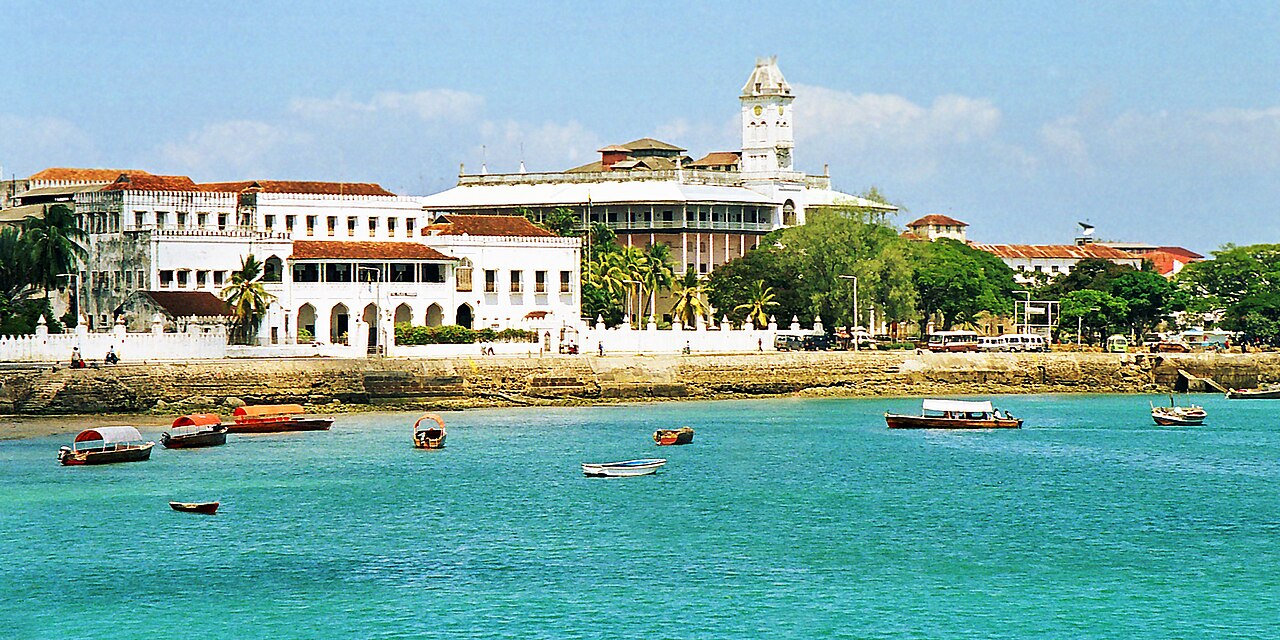
Stone Town rewards the dry months for a structural reason. UNESCO describes the property as a dense Swahili trading town on a promontory on the western side of Unguja, and it is walked rather than driven.
Picture the place
The town's lanes are narrow enough that two people pass sideways, and the coral-rag buildings hold heat into the evening. In the dry months the seafront catches a steady onshore breeze that never reaches the inner alleys.
The easily missed detail
Most of Stone Town's major buildings date from the 18th and 19th centuries, and the conservation machinery around them is recent: the Ancient Monuments Act dates from 1948, the town became a conservation area under the Town and Country Planning Act in 1985, the Stone Town Conservation and Development Authority was created the same year, and both the Stone Town Conservation and Development Act and its Master Plan followed in 1994, with a Management Plan in 2007. That framework is why the lanes still read as a single historic fabric rather than a few preserved monuments.
A practical rhythm
- June to September — The countrywide dry season; best for combining Stone Town walking with the east and north coasts.
- January and February — The bimodal dry pause; hot, with the rains on either side of it.
- March to May — Masika, the long rains, when the heaviest and most sustained rainfall arrives.
What could complicate the plan
The US Department of State raised Tanzania to Level 3, Reconsider Travel, on October 31, 2025, citing unrest, crime, terrorism and the targeting of gay and lesbian individuals, and notes that some areas carry increased risk. Its general guidance for the country includes keeping a low profile and avoiding public displays of affection, particularly between same-sex couples. Zanzibar is a majority-Muslim island where modest dress away from hotel beaches is expected, and during Ramadan many daytime food businesses close.
What to do next
The things-to-do answer in this group covers Stone Town's named monuments and the Jozani forest, both of which read differently in the wet and dry seasons.
Sources
- Tanzania Meteorological Authority, Statement on the Status of Tanzania Climate in 2024 — season names and months, bimodal zone, 2024 station rainfall, temperature anomalies
- UNESCO World Heritage Centre, Stone Town of Zanzibar — site description, building dates, conservation legislation
- US Department of State, Tanzania Travel Advisory — advisory level, date and stated reasons