Antananarivo / Madagascar Things to do
What are the most worthwhile things to do in Antananarivo on a first visit?
The short answer
Explore the restored Rova royal complex, walk the historic Upper Town, and visit the Analakely commercial district, then consider the UNESCO-listed Royal Hill of Ambohimanga as a separate excursion outside the capital.
The answer, with local context
The Rova of Antananarivo occupies Analamanga Hill at approximately 1,462 meters (4,797 feet) above sea level. Rather than being one palace, it is a fortified royal complex containing former residences, ceremonial buildings, religious structures, and royal tombs. Its history stretches back to the 17th century, when the hill served as a seat of the Merina rulers.
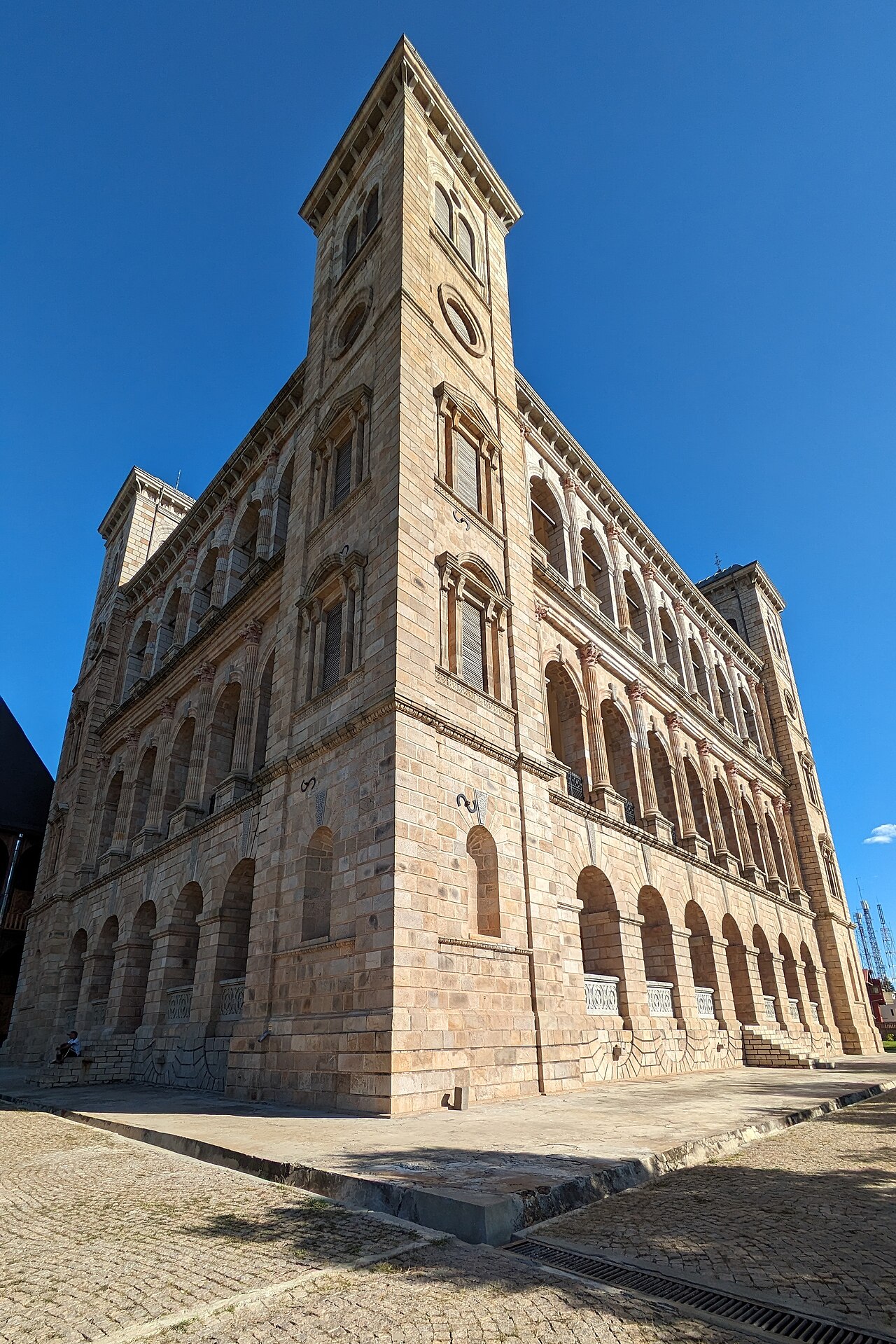
The most recognizable building is Manjakamiadana Palace, commonly called the Queen's Palace. Its original wooden design is associated with Queen Ranavalona I and engineer Jean Laborde. Architect James Cameron later added an exterior stone structure, creating the palace's distinctive combination of Malagasy royal architecture and 19th-century European building techniques.
A major fire on November 6, 1995, destroyed much of the palace complex. Reconstruction proceeded in stages, and the site reopened to the public on June 19, 2023. The restored complex includes historical exhibitions associated with Madagascar's monarchy, including material about Queen Ranavalona III. Its preservation history is now an important part of understanding the buildings.
The surrounding Upper Town offers additional landmarks. The Andafiavaratra Palace served as a residence for prime ministers during the monarchy. The Andohalo Cathedral and neighboring streets reflect the city's Christian architectural heritage. Farther downhill, Analakely contains the Avenue de l'Indépendance, Soarano railway station, and the historic commercial area associated with the former Zoma market.
For a larger royal landscape, the Royal Hill of Ambohimanga lies approximately 21 kilometers north of Antananarivo. The property has carried World Heritage status since 2001, listed under criteria (iii), (iv) and (vi). The protected property includes royal buildings, burial places, sacred sites, and associated traditional landscapes. It is outside the city and deserves its own excursion.
Picture the place
The Rova crowns a steep hill above densely arranged houses. Its reconstructed palace combines arched stone galleries and corner towers, while the surrounding royal precinct includes courtyards and older ceremonial structures.
The easily missed detail
The Rova and Ambohimanga are different royal sites. The Rova is in Antananarivo's Upper Town; Ambohimanga is a separate UNESCO World Heritage property north of the capital. The latter's designation must not be presented as though Antananarivo's Queen's Palace itself were the inscribed property.
A practical rhythm
Morning — Rova: Explore the restored palace complex and its historical interpretation.
Midday — Upper Town: Continue through Andohalo toward the former prime ministers' palace and historic churches.
Afternoon — Analakely: Explore the lower commercial district and its principal avenue.
What could complicate the plan
The Upper Town's terrain includes steep slopes and stairs, and the city has limited pedestrian accessibility. Ambohimanga requires transport beyond the capital rather than a continuation of the central walking route. The restored Rova's museum access arrangements may change as conservation work proceeds; its reconstruction history also means that not everything visible is original 19th-century fabric.
What to do next
identifies the drier months for walking the city's hills. explains where to seek a Malagasy meal after exploring the royal quarter.
Sources
- Regional Tourism Office of Antananarivo, Rova — royal complex, building history, fire, and reopening.
- Government of Madagascar, SADC Summit 2025 Antananarivo Cultural Tours — official description of the restored Rova and royal exhibitions.
- UNESCO World Heritage Centre, Royal Hill of Ambohimanga — designation, criteria, and protected heritage.
- Madagascar National Tourism Board — capital-region cultural tourism.
- U.S. Department of State, Madagascar Travel Guidance — pedestrian accessibility and road safety.