Armenia country guide Food and drink
What local dishes should I try in Armenia, and where should I look for them?
The short answer
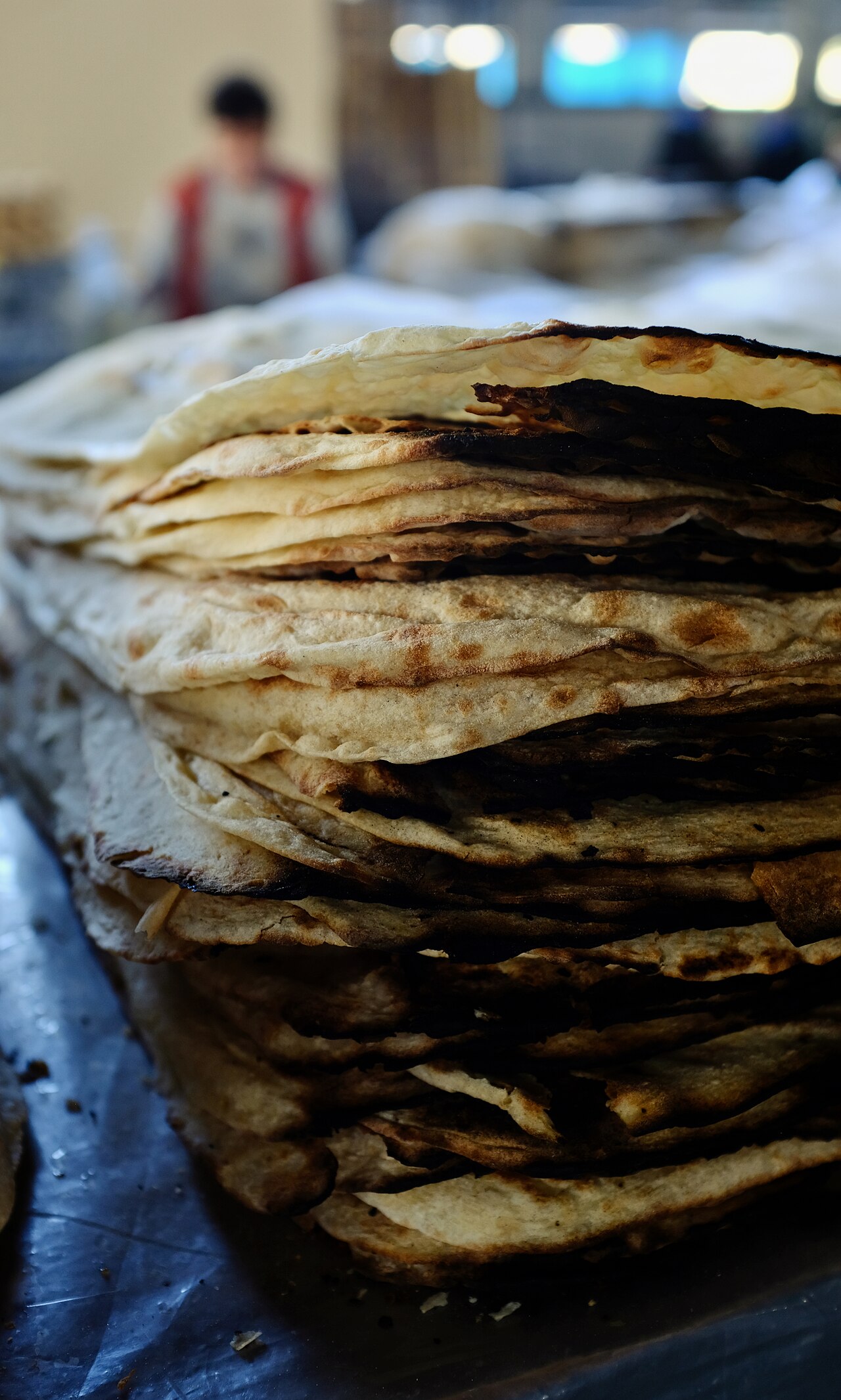
Start with lavash — the thin bread Armenia had inscribed on UNESCO's Representative List of the Intangible Cultural Heritage of Humanity in 2014, under a title that names not just the bread but "the preparation, meaning and appearance of traditional bread as an expression of culture in Armenia."
The answer, with local context
That wording is the useful part. The inscription, made at the Committee's 9th session, is not about a recipe; UNESCO's own file describes a dough of wheat flour and water kneaded into balls, rolled thin, stretched over a special oval cushion and then slapped against the wall of a traditional conical clay oven — the tonir — where it bakes for roughly 30 seconds to a minute before being pulled off. Lavash wraps grilled meat, lines the table, and carries ceremonial duties that have nothing to do with hunger. Order khorovats — grilled pork or lamb — almost anywhere in the country and lavash arrives with it as a matter of course, not as a side you choose. At weddings, UNESCO records, sheets of lavash are laid on the shoulders of the newlyweds as a symbol of fertility and prosperity.
Build out from there into the dishes that change by region. Harissa, the slow-cooked wheat and chicken porridge, belongs to the west and to memorial days. Ghapama, pumpkin baked with rice and dried fruit, is a cold-weather dish of the highlands. Lake Sevan supplies trout to the whole country, and the fish shows up grilled on the lake road in a way it does not in Yerevan. Tolma covers both the grape-leaf rolls and the summer version stuffed into peppers and tomatoes. Sujukh, the walnut-and-grape-must sweet, and dried fruit leathers are market goods rather than restaurant food.
The practical mechanics come from the US International Trade Administration's Armenia guide: the currency is the dram, AMD; standard business hours run 9 AM to 6 PM; Visa and Mastercard are the most widely accepted cards, traveler's checks are not accepted at retail outlets at all, and ATMs are common in Yerevan and widely available elsewhere. Carry cash for village bakeries and roadside grills, which is where lavash is best and card terminals are rarest.
Picture the place
Because the sheet bakes in under a minute against the clay, the work is rhythmic rather than patient: one layer goes on as the previous one comes off, and in a village bakery the heat coming back out of the oven mouth is the strongest thing in the room.
The easily missed detail
Armenia's edible heritage is bound up with its musical and craft heritage on the same UNESCO list, which tells you where to eat as much as what. The duduk and its music was inscribed in 2008 and Kochari, the traditional group dance, in 2017 — both are live-restaurant fixtures in Yerevan rather than festival-only performances. The Ministry of Foreign Affairs also records the Gyumri blacksmithing tradition as inscribed on 5 December 2023, at the Committee's eighteenth session in Kasane, Botswana, which is a reason to give Armenia's second city a lunch rather than a photo stop.
A practical rhythm
- Morning — Buy bread where it is made. Village and neighborhood bakeries sell lavash straight off the tonir wall and take cash only.
- Afternoon — Eat trout on the Sevan road rather than in the capital; it is the shortest distance between the lake and the plate.
- Evening — Pick somewhere with live duduk if you want the 2008 inscription in the room with you, and expect the meal to run late — standard hours end at 6 PM but restaurants do not.
What could complicate the plan
Closed land borders with Türkiye and Azerbaijan, which the US Department of State confirms, mean a lot of what Armenians eat is grown inside a small country, so seasonality is sharper than in a country with open frontiers: expect the fruit, herbs and vegetables on a summer table to be largely absent from a February one. Outside Yerevan, medical facilities are limited according to the same ITA guide, which is worth knowing before an ambitious meal of unfamiliar dairy and offal far from a city.
What to do next
See the Armenia places and experiences question for which regions these dishes belong to, and the trip-planning question for how to stage a route around them.
Sources
- UNESCO Intangible Cultural Heritage, Representative List element 00985 — the 2014 inscription at the 9th session, full element title, the conical clay oven, oval cushion and 30-second to one-minute bake, and the wedding custom; the duduk in 2008 and Kochari in 2017
- Ministry of Foreign Affairs of the Republic of Armenia — the 5 December 2023 Gyumri blacksmithing inscription at the eighteenth Committee session in Kasane
- US International Trade Administration, Armenia Country Commercial Guide, business travel — currency, business hours, card and ATM acceptance, medical provision outside Yerevan