Armenia country guide Places and experiences
What should a first-time traveler see in Armenia beyond the obvious highlights?
The short answer
The two monastery groups that UNESCO inscribed alongside Geghard — Haghpat and Sanahin in the northern Lori highlands, and the Echmiatsin churches with the ruined cathedral of Zvartnots on the Ararat plain — which between them cover 14 centuries of Armenian building in two completely different landscapes.
The answer, with local context
Haghpat was inscribed first and then enlarged: the World Heritage Committee approved the extension to take in Sanahin in 2000, at its 24th session, re-registering the property as 777 Bis under cultural criteria (ii) and (iv). The two monasteries sit close together in forested gorge country well north of Yerevan, which is why they are usually visited as a pair on the road toward Georgia.
Echmiatsin and Zvartnots are the opposite kind of trip — flat, fast, and close to the capital. UNESCO inscribed them on criteria (ii) and (iii) for illustrating the evolution of the Armenian central-domed cross-hall church. The dates stack up in an unusually legible sequence: the Mother Cathedral of Echmiatsin at AD 301 to 303, St Hripsime in AD 618, St Gayane in AD 630, Zvartnots in the middle of the 7th century, and St Shoghakat in 1694 on the site of a 4th-century chapel. The property is not one enclosure but three, of about 30.2 ha, 25.3 ha and 18.8 ha, with a shared buffer zone of about 93 ha around the first two and 24 ha around Zvartnots.
Armenia's living heritage is the other thing first-timers under-plan for. The Ministry of Foreign Affairs lists the country's entries on UNESCO's Representative List, among them the symbolism and craftsmanship of khachkars, Armenia's carved cross-stones, inscribed in 2010; the performance of the epic of David of Sassoun in 2012; and Armenian letter art and its cultural expressions in 2018. Khachkars in particular are not museum objects — they stand in monastery yards and roadside cemeteries across the whole country.
Picture the place
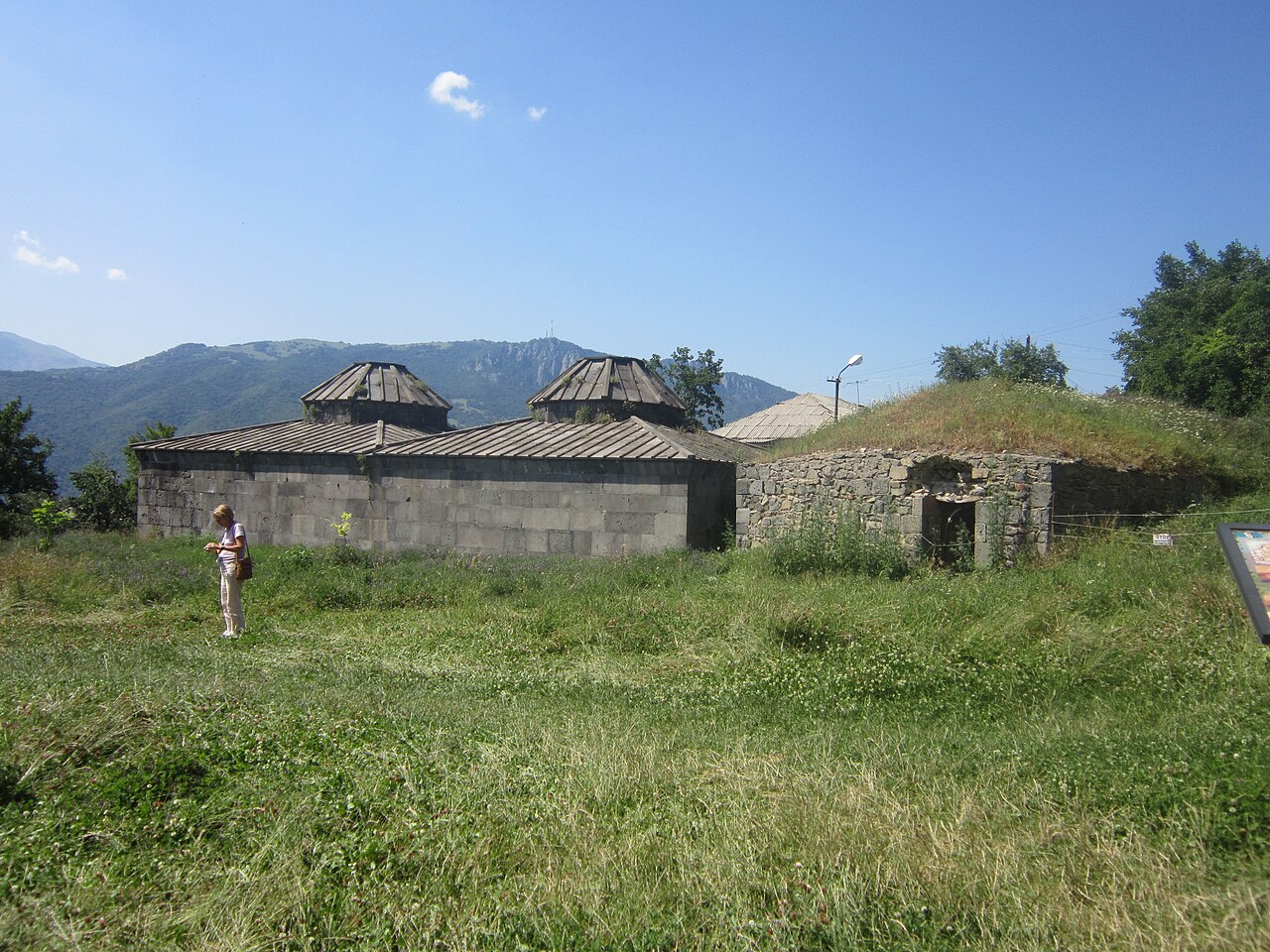
The contrast between the two groups is the point. Haghpat and Sanahin are built into wooded slopes where the stone is dark and damp-stained; Echmiatsin's churches stand on open plain where the tufa reads pink in low sun and Ararat fills the southern sky on a clear day.
The easily missed detail
Zvartnots has no roof. It is inscribed as an archaeological site rather than a church, and what survives is a footprint of a mid-7th-century circular cathedral rather than a building you enter — which is exactly why it belongs on the same half-day as Echmiatsin's intact cathedral nearby. Seeing the two in sequence shows you the form that Armenian architecture reached for and the form it kept.
A practical rhythm
- North — Allow a full day for Haghpat and Sanahin; they are a long drive from Yerevan and the gorge roads are slow.
- West — Echmiatsin and Zvartnots fit one morning, with the three inscribed areas spread over a few miles rather than one site.
- Everywhere — Look for khachkars wherever you stop; the craft was inscribed in 2010 precisely because it is still practiced rather than preserved.
What could complicate the plan
Routing is constrained in a way most countries' is not. The US Department of State's Armenia information applies a Level 4 "Do Not Travel" designation to the border with Azerbaijan, which rules out the eastern edge of several otherwise appealing loops and makes a there-and-back itinerary from Yerevan the default rather than a circuit. Monastery sites also keep liturgical rather than museum schedules, and the northern monasteries are high enough that winter road conditions can decide the day for you.
What to do next
Read the Armenia food and drink question in this guide for what to eat along the northern road, and the trip-planning question for how long these distances actually take.
Sources
- UNESCO World Heritage Centre — the 2000 Haghpat and Sanahin extension as 777 Bis, criteria for both properties, church construction dates, the three inscribed areas and their buffer zones
- Ministry of Foreign Affairs of the Republic of Armenia — Armenia's Representative List entries and their inscription years, including khachkars in 2010, David of Sassoun in 2012 and Armenian letter art in 2018
- US Department of State, Armenia country information — the Level 4 designation for the Azerbaijan border