Atacama Desert / Chile Food and drink
Where should I eat in Atacama Desert, and which local food or drink is worth trying?
The short answer
Eat in town and look for oasis produce — the Limón de Pica, registered in April 2010, was the first geographical indication ever granted in Chile, and it comes from a single desert oasis.
The answer, with local context
Chile's National Institute of Industrial Property records the Limón de Pica as the country's first registered geographical indication, granted in April 2010, with the use of the name authorized to the Cooperativa Agrícola Pica Ltda. The protected zone is the Oasis de Pica, in the Tamarugal sector — the northern reaches of the Atacama, a long way from San Pedro, but the clearest illustration of how this desert farms: not across a landscape, but inside a handful of spring-fed pockets. The small, thin-skinned lemon is the base of the local pisco sour, and the registration exists because the name had commercial value worth defending.
That oasis logic governs eating everywhere in the desert. Produce arrives from irrigated strips along the few watercourses, or by road from far away; nothing grows between them. San Pedro de Atacama is the practical base, because the protected areas around it offer no alternative — Chile's tourism board is explicit that visits to Los Flamencos are daytime only, with no overnight stays and no camping, and that its high-plateau lagoon sectors are reached out along Ruta 23. Every meal is a town meal.
Picture the place
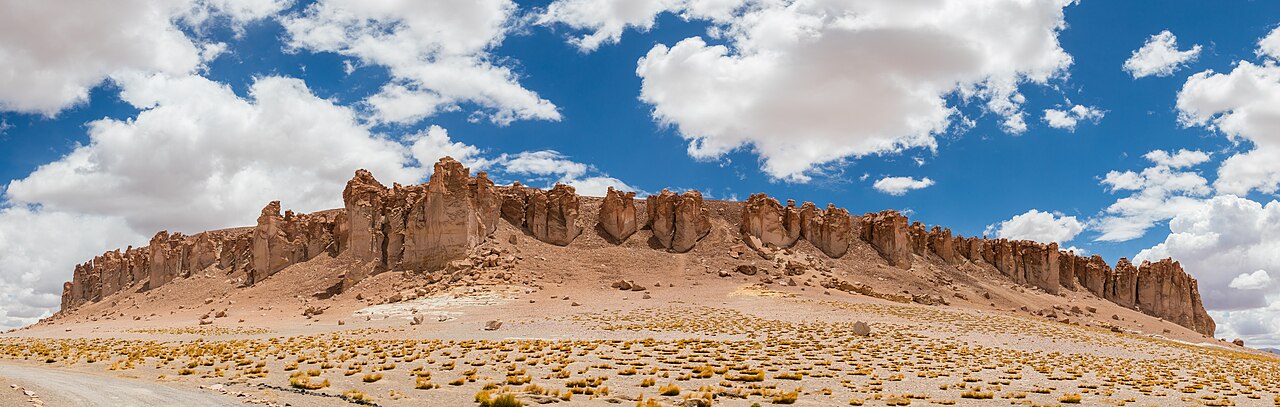
Pica is a cultivated patch in the Tamarugal, and its lemon exists because groundwater surfaces there and nowhere nearby — the same geography that makes the Atacama's green places look pasted onto the gravel rather than grown out of it.
The easily missed detail
A Chilean geographical indication is not a quality award; it is a legal boundary around a name. Because the Limón de Pica designation is tied to that one oasis and licensed to a named cooperative, a lemon described by that name should trace back there. It is a useful thing to know in a region where almost everything on a restaurant list arrived by truck.
A practical rhythm
- Midday — Eat in San Pedro. There is nowhere to eat inside the reserve sectors and nowhere to stay.
- Before an excursion — Reserve sectors are separately ticketed and daytime-only, so plan food around a return to town rather than a picnic at altitude.
- Evening — Ask what the lemon in the pisco sour is; Chile's first protected name is a desert product.
What could complicate the plan
The CDC's food and water guidance puts raw or undercooked meat, fish, shellfish and eggs, unpasteurized milk and dairy, salads and uncooked vegetables, and raw unpeeled fruit in its higher-risk group, along with food from street vendors and restaurant food held without good refrigeration. It notes that tea and coffee made with freshly boiled water are generally safe, and that where soap and water are unavailable an alcohol-based sanitizer should contain at least 60 percent alcohol — while adding that sanitizer works poorly on visibly dirty hands and is less effective against Cryptosporidium and norovirus. At desert altitude the CDC separately advises limiting alcohol during the first 48 hours, which is worth remembering before a second pisco sour on arrival day.
What to do next
The things-to-do question in this chapter covers Quitor and the reserve sectors you will be returning to town from, and the seasonal question explains why January and February are the months to avoid.
Sources
- Chile, Instituto Nacional de Propiedad Industrial (INAPI) — Limón de Pica as Chile's first registered geographical indication, April 2010 registration, authorized cooperative, Oasis de Pica zone
- Chile, national tourism board, Reserva Nacional Los Flamencos — daytime-only access, no camping, Ruta 23 sectors
- CDC Yellow Book 2026, Food and Water Precautions for Travelers — higher-risk food categories, boiled-water drinks, 60 percent alcohol sanitizer threshold
- CDC Yellow Book 2026, High-Altitude Travel and Altitude Illness — alcohol advice for the first 48 hours