Auckland / New Zealand Things to do
What are the most worthwhile things to do in Auckland on a first visit?
The short answer
The Sky Tower for the map of the city, the Auckland Museum for its meaning, and a ferry — Rangitoto's young volcano or Waiheke's vineyards — because Auckland is a city built on 53 volcanoes between two harbors, and it only makes sense from above and from the water.
The answer, with local context
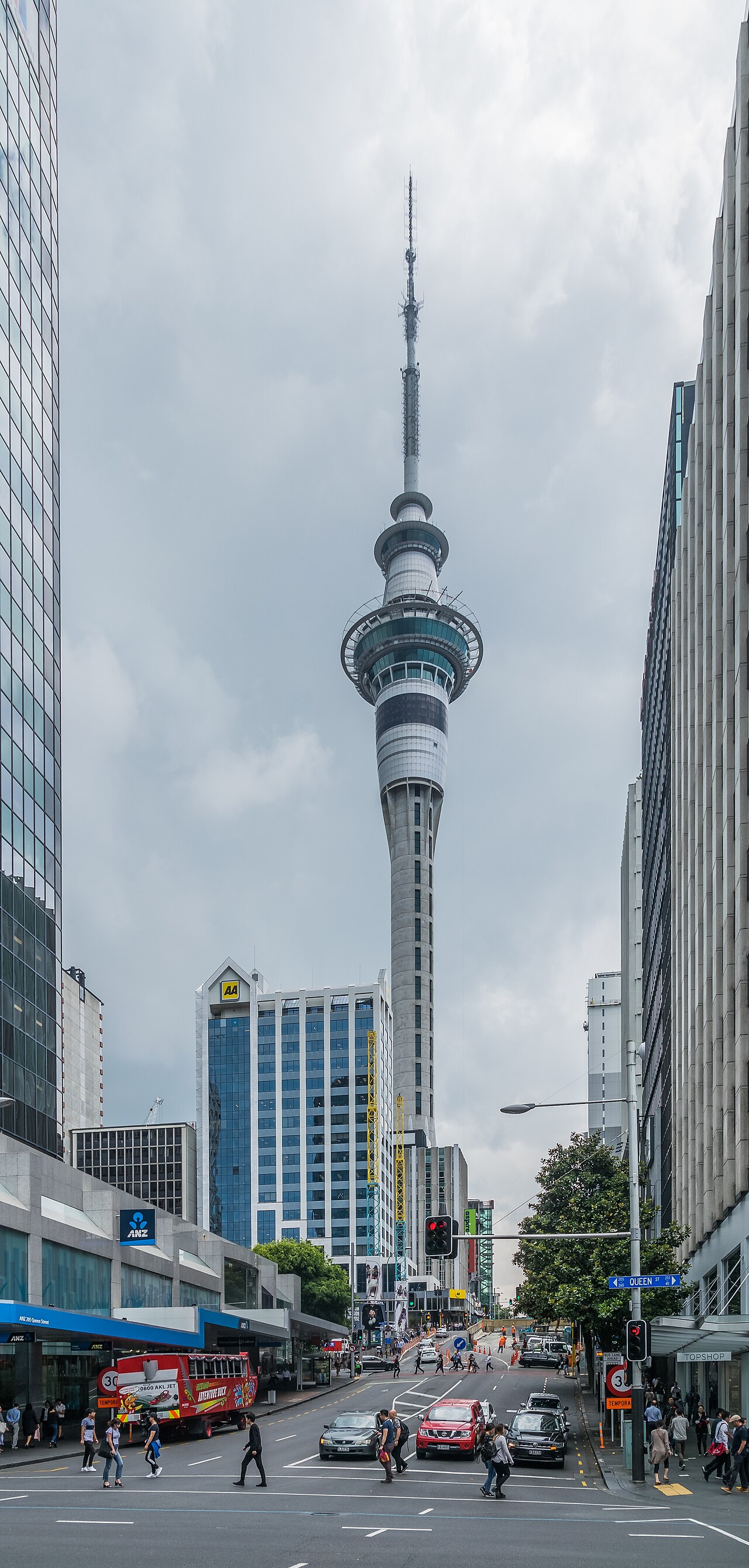
Start with the needle. The Sky Tower rises 1,076 feet (328 m) from the corner of Victoria and Federal Streets, opened on August 3, 1997, and remains New Zealand's tallest structure. Its main observation deck sits 610 feet (186 m) up, with glass floor sections an inch and a half (38 mm) thick, and the Sky Deck at 722 feet (220 m) sees up to 51 miles (82 km) on a clear day — both harbors, the isthmus, and the scatter of cones the city is built on. The tower held the title of tallest freestanding structure in the Southern Hemisphere for a quarter century, until Jakarta's Autograph Tower passed it in 2022. At 630 feet (192 m), the SkyWalk circles the outside and the SkyJump drops riders at up to 53 mph (85 km/h) on guide cables.
Then go under the dome. The Auckland War Memorial Museum, Tāmaki Paenga Hira, stands on Pukekawa — itself a dormant volcano — in the Auckland Domain. The institution dates to 1852; the present neoclassical building opened on November 28, 1929, funded by public subscription as a memorial to the First World War dead. It holds some 4.5 million objects, including the largest collection of Māori and Pacific artifacts in the country: the carved meeting house Hotunui, built at Thames in 1878, and Te Toki a Tāpiri, a war canoe from 1830, 82 feet (25 m) long and built to carry 100 warriors.
The harbor is the third act, and Rangitoto is its headline. The island's cone — 853 feet (260 m) high, the largest of the 53 volcanoes in the Auckland Volcanic Field — erupted into existence only about 600 years ago, around 1450, within the span of Māori settlement; human footprints survive pressed into its ash on neighboring Motutapu. Ferries from downtown take about 25 minutes, the summit track climbs through scoria and pōhutukawa forest for about an hour, and the Department of Conservation manages the island as a reserve with no shops, no water and no residents — everything goes in and out in your pack. The gentler ferry runs 40 minutes to Waiheke Island, the Hauraki Gulf's second-largest island, where more than 30 vineyards pour syrah above the beaches of Oneroa. Back in the city, Maungawhau (Mount Eden) offers the free version of the Sky Tower's lesson: at 643 feet (196 m) it is Auckland's highest natural point, with a grassed crater 164 feet (50 m) deep at its top.
Picture the place
On Rangitoto's summit track the black scoria crunches like gravel underfoot, the pōhutukawa trees lean out of cracks in the lava with no soil beneath them, and the whole pale city arranges itself across the water behind you as you climb.
The easily missed detail
Rangitoto is younger than some of the cultures watching it. Its eruption around 1450 was witnessed — the footprints in its ash on Motutapu belong to people who stood and watched Auckland's largest volcano being born, which makes it one of the few volcanoes on Earth whose birth has a documented human audience.
A practical rhythm
- Morning — Rangitoto on the first ferry, summit before the day's heat, and the lava caves on the way down; the last ferry back is a hard deadline, not a suggestion.
- Midday — The Auckland Museum through the middle of the day, Hotunui and the waka first, the war memorial halls last.
- Evening — Sky Tower at sunset, when the deck gives you both harbors lit in sequence, or the free climb up Maungawhau for the same geometry at ground rent.
What could complicate the plan
Weather shuffles everything: Gulf ferries cancel in strong winds, the Sky Tower's decks can close in high wind, and Rangitoto has no shelter, water or food to fall back on. Give the islands a full day each rather than stacking them, and keep the museum — open daily except Christmas Day — as the wet-day reserve it has been since 1929.
What to do next
Decide the island by appetite: volcano or vineyard. The food question in this group then takes over the evenings — Auckland's markets are where the city's Pacific character is eaten.
Sources
- SkyCity Auckland (Sky Tower) — tower height of 328 m, opened August 3, 1997, observation levels, SkyWalk and SkyJump at 192 m
- Auckland War Memorial Museum — the institution founded in 1852, the present building opened November 28, 1929, Hotunui (1878) and Te Toki a Tāpiri (1830) in a collection of 4.5 million objects
- Department of Conservation (DOC) — Rangitoto Island: eruption around 1450, the youngest and largest cone in the Auckland Volcanic Field, summit track and reserve rules
- Auckland Council — the Auckland Volcanic Field's 53 cones and Maungawhau (Mount Eden) as the city's highest natural point at 196 m