Auckland / New Zealand When to visit
When should I visit Auckland, New Zealand, for the best experience?
The short answer
Mid-February to mid-March — the warmest water and driest skies of Auckland's year, with the long summer evenings still running and the Pasifika Festival landing in March, after the New Zealand school-holiday peak has emptied out.
The answer, with local context
Auckland's seasons are mild to a degree that surprises visitors from continental climates. On NIWA's 1991–2020 normals, February — the warmest month — averages highs of 75°F (24°C) and lows of 63°F (17°C), while July, the coldest, manages highs of 58°F (14°C) and lows of 47°F (8°C): a swing of less than 20 degrees across the entire year, and frost is essentially unknown in the city. What changes with the seasons is not cold but light and rain. Daylight stretches to about fourteen and a half hours in late December and shrinks to nine and a half in June, and the rain — some 47 inches (1,200 mm) a year, spread over roughly 136 days — falls in every month, merely leaning harder in winter: July is the wettest month at about 5.7 inches over 16 rain days, February the driest at about 2.6 inches over 7.
That arithmetic makes late summer the clear window. February brings the year's warmest harbor water, around 70°F (21°C) in the Waitematā, the tail of the long evenings, and a city returned to its residents after the domestic holidays end with the school year in early February. Extending into March trades a degree or two for the Pasifika Festival, held over a mid-March weekend at Western Springs since 1993: the largest Pacific Island cultural festival in the world, free to enter, with villages representing 11 Pacific nations and crowds in the tens of thousands eating and watching their way around the park.
The rest of the calendar has sharper edges. Late January's Auckland Anniversary weekend is peak summer and peak demand together. Winter's compensation is cultural rather than climatic: Matariki, the Māori New Year marked by the rising of the Matariki star cluster, has been a national public holiday since 2022 and falls on a Friday in June or July, when the city leans into dawn ceremonies and winter feasts in the year's darkest, wettest weeks.
Picture the place
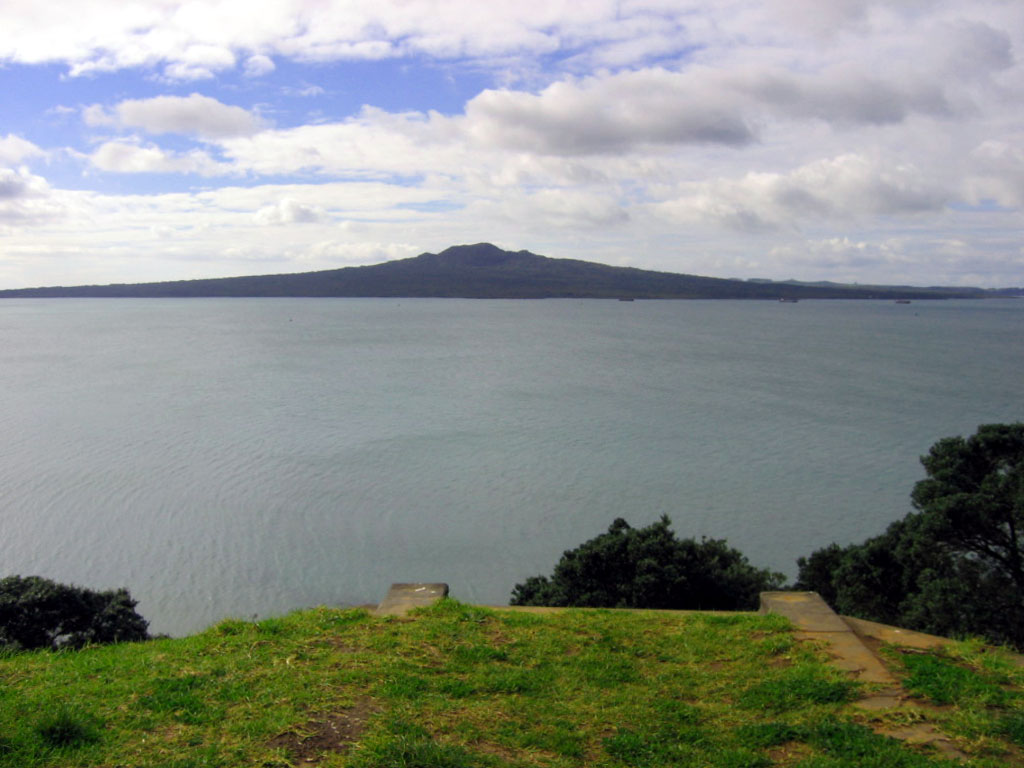
From the grass of North Head in Devonport on a February evening, Rangitoto's perfect cone sits black against the last light on the harbor, ferries crossing below it with their wakes still lit, and the city behind you turning its lights on.
The easily missed detail
Auckland has no dry season to aim at — only a least-wet one. February's roughly seven rain days against July's sixteen is the whole difference, so the late-summer advantage is statistical, not guaranteed; what February truly guarantees is the light, with the sun up before seven and not down until after eight.
A practical rhythm
- Morning — Harbor and island time first: the ferries to Rangitoto and Waiheke run in the calmest air of the day, and the volcanoes climb best before noon.
- Midday — The Auckland Museum and the shaded Domain for the hours when a summer front can park a downpour over the city.
- Evening — Viaduct Harbour and Wynyard Quarter after 7 p.m., when the late-summer light does its best work on the water.
What could complicate the plan
Late summer is also ex-tropical cyclone season in the far north of New Zealand. In late January 2023 Auckland recorded its wettest day since records began, and days later the edge of Cyclone Gabrielle flooded parts of the region again — a reminder to hold one flexible day in a February itinerary and to keep ferry days movable, since Gulf sailings are the first thing cancelled in a blow.
What to do next
If Pasifika matters, anchor the trip on its March weekend and book around it; the things-to-do question in this group gives the first visit its order.
Sources
- NIWA — 1991–2020 climate normals for Auckland: February and July temperature ranges, annual rainfall of about 1,200 mm and the winter rainfall maximum
- Auckland Council (Tātaki Auckland Unlimited) — Pasifika Festival at Western Springs in March, running since 1993, with villages for 11 Pacific nations
- New Zealand Government — Matariki as a public holiday since 2022, observed on a Friday in June or July