Bora Bora / French Polynesia Things to do
What are the most worthwhile things to do in Bora Bora on a first visit?
The short answer
One full day on the lagoon — coral garden, rays and reef sharks, out through the island's only pass — one day around the main island by road and 4x4, and one sunset at Matira Beach: the three movements of an island that is mostly water.
The answer, with local context
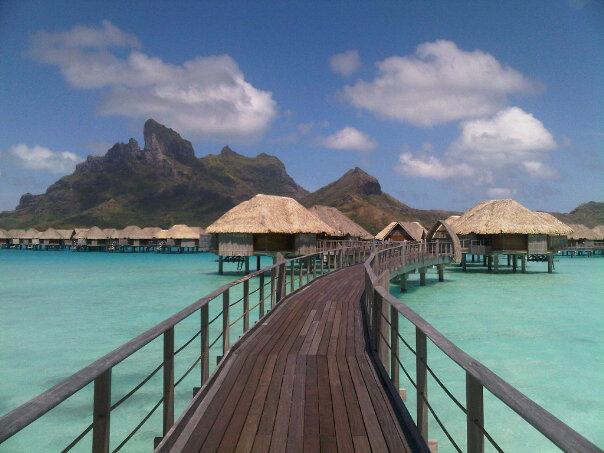
Understand the proportions first. The main island of Bora Bora is 11.3 square miles (29.3 km²) of extinct volcano — five miles long, three wide — rising to Mount Otemanu at 2,385 feet (727 m) with Mount Pahia at 2,169 feet (661 m) beside it, home to 10,605 people at the 2017 census, most of them around Vaitape on the west coast. Everything else is lagoon: a barrier reef ringed with motu islets, pierced by exactly one navigable opening, the Teavanui Pass on the western side. The lagoon is therefore not an excursion from the island; it is the island, and the classic full-day tour runs its circuit — snorkeling the coral garden in the shallows, standing in waist-deep water while stingrays work the sandbar, and watching blacktip reef sharks circle at the outer reef stops, with manta rays at the cleaning stations on the eastern side in the right season.
The main island repays a day of its own. Its coastal road runs about 20 miles (32 km) around the shore — a bicycle or scooter circuit at local pace — and the 4x4 tracks climb the interior to the island's Second World War layer. In February 1942 the United States arrived with Operation Bobcat: some 5,000 to 7,000 troops who built the Motu Mute airstrip, an oil depot and a seaplane base, and set eight 7-inch coastal guns on the headlands to guard the pass. The base never saw combat and closed on June 2, 1946; all eight guns remain on their points today, rusting picturesquely into the hillsides above Faanui Bay, and the airstrip they built was French Polynesia's only international airport until Tahiti's Faa'a opened in 1960.
At the island's southern tip, Matira Beach is the public exception that proves the resort rule — the main island's one broad, open-access white-sand beach, where the shallows run warm and pale for hundreds of yards. The overwater bungalows strung along the eastern motus are the island's other signature, and the concept is local: the first overwater bungalows in the world were built in French Polynesia, on Raiatea, in 1967, and Bora Bora turned them into the defining image of the luxury South Pacific. A boat day across to Taha'a — the vanilla island, sharing its lagoon with Raiatea — adds pearl farms, vanilla plantations and a drift snorkel through a coral garden between two motus.
Picture the place
From the sandbar stop the water is the color of weak tea over white sand and ink-dark over the coral heads, a stingray is tracing slow figure-eights around the guide's ankles, and Otemanu — which disappears for days in the wet season — is standing over all of it like it owns the view, which it does.
The easily missed detail
Everything enters this lagoon through one door. Ships, tides, sharks and weather all come and go by the Teavanui Pass, which is why the island's whole marine life is organized around it: the dives split into lagoon dives inside and ocean dives at the pass mouth, the WWII guns all face it, and the ferry and tour boats time their crossings by the current running through it.
A practical rhythm
- Morning — The full lagoon day, out early: coral garden and ray sandbar before the other boats, sharks at the outer stops, lunch on a motu.
- Midday — The 4x4 island circuit in the heat of the day — cannons, Faanui Bay and the viewpoints below Pahia — shaded by the vehicle and the island's own weather.
- Evening — Matira Beach for the sunset hour, then the roulottes by Vaitape pier for dinner, as in the food question in this group.
What could complicate the plan
The lagoon belongs to the weather and the operators: tours cancel in strong trade winds, manta sightings follow seasons and luck, and every activity is a boat ride from wherever you sleep — from the eastern motu resorts, even dinner in Vaitape is a scheduled shuttle boat, not a stroll. The island's interior is also steeper than it looks from the water: there is no road over the volcano, Otemanu has no public summit trail, and the views are earned on the 4x4 tracks or not at all.
What to do next
Book the lagoon day for your first full morning, while the weather forecast is yours to choose from; the food question in this group then covers the evenings on the main island.
Sources
- ISPF (Institut de la statistique de la Polynésie française) — the commune of Bora Bora: 10,605 residents at the 2017 census, land area and the atoll of Tupai
- Tahiti Tourisme — Bora Bora: Mount Otemanu at 727 m, the single Teavanui Pass, Matira Beach and the lagoon excursion circuit
- United States Navy / Naval History and Heritage Command — Operation Bobcat, 1942–1946: the Motu Mute airstrip, the eight coastal defence guns and the base closure on June 2, 1946