Budapest / Hungary Food and drink
Where should I eat in Budapest, and which local food or drink is worth trying?
The short answer
Eat on the Pest side and let the city's geography decide the menu — Budapest sits at the edge of Hungary's driest band, where the lowland river country along the Tisza takes only about 500 to 550 mm (20 to 22 inches) of rain a year, and that is grain, paprika and grazing land rather than orchard country.
The answer, with local context
The national rainfall picture explains Hungarian cooking better than any list of dishes. HungaroMet's record shows precipitation falling from the southwest to the northeast, with the lowland river corridors at the dry end and the Bükk Mountains and the southwest above 800 mm (31 inches). Dry lowland plains are what give Hungary its paprika, its grain, its pork and its long-cooked one-pot food; the wetter hills to the north and west are where the forest and freshwater influence shows up instead. Eating across Budapest, you are eating a capital's collection of both.
Hungary also has a much more extreme seasonal spread than its latitude suggests. Most of the year's rain falls between May and July; January is now the driest month in the 1991–2020 reference period, having displaced February. That produces a genuine winter eating season rather than a lull — a dry cold January is when the slow-cooked food is actually in season, and when the market halls are busiest with Hungarian shoppers rather than visitors.
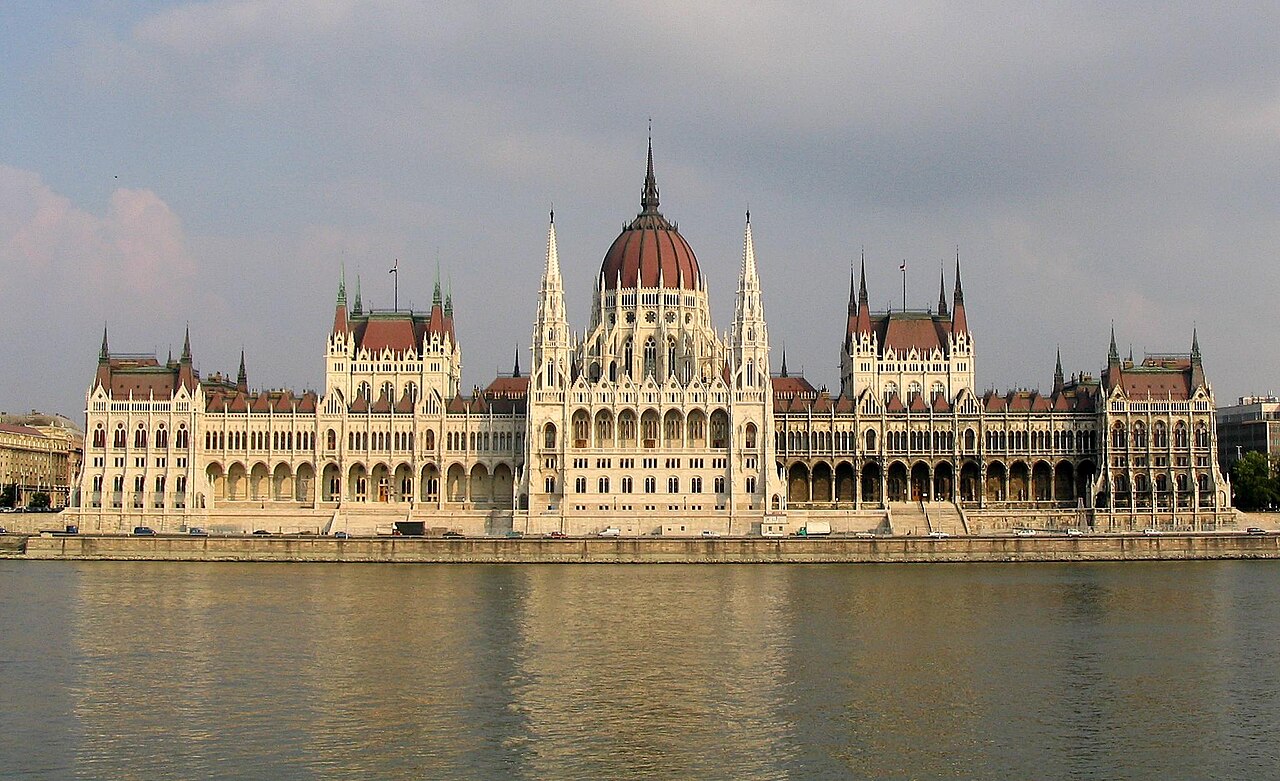
The World Heritage property gives you a useful geography for choosing where to sit down. UNESCO's inscription covers the banks of the Danube, the Buda Castle Quarter and Andrássy Avenue, under criteria (ii) and (iv). Those three strips are where restaurant rents are highest and the visitor share is largest. The practical move is to eat one or two streets back from each of them, in the same districts but off the inscribed line.
The easily missed detail
The bath houses are part of Budapest's eating and drinking rhythm, not separate from it. Széchenyi's 7 a.m. opening Monday to Thursday means the water is available before breakfast rather than after dinner, and its 10 p.m. Friday close is the one evening it works the other way round. Building a meal around the bath schedule rather than the reverse is how the city's own residents use it, and it keeps you out of the restaurant peak on both sides.
A practical rhythm
- Early — A 7 a.m. bath entry midweek, then breakfast; the queue at the ticket desk is shortest at opening and online tickets skip it entirely.
- Midday — The main hot meal, in the Pest grid behind Andrássy Avenue rather than on it.
- Late — Friday only, when the baths run to 10 p.m. and dinner comes first.
What could complicate the plan
Weekend hours at the baths shift the whole day: 8 a.m. to 8 p.m. on Saturday and Sunday rather than 7 a.m. to 8 p.m. midweek. Hungarian rainfall can swing by a factor of three between the wettest and driest years, and a month can pass without precipitation, so an outdoor table in May or June is a less reliable booking than the monthly average implies. Hungary is in the Schengen Area, and a visa-exempt traveler's 90 days in any 180-day period is shared with every other Schengen country visited in the same window.
What to do next
The things-to-do question in this chapter sets out the three World Heritage components these neighborhoods sit behind.
Sources
- HungaroMet (Hungarian Meteorological Service), precipitation in Hungary — regional rainfall gradient, driest band, driest and wettest months, variability
- UNESCO World Heritage Centre, Budapest — property components and criteria
- Széchenyi Thermal Bath — weekday, Friday and weekend hours, online ticketing
- European Commission, Migration and Home Affairs — Schengen 90-in-180 short-stay rule