Buenos Aires / Argentina Things to do
What are the most worthwhile things to do in Buenos Aires on a first visit?
The short answer
Walk the four set pieces in order — Recoleta Cemetery, the Teatro Colón, San Telmo on its Sunday fair day, and La Boca's Caminito — and give your evenings to the Ateneo's theater-turned-bookshop, MALBA's Latin American masters, and one real milonga.
The answer, with local context
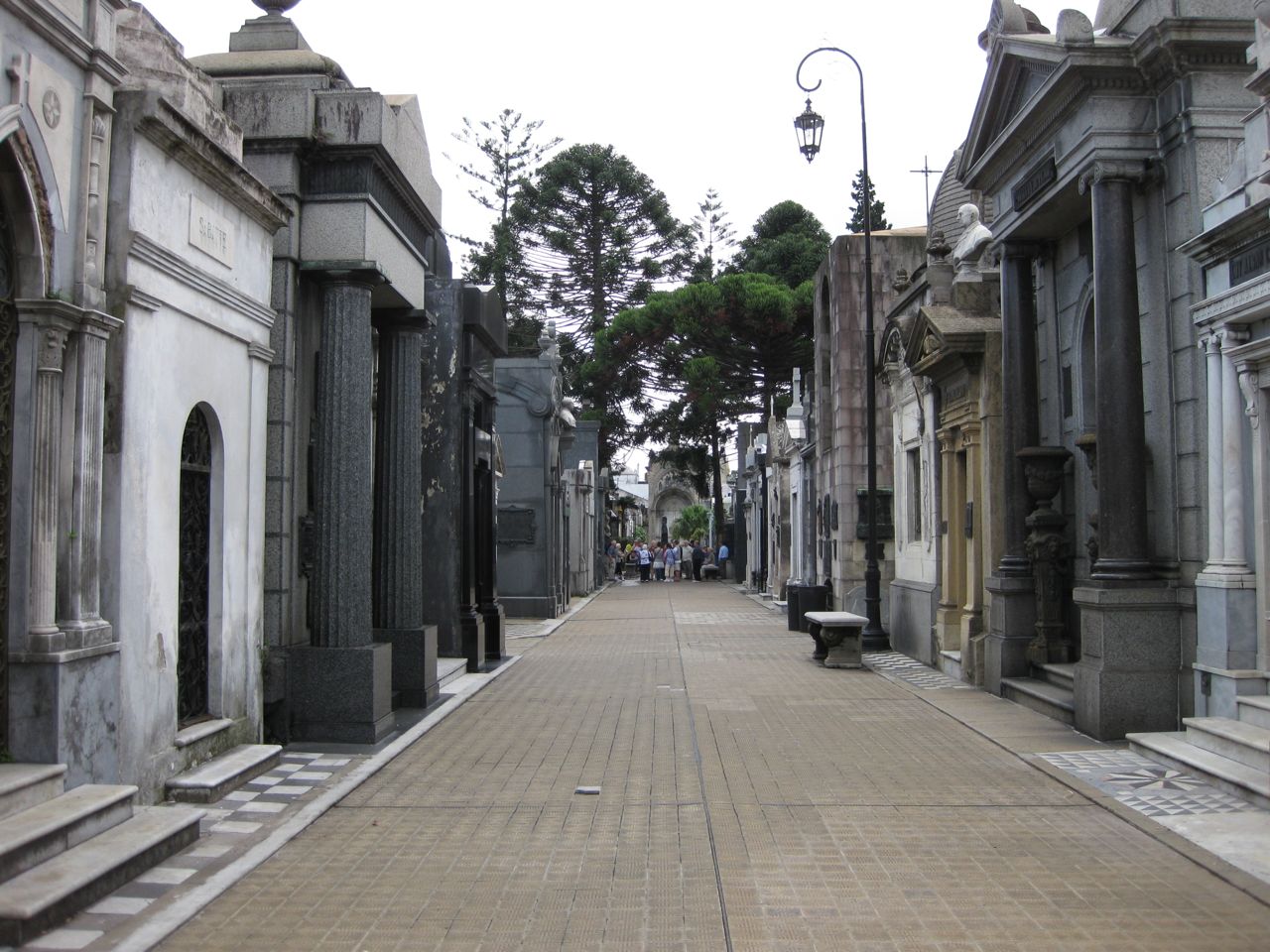
Recoleta Cemetery is where the city's history is densest and strangest. Opened on November 17, 1822, as Buenos Aires' first public cemetery, it packs 4,691 vaults into 14 acres (5.5 ha) — a grid of marble streets in miniature, built largely between 1880 and 1930 from materials imported from Paris and Milan, in styles from Neo-Gothic to Art Deco. Ninety-four of the vaults are declared National Historical Monuments; twenty-one Argentine presidents lie here; and the most visited tomb of all is one of the plainest, the Duarte family vault, where Eva Perón rests in a secured crypt some 16 feet (5 m) below the pavement. Non-residents now pay a small entry fee; residents enter free — and the church next door, the Basílica del Pilar, dates to 1732.
The Colón is the other essential interior. Inaugurated on May 25, 1908, with a performance of Aida, the Teatro Colón seats 2,478 and is placed by acousticians among the finest opera houses in the world; its guided tours run through the salons and workshops by day, and a performance in season is the city's great evening. Plaza de Mayo, a walk south, holds the political layer: the Pirámide de Mayo of 1811, the city's first monument, the Casa Rosada's balcony — and, every Thursday since 1977, the Mothers of Plaza de Mayo walking their slow rounds in white headscarves.
The weekends belong to the southern barrios. San Telmo's Sunday fair has run since 1970, antiques spreading from Plaza Dorrego down Defensa street past the 1897 market hall. La Boca's Caminito — an open-air museum since 1959, its corrugated houses painted in shipyard colors under the patronage of the painter Quinquela Martín — leads to La Bombonera, Boca Juniors' stadium of 1940, of which the club's own saying runs that it does not tremble, it beats. And the evenings: El Ateneo Grand Splendid, a 1919 theater converted to a bookshop in 2000 and named the world's most beautiful bookshop by National Geographic in 2019, keeps its stage as a café; MALBA, opened in 2001, holds the continent's modern masters, including Frida Kahlo's Diego y yo, bought in 2021 for US$34.9 million — then a record for a Latin American artwork; and the Reserva Ecológica, 865 acres (350 ha) of lagoons and grassland grown on land reclaimed from the river and protected since 1986, waits for the morning you want herons instead of monuments.
Picture the place
In Recoleta at eight in the morning the avenues are empty and loud with birdsong — marble angels in Art Nouveau drapery, a president's bronze horse, stained glass glowing in a dozen family chapels, and somewhere down a side alley a fresh bunch of flowers against a black marble door lettered DUARTE.
The easily missed detail
The cemetery's most photographed statue is not a president's. It is the tomb of Liliana Crociati de Szaszak, a young bride who died on her honeymoon in 1970, sculpted in her wedding dress with her dog Sabú at her feet — the dog's bronze nose is polished bright by generations of visitors rubbing it for luck.
A practical rhythm
- Morning — Recoleta and the Pilar church first, while the vaults are empty and the light rakes the marble; the neighborhood's cafés take the late morning.
- Midday — The Centro in the middle of the day: the Colón tour, Plaza de Mayo and the Casa Rosada museum, then lunch where the office city eats it.
- Evening — Alternate the evenings by kind: one for the Ateneo and MALBA's late hours, one for a milonga — the beginner-friendly nights start with a class around 9 p.m. and the floor belongs to everyone after eleven.
What could complicate the plan
San Telmo's fair is a Sunday-only proposition, and Caminito empties and turns uneasy after dark — do both in daylight, and keep to Caminito's painted blocks in La Boca rather than wandering the wider barrio. The Colón's performances sell out in season and its tours run on a separate timetable from the box office; book both ahead. Recoleta's fee, MALBA's Monday closure and the milongas' late gravity all reward an itinerary written by weekday, not by wish — the timing answer in this group explains why one day must be a Sunday.
What to do next
Anchor the trip on a Sunday in San Telmo, book the Colón before the flights, and let the food answer in this group fill the tables between the sights.
Sources
- Gobierno de la Ciudad de Buenos Aires (Turismo Buenos Aires) — Recoleta Cemetery: opened 1822, 4,691 vaults, 94 declared National Historical Monuments, and the resident and non-resident entry arrangements
- Teatro Colón — the theatre's 1908 inauguration, 2,478 seats and guided tour programme
- MALBA — the museum's collection and the 2021 acquisition of Frida Kahlo's Diego y yo for US$34.9 million