Buenos Aires / Argentina Food and drink
Where should I eat in Buenos Aires, and which local food or drink is worth trying?
The short answer
Book Don Julio in Palermo weeks ahead, then eat the city's other institutions: a standing pizza slice at Güerrín on Corrientes, hot chocolate with churros at the Café Tortoni, open since September 26, 1858, and a vermouth in the golden hour that the city has reclaimed as its own.
The answer, with local context
The splurge first. Don Julio, on the Palermo corner of Guatemala 4691, began as a neighborhood parrilla and became the city's standard-bearer for the grill, with a cellar of Argentine wine beneath the dining room that makes the malbec conversation here longer than at any other steakhouse in the neighborhood. Book weeks ahead; the walk-in queue on the pavement is a nightly event in itself.
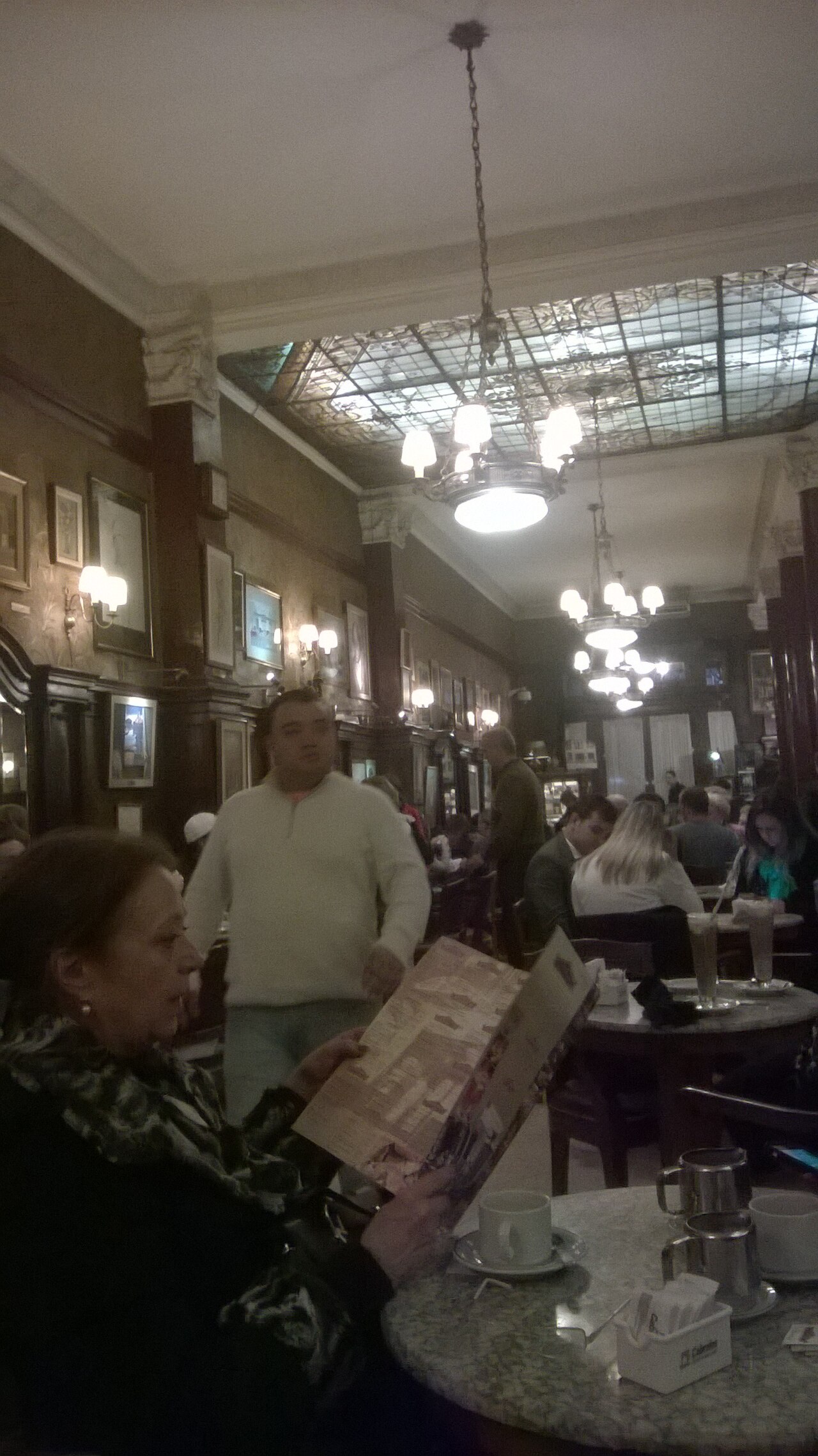
The everyday institutions are cheaper and just as specific. Güerrín, on Avenida Corrientes since 1932, is the temple of porteño pizza: order a slice of mozzarella al molde at the marble counter and eat it standing, de mostrador, with a small glass of moscato, exactly as theater crowds have done for ninety years. The bodegón — the city's old neighborhood canteen — survives at places like El Preferido de Palermo, a pink corner restaurant trading since 1952, where the milanesas and tortillas come in portions built for a table of four. And the cafés are a protected species: the city government's Bares Notables programme designates its heritage cafés, more than 60 of them spread across 25 neighborhoods and held as part of the city's cultural heritage, and their dean is the Café Tortoni at Avenida de Mayo 825, founded on September 26, 1858. The same roll call includes Café El Montecarlo, open since 1922, and Café Banderín with its some 500 football club flags on the walls; the city marks a Día de los Cafés every October 26.
The drink to try is not wine at all. Buenos Aires has revived the hora del vermut: bars such as La Fuerza in Chacarita pour house vermouths made from Mendoza wine and local botanicals over ice with soda and an olive, at seven in the evening, as the city's grandparents did. Those wine-based drinks sit inside a national regime rather than a bar trend — since Resolución C.5/2011 the national wine institute has required producers of wine cocktails and fruited sparkling wines to file monthly declarations of what they hold and move, with their suppliers' chemical reports on every juice, essence and pulp and a laboratory certificate showing no colorants or preservatives outside Law 14.878. Finish sweet at Cadore, making gelato since 1957, where dulce de leche is the flavor to order — and if a football night finds you by the river, the carritos of the Costanera serve choripán and bondiola sandwiches to the whole city at once, no reservation ever taken.
Picture the place
At Güerrín's counter at midnight the marble is crowded elbow to elbow — a mozzarella slice folded on a steel plate, a paper napkin, a small glass of sweet moscato, the pizzero's peel sliding in and out of the oven behind the glass, and Avenida Corrientes lit like Broadway outside.
The easily missed detail
Florería Atlántico, in Retiro, is a flower shop that sells very few flowers after dark: the bar is in the basement, reached through the shop, and it has been a fixture of the World's 50 Best Bars list for a decade. Order the drink; the flowers upstairs are real, the shop upstairs is real — the city's best bar simply begins where the florist ends.
A practical rhythm
- Morning — Café con medialunas at a bar notable: the Tortoni opens the day in wood, marble and stained glass, and the chocolate with churros is a breakfast argument all by itself.
- Midday — The bodegón lunch is the city's best value: El Preferido or its kind, a milanesa, a tortilla to share, and no plan for the hour after.
- Evening — Vermouth at seven, the parrilla at ten: Buenos Aires' dinner hour is late enough that the vermut is not an aperitif but a meal's first act — build the evening in that order and the city makes sense.
What could complicate the plan
Don Julio's bookings open ahead and vanish; the same is true of the small rooms around it in Palermo, and January — when part of the restaurant city takes its holidays — quietly closes some of the famous names. The heritage cafés trade on atmosphere as much as menus: go to the Tortoni for 1858, not for the city's finest cooking, and expect a queue at the door by midday. And the city's hours defeat the early diner: a parrilla at 7 p.m. is an empty room and a suspicious kitchen; eat at the porteño hours or not at all.
What to do next
Book Don Julio the day the trip is fixed, put one bar notable on every morning, and use the things-to-do answer in this group to pair the tables with the sights by neighborhood.
Sources
- Gobierno de la Ciudad de Buenos Aires — the Bares Notables heritage café programme, including the Café Tortoni at Avenida de Mayo 825
- Instituto Nacional de Promoción Turística (Visit Argentina) — more than 60 notable bars across 25 Buenos Aires neighborhoods, held as part of the city's cultural heritage; the Café Tortoni founded on 26 September 1858; the Día de los Cafés marked on 26 October; Café El Montecarlo open since 1922; Café Banderín's collection of about 500 football club flags
- Instituto Nacional de Vitivinicultura, Resolución C.5/2011 — sanctioned in Mendoza on 11 February 2011 and published in the Boletín Oficial on 23 February 2011: producers of cóctel de vino and fruited sparkling wines must file monthly declarations of stock and movement with suppliers' chemical reports on the juices, essences and pulps used and an analytical certificate confirming no colorants or preservatives unauthorized under Law 14.878