Buenos Aires / Argentina When to visit
When should I visit Buenos Aires, Argentina, for the best experience?
The short answer
April — the summer heat has broken, average highs sit at 73°F (23°C), the Teatro Colón season is in full voice, and the month ends with the Feria del Libro, one of the largest book fairs in the Spanish-speaking world.
The answer, with local context
Buenos Aires is a four-season city with no dry season to hide in — rain falls in every month — so the choice is made on temperature and on the cultural calendar, and April wins both. The Servicio Meteorológico Nacional's 1991–2020 normals mark the turn precisely: March still averages highs of 81°F (27°C) with nights at 64°F (18°C), but April settles to highs of 73°F (23.2°C) and lows of 57°F (14.1°C), the first month since spring in which a jacket is a pleasure rather than an apology. The city's theatres, museums and milongas are all back from the summer dispersal, and the Colón — whose season runs from autumn into December — is in its opening weeks.
April's crown is the Feria Internacional del Libro, held at La Rural in Palermo from late April into May: roughly three weeks of halls, signings and street-long queues that the Fundación El Libro counts at more than a million visitors, making it one of the largest literary gatherings in Latin America. October is the spring counterweight — average highs of 73°F (22.6°C), lows of 55°F (13.4°C) — when the cultural calendar peaks again and, on one night in October or November, the city runs the Noche de los Museos, hundreds of museums and cultural spaces open free until the small hours. Between the two shoulders, the city has two weather systems with names worth learning: the pampero, a southerly that can drag even a warm week's highs down toward 50°F (10°C) in a day, and the sudestada, a south-easterly off the Río de la Plata that parks grey drizzle over the avenues for two or three days at a time.
The contrarian case belongs to August. It is the coldest-feeling month in the cafés, but the city government stages the Tango Festival and the Mundial — the world tango championship — every August, filling Usina del Arte and a hundred milongas with dancers from everywhere; if tango is the point of the trip, winter is the season. January is the month to skip for the opposite reason: the hottest days reach 97–100°F (37–38°C), and the porteños who can leave, do — a share of the city's restaurants take their holidays with them.
Picture the place
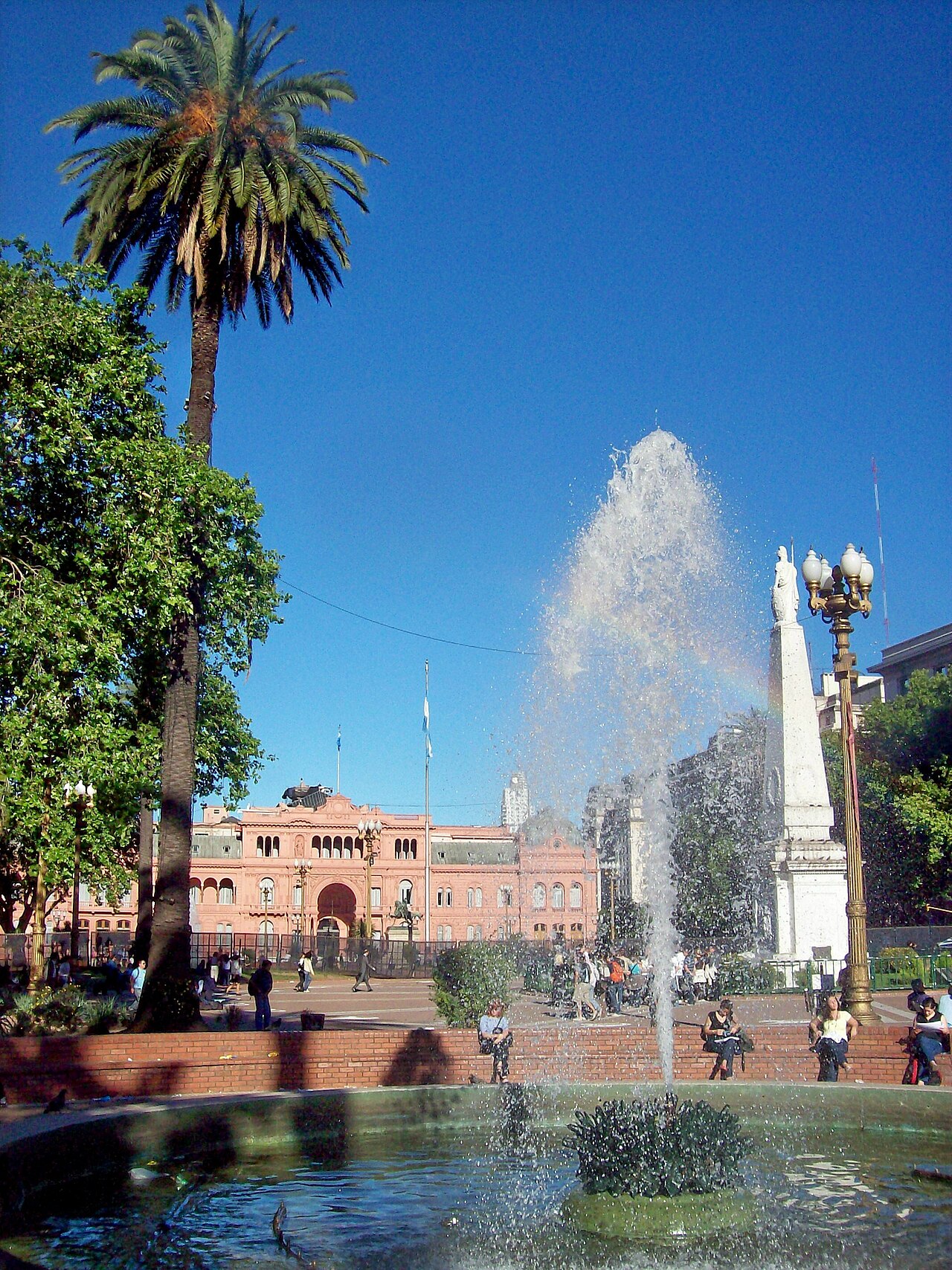
On an April evening on Avenida de Mayo the plane trees are turning, the café terraces are full without being hot, and outside the Tortoni a queue of book-fair visitors is deciding between hot chocolate and the next signing across town in Palermo — the city at its most itself, dressed for autumn.
The easily missed detail
Late summer into March the palo borracho trees — the silk floss trees with their swollen, spined trunks — open in improbable pink across Palermo and Recoleta. Porteños read them as the city's own autumn signal, and their cottony seed pods drift the pavements weeks before the plane trees turn.
A practical rhythm
- Morning — April mornings are the museum hours: Recoleta Cemetery opens at 7 a.m. into empty avenues, and the MALBA and the Museo Nacional de Bellas Artes are quietest before noon.
- Midday — The book fair is a midday-to-evening animal at La Rural; pair it with lunch in Palermo and give the fair the long afternoon it demands.
- Evening — The Colón at night, then the café hour after: an April evening of opera and a Tortoni chocolate is the city's classic double bill, and neither half works in January's heat.
What could complicate the plan
Autumn is mild but not settled — the same normals that give April its 73°F highs give it real rain, and a sudestada can steal two grey days from any week; carry the plan loosely, with indoor anchors for every day. The fair cuts both ways: it fills the city's hotels and its cultural calendar simultaneously, so book both early. And the tango festival's August timing tempts dancers into the city's coldest, dampest weeks — pack for 50°F (10°C) evenings, not for Buenos Aires' postcard weather.
What to do next
Fix April, book the Colón and the fair-week hotel early, and read the things-to-do answer in this group to order the days — one of them must be a Sunday.
Sources
- Servicio Meteorológico Nacional — Buenos Aires climate normals, 1991–2020: March highs of 27°C, April highs of 23.2°C and lows of 14.1°C, October highs of 22.6°C, and the pampero's cold surges
- Gobierno de la Ciudad de Buenos Aires — the city's cultural agenda: the August Tango Festival and Mundial, and the Noche de los Museos each spring
- Fundación El Libro — the Feria Internacional del Libro at La Rural, its three-week run and attendance above one million visitors