Busan / South Korea Things to do
What are the most worthwhile things to do in Busan on a first visit?
The short answer
Visit Haedong Yonggungsa Temple, explore Gamcheon Culture Village and Jagalchi Market, and spend time along Busan's distinctive coastal neighborhoods.
The answer, with local context
Haedong Yonggungsa is one of Busan's most recognizable religious landmarks because it sits beside the sea rather than on a typical inland mountain site. The Korea Tourism Organization traces its foundation to 1376, during the Goryeo dynasty. The temple was destroyed during the Japanese invasions of Korea and rebuilt during the early twentieth century.
The tourism authority lists opening hours of 4:30 a.m.–7:20 p.m., with last admission at 6:50 p.m. Admission is listed as free. The complex is located at 86 Yonggung-gil, Gijang-gun, northeast of the central beach districts.
Gamcheon Culture Village offers a contrasting urban experience. Its stepped houses were built by refugees following the Korean War, and the neighborhood later became known for public art, painted buildings and narrow pedestrian lanes.
A significant visitor rule was introduced in 2026. The Korea Tourism Organization reports that the residential area is subject to tourism-management restrictions, with tourist visiting hours of 9 a.m.–6 p.m. This takes precedence over older listings describing the village as open around the clock.
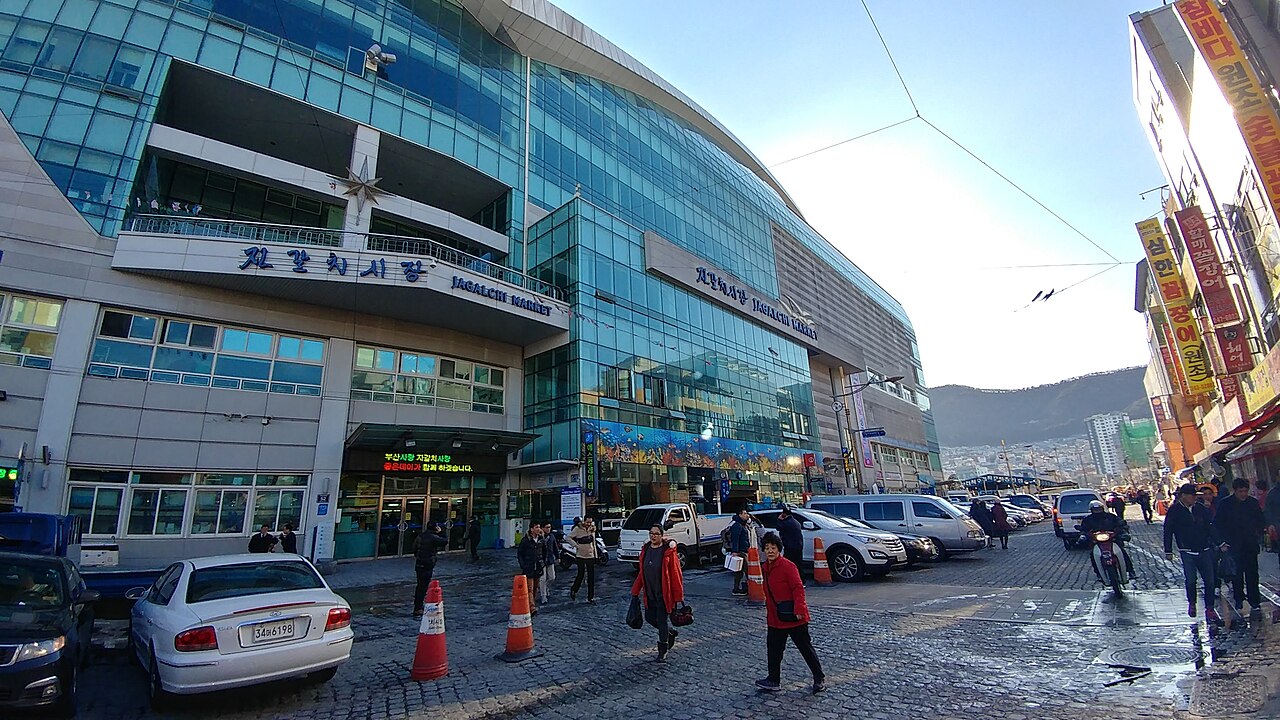
Jagalchi Market and the nearby Nampo-dong area provide an introduction to Busan's maritime commercial culture. The market's seafood stalls and dining facilities are associated with the city's longstanding fishing industry.
One Busan site has no counterpart anywhere else. Busan Metropolitan City's official listing for the United Nations Memorial Cemetery in Korea, at 93 UN pyeonghwa-ro in Nam-gu, describes it as the only cemetery of its kind in the world and gives opening hours of 9 a.m.–5 p.m. from October through April and 9 a.m.–6 p.m. from May through September. The city puts it about a 15-minute walk from Exit 3 of Daeyeon Station on Metro Line 2.
The American Battle Monuments Commission, which maintains the United States memorial standing inside the grounds, supplies the numbers the gate does not. About 2,300 war dead from 11 countries are buried at the cemetery, 36 of them American — a very small share of the 33,739 US battle deaths of the Korean War, because most American dead were repatriated. The US monument there was dedicated on July 28, 2013.
Picture the place
At Haedong Yonggungsa, stone steps descend toward temple buildings above the shoreline. At Gamcheon, painted houses rise in terraces, forming a dense pattern across the hillside.
The easily missed detail
Gamcheon Culture Village is a residential neighborhood, not an outdoor museum. The newer visitor restrictions reflect concerns about noise, privacy and disruption to people living there.
A practical rhythm
Early morning: Visit Haedong Yonggungsa on the northeastern coast.
Midday: Explore Nampo-dong and Jagalchi Market.
Afternoon: Visit Gamcheon Culture Village within its designated tourist hours.
What could complicate the plan
The attractions occupy different parts of Busan. Traveling between Gijang, Nampo-dong and Gamcheon can take significant time, and Gamcheon's lanes are steep. Some temple areas require respectful clothing and behavior.
What to do next
introduces Busan's distinctive pork soup, wheat noodles and traditional market foods.
Sources
- Korea Tourism Organization — Haedong Yonggungsa history, admission and hours.
- Korea Tourism Organization — Gamcheon's history and location.
- Korea Tourism Organization — August 2026 residential visitor restrictions.
- Busan Metropolitan City, United Nations Memorial Cemetery in Korea — address, seasonal opening hours and metro access.
- American Battle Monuments Commission, Korean War Monument at Busan — the cemetery's roughly 2,300 graves from 11 countries, the 36 American burials, the 33,739 US battle deaths of the war and the monument's dedication on July 28, 2013.