Cairo / Egypt Things to do
What are the most worthwhile things to do in Cairo on a first visit?
The short answer
Explore UNESCO-listed Historic Cairo, visit the Citadel of Saladin, and see the royal mummies at the National Museum of Egyptian Civilization before treating the Giza pyramids as a separate excursion beyond Cairo’s central districts.
The answer, with local context
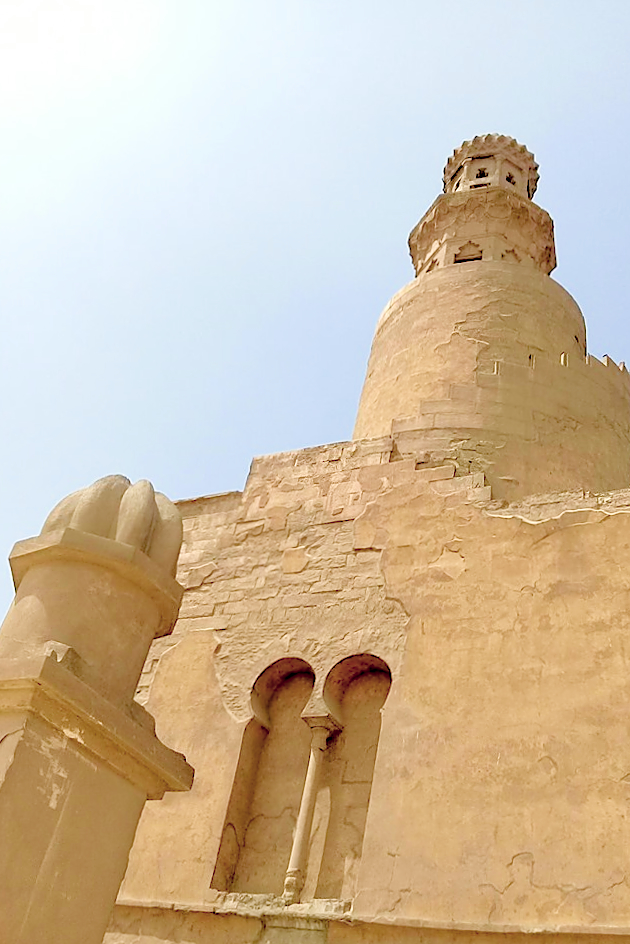
Historic Cairo entered the UNESCO World Heritage List in 1979, under criteria (i), (v), and (vi). The protected area covers approximately 524 hectares and includes a striking variety of Islamic, Coptic Christian, and Jewish heritage. Its architectural history extends across the Tulunid, Fatimid, Ayyubid, and Mamluk periods. The Mosque of Ibn Tulun dates to 876–879 CE, while Al-Azhar was founded in 970 CE. These monuments make the historic city more than a shopping neighborhood: it is a record of successive capitals and intellectual traditions.
Walk the Al-Muizz corridor to see the differences between medieval building types. Historic Cairo contains mosques, madrasas, tombs, former hospitals, and sabils—structures originally built to distribute water. UNESCO identifies the Sultan Qalawun complex and the Mosque-Madrasa of Sultan Hassan among the city’s important Mamluk monuments. The street pattern still reflects older commercial specializations, including areas historically associated with different crafts. UNESCO World Heritage Centre
The Citadel adds a different perspective. Built as a defensive stronghold under Saladin, it later became a major seat of government. Its grounds include the Mosque of Muhammad Ali Pasha, the Mamluk Mosque of al-Nasir Muhammad, and the Ottoman-era Sulayman Pasha Mosque. Egypt’s Ministry of Tourism and Antiquities currently lists the Citadel as open daily from 8 a.m. to 5 p.m. Its published foreign-adult admission is 550 Egyptian pounds for entry to the Citadel area; the ministry lists separate categories for students and Egyptian visitors. Ministry of Tourism and Antiquities
For a museum, the National Museum of Egyptian Civilization offers an unusually broad chronological view. Located in Fustat, it presents Egyptian heritage from prehistory through later periods and includes the Royal Mummies Hall. Its published daily opening period begins at 9 a.m., with a regular 5 p.m. closing time. The museum makes a valuable counterpart to the monuments because its collections place objects, burial practices, and cultural traditions in a wider historical sequence. Ministry of Tourism and Antiquities
Picture the place
At the Citadel, the large central dome and slender minarets of Muhammad Ali’s mosque stand above Cairo’s extensive urban landscape. At street level, Historic Cairo shifts between enclosed stone courtyards, decorated facades, and compact commercial lanes.
The easily missed detail
UNESCO’s Historic Cairo property extends well beyond what visitors often call “Islamic Cairo.” Egypt’s antiquities ministry also identifies Fustat’s Hanging Church, Ben Ezra Synagogue, Mosque of Amr ibn al-As, and the historic Nilometer as parts of the wider heritage landscape. These places are not all within one compact pedestrian route, making a separate Fustat visit worthwhile. Ministry of Tourism and Antiquities
A practical rhythm
- Morning — Al-Muizz Street: Follow the surviving Fatimid and Mamluk streetscape and examine its architectural complexes.
- Afternoon — Cairo Citadel: Visit the principal mosques and use the elevated setting to understand the city’s geography.
- Second morning — Fustat: Visit the National Museum of Egyptian Civilization and selected religious monuments in Old Cairo.
What could complicate the plan
The Citadel, Al-Muizz Street, and Fustat are separate districts, so covering all three on foot is impractical. A further geographical distinction matters: the Giza Plateau lies in Giza, outside Cairo proper. Its official entry ticket also excludes admission inside individual pyramids, which require separate purchases. Travelers allocating time or money to pyramid interiors should not mistake the plateau-entry price for an all-inclusive ticket. Ministry of Tourism and Antiquities
What to do next
explains which months suit Cairo’s outdoor monuments. provides a food route that can be paired with a historic-city visit.
Sources
- UNESCO World Heritage Centre, Historic Cairo — inscription year, criteria, protected area, architectural periods, and principal monuments.
- Egyptian Ministry of Tourism and Antiquities, Historic Cairo — component districts and religious monuments.
- Egyptian Ministry of Tourism and Antiquities, Cairo Citadel — buildings, access hours, and published admission categories.
- Egyptian Ministry of Tourism and Antiquities, National Museum of Egyptian Civilization — collections, royal mummies, and visiting hours.
- Egyptian Ministry of Tourism and Antiquities, Giza Plateau — separately ticketed pyramid interiors.