Cairo / Egypt Food and drink
Where should I eat in Cairo, and which local food or drink is worth trying?
The short answer
Eat ful medames and taameya for breakfast, koshari at a specialist restaurant, and molokhiya at a traditional Egyptian kitchen for three distinctly different examples of Cairo’s everyday food.
The answer, with local context
Breakfast is a useful introduction to Egyptian legumes. Ful medames is made from slow-cooked fava beans and commonly served with baladi bread, Egypt’s traditional flatbread. Taameya uses fava beans differently: the beans are ground with green herbs, shaped into patties and fried. Their interiors are often green, unlike the beige interiors of many chickpea-based falafel preparations.
Koshari combines rice, pasta, lentils, chickpeas, fried onions and a seasoned tomato-based sauce. Garlic, vinegar and hot sauce are common accompaniments. It is particularly associated with dedicated shops, takeaway counters and street-food vendors. In 2025, UNESCO inscribed “Koshary, everyday dish and associated practices” on the Representative List of the Intangible Cultural Heritage of Humanity. The inscription recognizes the social practices of preparing, serving and sharing koshari, not a single protected recipe.
Molokhiya brings another cooking technique to the table. The leaves of the molokhiya plant are finely chopped and cooked into a green soup, commonly finished with fried garlic and coriander. It may be served with rice, bread or meat. Another Egyptian option is hawawshi, in which seasoned minced meat is enclosed in bread and cooked until the filling and exterior are done.
For a sandwich, kebda Iskandarani uses thin strips of beef liver, commonly cooked with peppers and seasonings. Although its name references Alexandria, the preparation is familiar in Egyptian urban food culture beyond that city. These meals have different serving formats, making a breakfast counter, koshari specialist and traditional restaurant more productive stops than seeking them all on one menu.
Picture the place
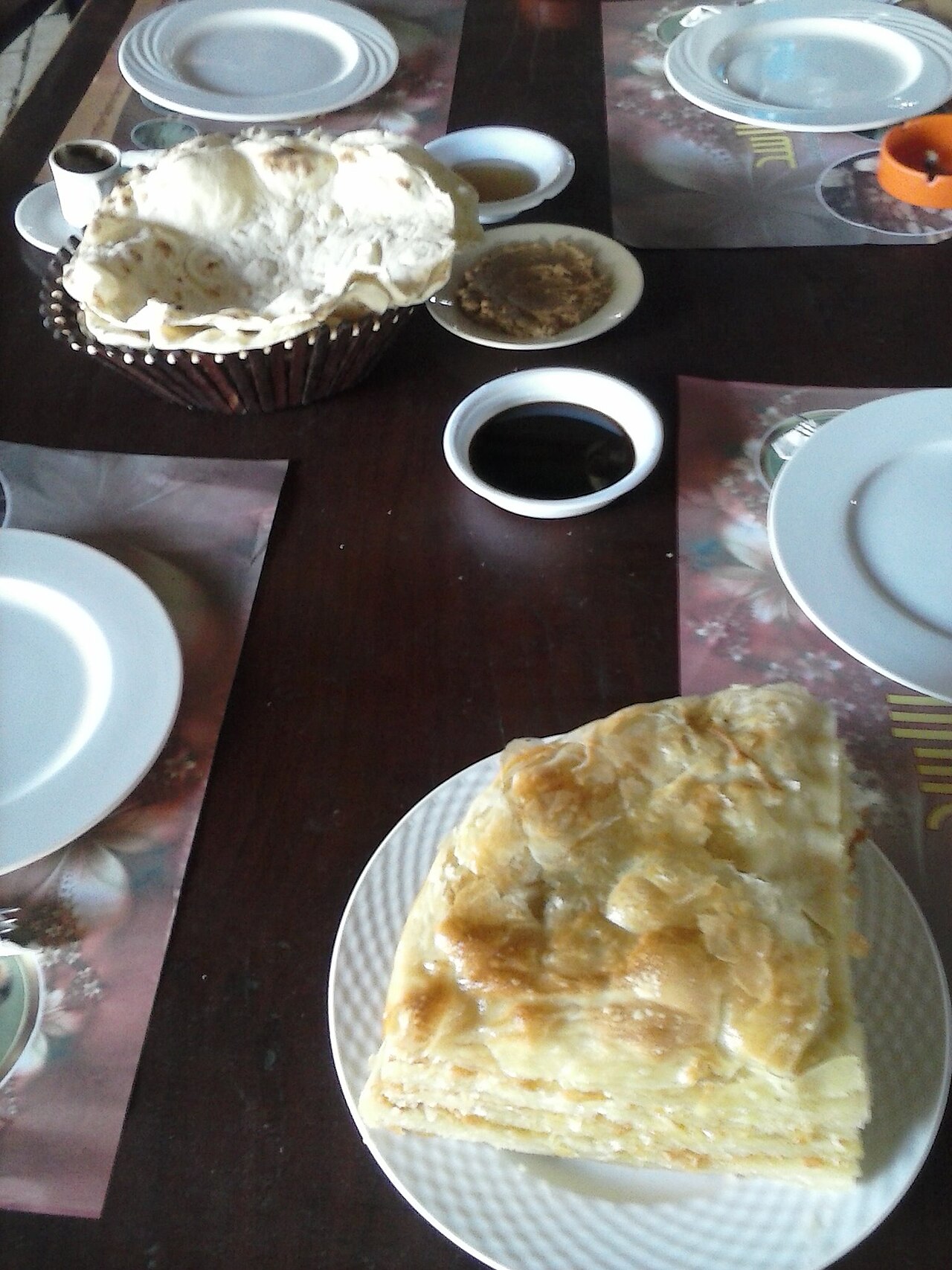
A Cairo breakfast may combine bread with bowls of beans and green-centered fritters. Koshari is recognizable by its layers of grains, legumes and browned onions, while molokhiya arrives as a green, finely textured soup.
The easily missed detail
UNESCO’s 2025 recognition of koshari concerns its communal culture as well as its ingredients. The nomination identifies restaurants and street carts, family preparation, and gatherings as parts of the tradition. Koshari also provides an easy point of comparison between different Cairo neighborhoods because a substantial portion of the dish is assembled from the same staple components.
A practical rhythm
Breakfast — Ful counter: Order ful, taameya and baladi bread to compare two fava-bean preparations.
Lunch — Koshari specialist: Try the combination of pasta, rice, lentils, chickpeas, onions and sauce.
Dinner — Egyptian kitchen: Choose molokhiya with an accompaniment or order hawawshi.
What could complicate the plan
Traditional koshari generally contains wheat pasta, and hawawshi contains meat and bread. Molokhiya can be cooked with meat stock even when the most visible ingredient is leafy greens. Ful and taameya are made from fava beans, which the U.S. Centers for Disease Control and Prevention identifies as a possible trigger of acute hemolytic anemia in people with G6PD deficiency.
What to do next
connects the city’s principal cultural sites with potential meal stops. explains which months make extended walks between Cairo’s historic districts more comfortable.
Sources
- Experience Egypt, Egyptian Food Favorites — ful, taameya, koshari, molokhiya and other traditional foods.
- UNESCO Intangible Cultural Heritage, Koshary — 2025 inscription, ingredients and social practices.
- U.S. Centers for Disease Control and Prevention, Laboratory Testing — G6PD deficiency and fava-bean exposure.