Cambodia country guide Food and drink
What local dishes should I try in Cambodia, and where should I look for them?
The short answer
Try fish amok, nom banh chok, bai sach chrouk and dishes seasoned with Kampot pepper, exploring markets and local restaurants in Siem Reap, Phnom Penh and the southern provinces.
The answer, with local context
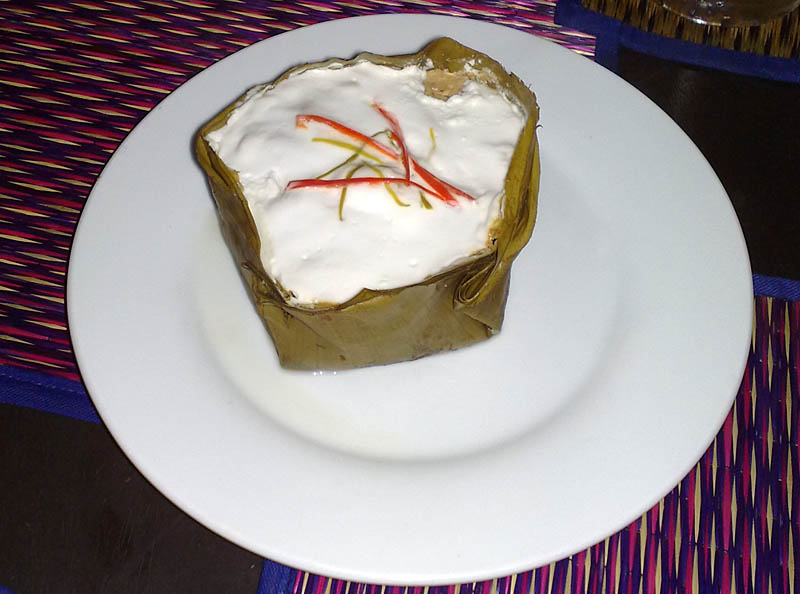
Cambodian cooking frequently uses rice, freshwater fish, herbs, coconut milk and aromatic spice pastes. That reliance on freshwater fish is structural rather than stylistic: FAO's Cambodia office describes fish as the main source of protein in Cambodian diets and names the Tonle Sap and the Mekong as the principal inland fishing waters, with fisheries making up about 25 percent of agricultural sector output. The same office records that only about 8 percent of rice production is irrigated, which ties the staple grain to the same seasonal water cycle. One familiar preparation is fish amok, a seasoned fish dish typically associated with a coconut-based mixture and steamed cooking. Individual restaurant versions differ in consistency, presentation and ingredients.
Nom banh chok is a rice-noodle dish commonly served with a fish-based curry sauce and fresh vegetables. It is especially associated with breakfast and morning food stalls.
Bai sach chrouk consists of pork served with rice, often accompanied by pickled vegetables and soup. The dish is widely available through morning eateries.
Kroeung is an important Cambodian aromatic paste, commonly made using ingredients such as lemongrass, galangal, turmeric and other herbs. Different recipes employ different combinations.
Along the southern coast, Kampot pepper carries a formal protected name. Commission Implementing Regulation (EU) 2016/222 of 5 February 2016 entered Mrech Kampot, also styled Poivre de Kampot, in the European Union register of protected designations as a protected geographical indication in the spices class, on an application made by Cambodia. The pepper appears in seafood and stir-fried dishes, particularly around Kampot and Kep.
Cambodia's food heritage also includes fermented fish preparations such as prahok, which provides a strong savory flavor in many traditional recipes.
Phnom Penh offers a broad range of street-food and restaurant options. Siem Reap provides opportunities to sample northern Cambodian food, while the south offers seafood and pepper-based dishes.
Picture the place
Fish amok may be presented in a folded banana-leaf container, while nom banh chok combines pale rice noodles with herbs, vegetables and sauce. The appearance varies between home cooking and restaurants.
The easily missed detail
Amok is a cooking style rather than a guaranteed ingredient list. Restaurant versions may contain fish, chicken or vegetarian substitutes, so the menu description matters.
A practical rhythm
Breakfast: Try bai sach chrouk or nom banh chok.
Lunch: Explore a local restaurant serving Khmer rice and vegetable dishes.
Dinner: Choose fish amok or a regional curry.
What could complicate the plan
Fermented fish, shrimp paste and fish sauce are common in Cambodian cuisine, including some vegetable preparations. Travelers with seafood allergies or vegetarian requirements should clarify ingredients.
What to do next
connects Cambodia's regional cultural and food experiences into an itinerary that avoids unnecessary travel.
Sources
- UNESCO Cambodia — cultural and geographical reference.
- FAO, Cambodia at a glance — fish as the main protein source, the Tonle Sap and Mekong inland fisheries, the fisheries share of agricultural sector output and the irrigated share of rice production.
- European Commission, Implementing Regulation (EU) 2016/222 — registration of Mrech Kampot / Poivre de Kampot as a protected geographical indication in the spices class, 5 February 2016.