Cartagena / Colombia Food and drink
Where should I eat in Cartagena, and which local food or drink is worth trying?
The short answer
Book Celele in Getsemaní — No. 5 in Latin America's 50 Best Restaurants 2025 and No. 48 in the world — then eat the city at street level: arepa de huevo from a frying cart, posta cartagenera with coconut rice, and a Kola Román, the soda Cartagena has made since 1865.
The answer, with local context
Cartagena's kitchen is Caribbean-Colombian, a different country from the Andean cooking of the interior: seafood, coconut, plantain and tropical fruit, layered from Indigenous, African, Spanish and Arab traditions — a combination strong enough that National Geographic named Cartagena and Barranquilla among the world's best food destinations for 2026. Colombia has no Michelin guide, so the benchmark is Latin America's 50 Best, and its summit here is Celele, on Getsemaní's Calle del Espíritu Santo. Chef Jaime Rodríguez built the restaurant out of Proyecto Caribe Lab, a years-long research project cataloguing the coast's forgotten ingredients and techniques; the fermentation-driven tasting menu that resulted placed No. 5 in Latin America in 2025 — the highest of any Colombian restaurant — and No. 48 on the World's 50 Best list.
The classics are a liturgy of coconut and plantain. Arroz con coco, rice cooked down with caramelised coconut, accompanies everything; posta cartagenera is beef slow-braised in a dark, sweet panela glaze; cazuela de mariscos brings the catch in a coconut broth; pescado frito is a whole snapper, fried entire, with patacones. Cartagena's ceviche takes local liberties — coconut, or a tomato twist. The street level is better still. The arepa de huevo — a corn patty fried, split, filled with a whole egg and fried again until the yolk sets inside its golden shell — is the city's portable breakfast, done properly at counters like Donde Magola in San Diego; its home town of Luruaco, an hour inland, holds a festival in its honour. Carimañolas, yuca fritters stuffed with meat or cheese, run it close.
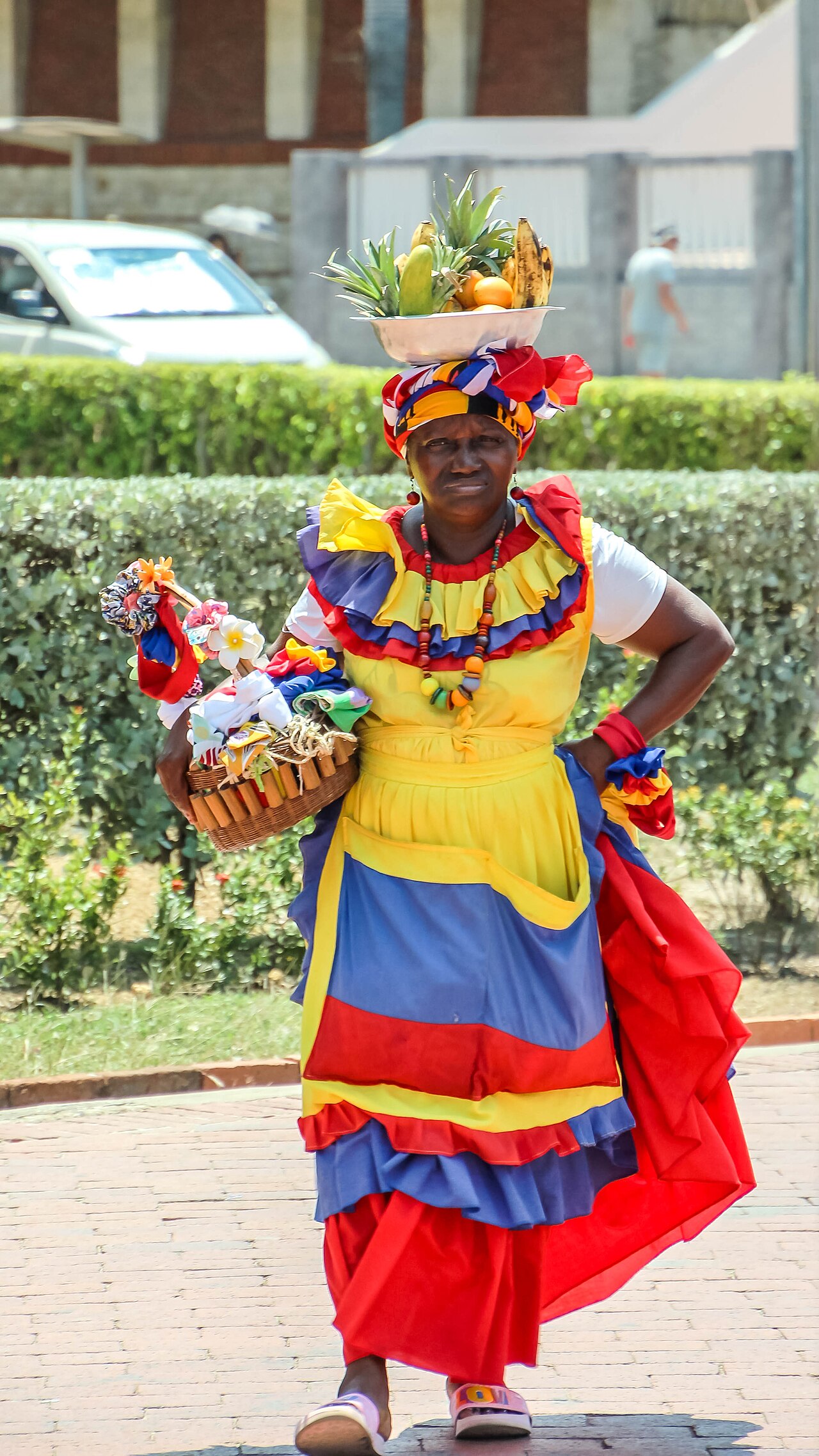
The city's sweet and bottled signatures finish the education. Under the arcades by the Clock Tower, the Portal de los Dulces sells cocadas, panelitas and enyucado, the yuca-and-coconut cake, from stalls that have traded there for generations. The palenqueras — women from San Basilio de Palenque, the first town in the Americas founded by Africans who freed themselves, whose cultural space is UNESCO-listed — sell cut fruit from the bowls on their heads; buy the fruit, and agree a price before photographs. To drink: limonada de coco everywhere, and Kola Román, the crimson soda a Cartagena family firm has produced since 1865, made to stand beside fried food. After dinner, Getsemaní's Alquímico — a fixture of the World's 50 Best Bars — pours cocktails built on sugarcane viche and lulo across three floors of a colonial mansion, while Candé in the Centro pairs a traditional cartagenero menu with live dance every night.
Picture the place
At a frying cart in San Diego the oil never rests: the cook presses a corn arepa flat, slips it into the heat until it puffs, opens it like a pocket, cracks in an egg, seals it and sends it back to blister — and hands you the finished arepa de huevo in a twist of paper, too hot to hold and too good to wait for.
The easily missed detail
Order lionfish if you see it. The pez león is an invasive predator devastating Caribbean reefs, and Colombia's national parks service has spent years urging the country's chefs to put it on menus — Cartagena's kitchens obliged, and the fish is delicate, white and excellent. It is the rare menu item that is simultaneously the catch of the day and a conservation measure.
A practical rhythm
- Morning — Breakfast is fried and early: arepa de huevo and carimañolas from a cart or a San Diego counter, with a corozo juice, before the heat makes frying heroic.
- Midday — The costeño lunch is the day's main event — a cazuela de mariscos or fried snapper with coconut rice in a family dining room, then fruit from a palenquera for dessert.
- Evening — Split the evening in two: Candé or a Centro classic early, or Celele's tasting menu as the whole night — and Alquímico's rooftop whenever the night refuses to end.
What could complicate the plan
Celele books out weeks ahead in the dry season, and the famous rooms inside the walls price for the cruise-and-wedding city; Getsemaní's smaller kitchens are the value play and close earlier than visitors expect. Street food has one rule that matters: eat where the oil is busy and the queue is local — the arepa cart with a line is the city's real restaurant guide. And Cartagena's heat forgives no heavy lunch before a fortress climb; the cazuela and San Felipe belong on different halves of the day, as the timing answer in this group makes clear.
What to do next
Reserve Celele when you book the flights, plan one market-and-street-food morning in Getsemaní and San Diego, and keep a lunch free for the fried snapper — it is the dish the whole coast is judged by.
Sources
- Latin America's 50 Best Restaurants — Celele: No. 5 in 2025, the highest-ranked Colombian restaurant, and No. 48 in The World's 50 Best 2025; Colombia has no Michelin coverage
- National Geographic — Cartagena and Barranquilla named among the world's best food destinations for 2026
- UNESCO — the Cultural Space of Palenque de San Basilio on the Intangible Cultural Heritage list, the palenqueras' home community
- Parques Nacionales Naturales de Colombia — the lionfish control programme promoting pez león on Caribbean menus