Catania / Italy Things to do
What are the most worthwhile things to do in Catania on a first visit?
The short answer
Go up Etna by cable car from Rifugio Sapienza, walk the Pescheria fish market at dawn, cross the Piazza Duomo to the elephant fountain, and tour the Benedictine monastery — volcano, market, baroque and monastery are Catania's four elements.
The answer, with local context
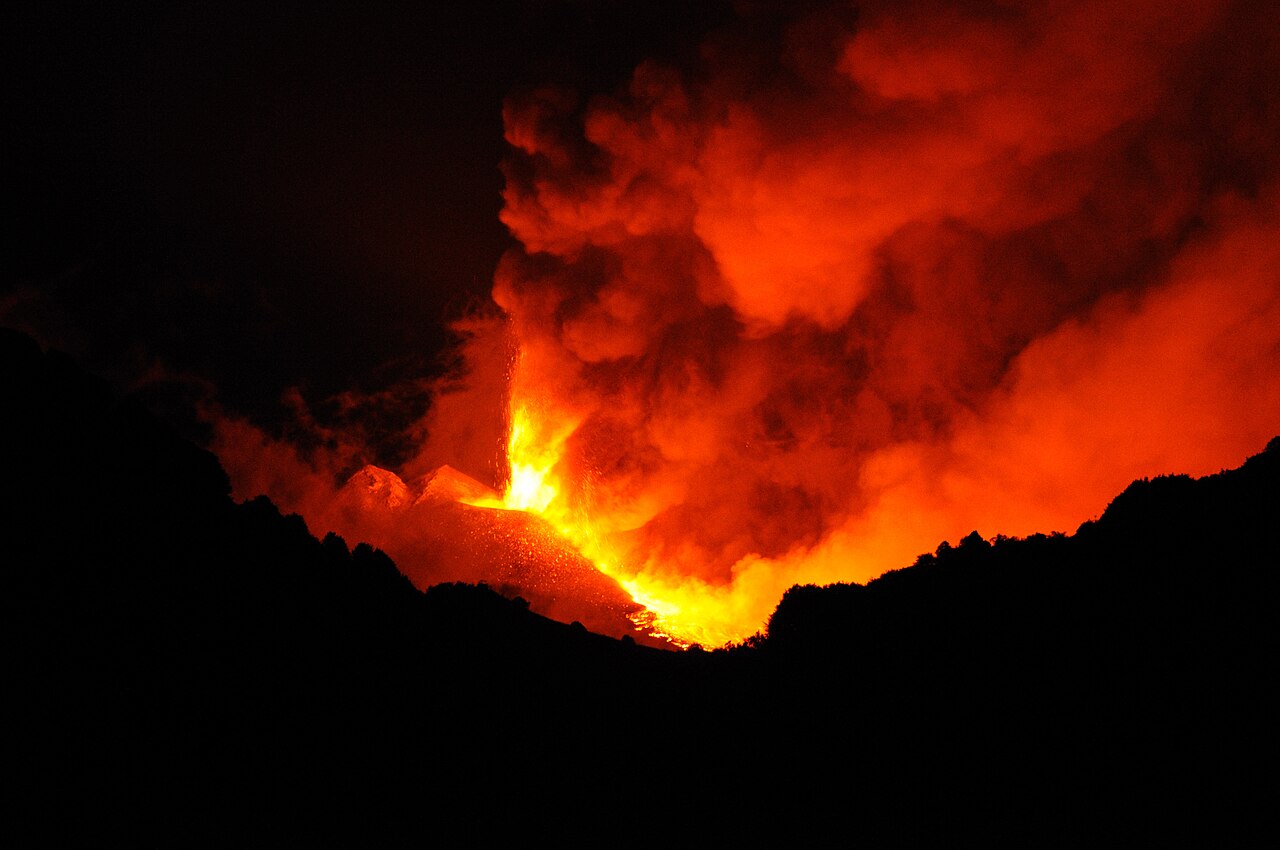
Etna comes first because Catania is Etna's city: the Via Etnea, the main street, is aimed at the summit like a gunsight, and the mountain — now measured at about 11,165 feet (3,403 m) at the Voragine rim by INGV's 2024 survey, a height that changes with its eruptions — is Europe's most active volcano, with a documented eruption record of some 2,700 years that earned its UNESCO inscription in 2013. The standard ascent runs from the south: drive or take the AST bus up through Nicolosi to Rifugio Sapienza (6,266 ft / 1,910 m), walk the roadside Silvestri craters of 1892 for free, ride the Funivia dell'Etna cable car (roughly €50 for the round trip) to 8,200 feet (2,500 m), and continue by 4×4 bus with volcanological guides to about 9,580 feet (2,920 m). Under current rules the zone above 8,200 feet is entered only with licensed alpine or volcanological guides, and the crater rims close when INGV raises the alert — the mountain's mood, published in the Osservatorio Etneo's bulletins, is part of the exhibit. Go on the first clear morning of the trip.
Back at sea level, do the market before the monuments. La Pescheria, the fish market behind the Duomo in place since the 19th century, runs Monday to Saturday mornings in a roar under its umbrellas: swordfish heads with their bills, tubs of sea urchins, octopus, neon-red gambero rosso, and the Amenano river — which flows through the lava under the city — surfacing at the fountain beside it. Steps away, the Piazza Duomo holds the city's symbol, u Liotru: a lava-stone elephant of Roman-era workmanship carrying an Egyptian obelisk, assembled into a fountain by Vaccarini in 1736, facing a cathedral rebuilt after the 1693 earthquake on Norman foundations raised by Roger I in 1078–1094. Under the piazza's streets runs the Roman Theatre (lava-built, with its orchestra still flooded by the Amenano), and a few blocks east the vast amphitheatre of Piazza Stesicoro shows one exposed slice of a 16,000-seat arena mostly still under the modern city.
Then take the baroque at walking pace. Via dei Crociferi, the showpiece street of the post-1693 rebuild, strings church after church — San Benedetto under its bridge-arch, San Giuliano, San Francesco Borgia — and ends near the Monastero dei Benedettini di San Nicolò l'Arena, one of Europe's largest monasteries, a lava-and-limestone city within the city that now houses the University of Catania's humanities faculties and takes visitors through cloisters, a Roman house under the floor, and the monks' vast kitchens. The medieval counterpoint is Castello Ursino (1239–1250), Frederick II's castle, which stood on a sea cliff until the 1669 eruption's lava filled the sea around it and left it inland — the city's single most eloquent geology lesson, now its civic museum. End in the Villa Bellini gardens at dusk, named for the opera composer Vincenzo Bellini, Catania's other famous son (born here in 1801).
Picture the place
From the cable car's top station the world goes monochrome: black cinder fields ribbed with old flows, the Silvestri cones below like two dropped scoops of ash, and through the gaps the Ionian Sea shining silver at the edge of the lava.
The easily missed detail
Catania is built out of its volcano in a second, quieter way: the baroque palazzi alternate bands of black lava stone and white Syracuse limestone — a striped, chessboard architecture unique to the Etna cities — and the pavement under your feet on Via Etnea is lava too. Look at the kerbs and thresholds: the 1669 and 1693 flows are not under the city, they are the city, planed smooth by three centuries of feet.
A practical rhythm
- Etna on the first clear morning — The single AST bus leaves Catania around 8:15 a.m.; drivers should be at Rifugio Sapienza by 9 for the cable car's quietest hour
- Pescheria before monuments — The market peaks by 9 a.m. and fades by noon; pair it with the Duomo and the Roman Theatre next door
- Crociferi in the late light — The baroque street and the Benedictine monastery tours run best in the afternoon, ending at Villa Bellini
What could complicate the plan
Etna is a live volcano with a temper: eruptive phases close the summit zone and ash can close Catania's airport, as it did during the August 2026 eruption (flight restrictions ran August 7–18, 2026). The cable car also stops in high wind even in calm volcanic weather — always check INGV and the Funivia's morning status before driving up. In the city, the Pescheria rests on Sundays, and church and museum hours contract at lunch in the southern pattern.
What to do next
Check INGV's bulletin the night before your Etna day, book the monastery tour, and give the Pescheria your first morning, not your last.
Sources
- INGV Osservatorio Etneo — Etna's summit measured at 3,403 m (Voragine, September 2024 survey); activity bulletins and alert levels governing access
- UNESCO World Heritage Centre — Mount Etna, inscribed 2013, for a documented eruptive record of about 2,700 years; Late Baroque Towns of the Val di Noto (2002)
- Funivia dell'Etna — the cable car from Rifugio Sapienza (1,910 m) to 2,500 m, with guided 4x4 continuation to about 2,920 m
- Comune di Catania / Museo Civico Castello Ursino — the castle (1239–1250) and the 1669 lava flow that left it inland
- Università di Catania — the Monastero dei Benedettini, among Europe's largest monasteries, now the university's humanities seat