Catania / Italy Food and drink
What should I order for a traditional dinner in Catania?
The short answer
Open with seafood antipasti, take Pasta alla Norma as the primo, swordfish or cuttlefish-ink pasta next, and close with granita or a cannolo — with an Etna Rosso on the table from start to finish.
The answer, with local context
A traditional Catanian dinner is built in the Italian order, and the city fills each course with its own signatures. Begin with the sea, because the Pescheria dictates the menu: insalata di polpo (octopus salad with celery, olives and lemon), impepata di cozze (mussels in their peppery liquor), and — in the cold months — ricci, sea urchins eaten raw with bread, the Ionian's winter luxury. A landward alternative is caponata, the sweet-and-sour eggplant stew that anchors Sicilian antipasti. The wines of Etna arrive with the first plates: a Carricante white with the seafood, and keep an Etna Rosso (Nerello Mascalese) in reserve for what follows.
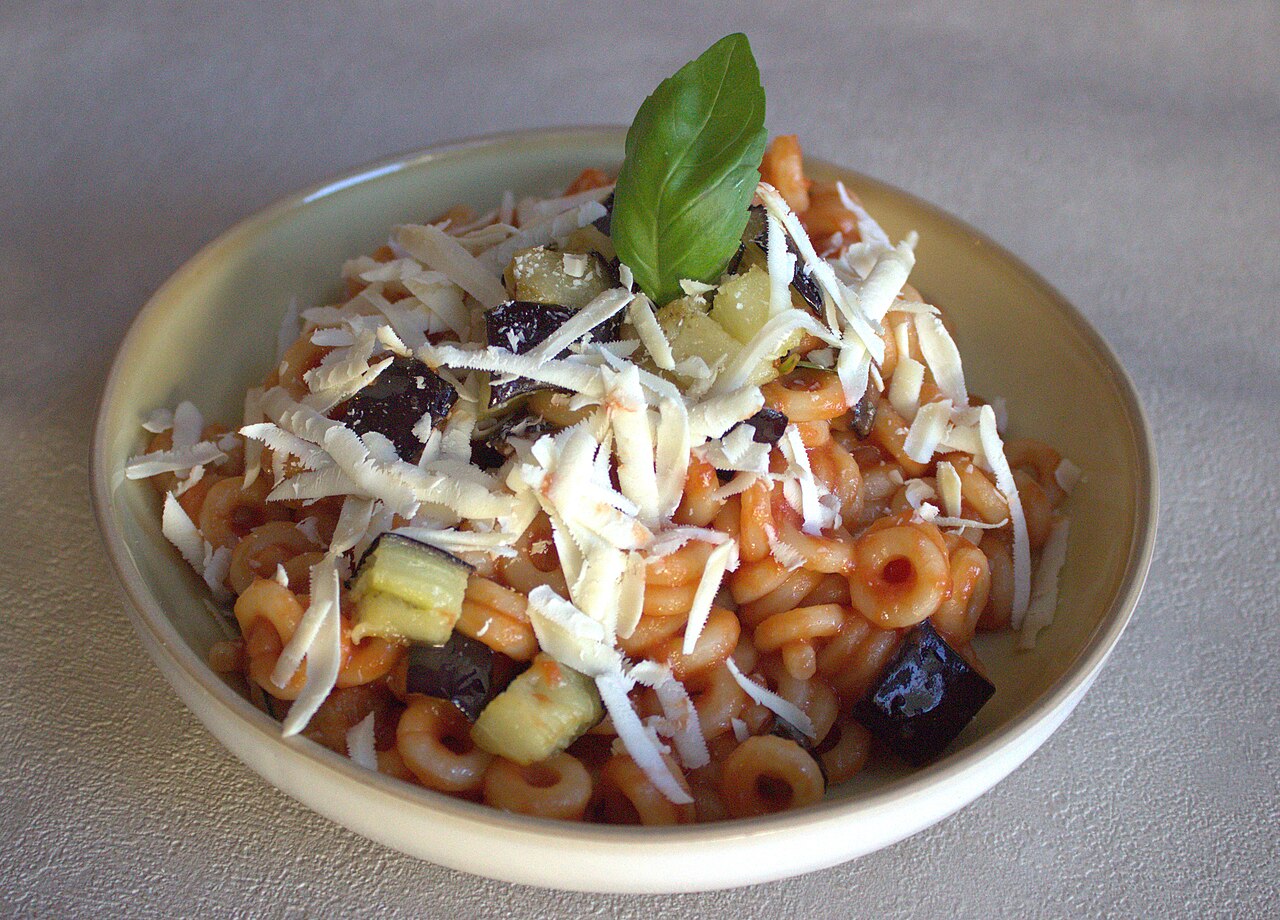
The primo is the city's edible anthem: Pasta alla Norma — short pasta (rigatoni or maccheroni) in tomato sauce with fried eggplant, basil and a snow of salted ricotta (ricotta salata) grated over the top. The dish carries the name of Norma, the 1831 opera by Catania's own Vincenzo Bellini — legend credits the playwright Nino Martoglio with tasting it and declaring it a masterpiece worthy of the name — and no Catanian kitchen argues with it. The darker alternative, equally local, is pasta al nero di seppia, spaghetti blackened with cuttlefish ink, rich and marine. Choose one as your primo; a half-portion ("mezza porzione") of the other is a legitimate negotiation in most trattorie.
The secondo returns to the fish market's flagship: pesce spada — swordfish, caught in the Strait and sold by the head in the Pescheria — grilled simply with salmoriglio (the lemon-oregano emulsion) or rolled as involtini alla catanese, stuffed with breadcrumbs, pine nuts, raisins and orange zest. It is also the most tightly regulated thing on the menu: under ICCAT's Mediterranean recovery plan a swordfish under 100 cm lower-jaw fork length — roughly 11.4 kg round weight — may not be caught, kept, landed, sold or displayed, and the fleets keep a three-month annual closure, either 1 January to 31 March or 1 October to 30 November plus one month between 15 February and 31 March. There are stretches of the year, in other words, when the slab's swordfish was landed somewhere other than the Strait. The proud local exception is meat: on Via Plebiscito the dinner of tradition is carne di cavallo, a grilled horse steak or meatballs with a squeeze of lemon. Finish sweet but light: a granita (mulberry or almond) does dessert's work in Catania even at dinner, a cannolo siciliano — ricotta-filled, made to order so the shell stays crisp — is the pastry answer, and in February the table adds minne di Sant'Agata. Close with a glass of amaro or a sip of Etna's other pour, and dinner has run the city's full circuit: market, opera, volcano.
Picture the place
A trattoria table off Via Crociferi at 9 p.m.: the Norma arrives under its blizzard of ricotta salata, the eggplant glossy as lacquer, and the waiter is already describing the swordfish with the pride of a man introducing relatives.
The easily missed detail
Mind the ricotta: on a true Norma the cheese is ricotta salata — salted, aged, hard enough to grate into flakes — never mozzarella and never fresh ricotta, and Catanian cooks treat substitutions as a different dish wearing the name. The same precision applies to the eggplant, which must be fried (some say twice) until it silks rather than steams. If a menu outside Sicily offers you a baked, mozzarella-topped "Norma," you are reading a rumor of the dish, not the dish.
A practical rhythm
- Antipasto from the day's market — Ask what the Pescheria landed; the octopus and mussels follow the boats, not the printed menu
- One primo, properly — Norma as the main event rather than a sampler; pasta is a course here, not a side
- Etna on the table — Carricante with the seafood, Nerello Mascalese after; the DOC dates to 1968 and the wines are the mountain's
What could complicate the plan
Dinner in Catania starts late — kitchens fill from 8:30–9 p.m., and arriving at 7 finds you alone with the staff's own meal. Sea urchins are a winter food (roughly November to April, and regulated), and swordfish quality peaks in its spring–early-summer season, though it is sold year-round. On Sundays and feast days many family trattorie close or run a fixed celebratory menu; during the February feast, book the table with the hotel.
What to do next
Book a trattoria near Crociferi or the Pescheria for 9 p.m., order the Norma without discussion, and let the waiter choose between swordfish and involtini by the day's catch.
Sources
- Accademia Italiana della Cucina / Catania culinary tradition — Pasta alla Norma: tomato, fried eggplant, basil and grated ricotta salata, named for Bellini's Norma (1831)
- Vincenzo Bellini / Teatro Massimo Bellini, Catania — the composer (born Catania, 1801) whose opera names the dish
- La Pescheria — the swordfish and cuttlefish supply behind the pesce spada and nero di seppia courses
- Consorzio Tutela Vini Etna DOC — Etna DOC (1968): Carricante whites and Nerello Mascalese reds for the table
- ICCAT (International Commission for the Conservation of Atlantic Tunas), Recommendation 16-05 on Mediterranean swordfish — the 100 cm lower-jaw fork length and 11.4 kg minimum size and the three-month closed-season options