Cornwall / United Kingdom When to visit
When should I visit Cornwall, United Kingdom, for the best experience?
The short answer
Mid-September — the Atlantic is at its warmest of the year, the UK school holidays have handed the coast back, and you can still catch the last Minack Theatre evenings and the St Ives September Festival.
The answer, with local context
Cornwall splits into two climates, and September flatters both. The north coast — Bude, Newquay, St Ives, the mining cliffs of St Agnes — faces the Atlantic: this is the surf shore, wilder and windier, where the sea reaches its annual maximum (about 63°F / 17°C in September by Met Office sea-temperature averages, the warmest month after the whole summer's slow heating) and the surf schools still run full timetables into autumn. The south coast — Fowey, Mevagissey, the Roseland, Falmouth — is the sheltered "Cornish Riviera" of estuaries and gardens, and in September it keeps summer's warmth without summer's saturation. The far west (Penzance, Land's End, St Ives) holds the light artists colonized, and mid-September is when the St Ives September Festival, running since 1978, fills the town with two weeks of music and open studios.
The month is a shoulder with summer's equipment still switched on. The Minack Theatre's open-air season above Porthcurno runs roughly May to late September, so mid-month still buys a cliff-top evening performance. Gardens — the Eden Project near St Austell, the Lost Gardens of Heligan — show their late-season lushness without August queues. The South West Coast Path, which runs 300 miles of Cornwall's own coastline within its 630-mile length, walks best now: bracken turning amber, the heat gone off the climbs, and the waymarked pubs at day's end still serving outside.
August argues for itself with festivals (Boardmasters at Newquay, Falmouth Week) but it is the fortnight when Cornwall's lanes — built for carts, serving a county of under 600,000 residents — absorb the peak of the county's millions of annual visitors, and the honeypots (St Ives, Padstow, the Mount) become exercises in queuing. Late spring (May–June) is September's real rival: longer days, rhododendrons at Heligan, emptier beaches — but a colder sea. September's water warmth and festival residue take the verdict.
Picture the place
A mid-September evening at the Minack: gulls settling, the auditorium's granite rows holding the day's heat, and below the stage's cliff the Atlantic going copper — a theater with a horizon for a backdrop, for a few more nights before the season closes.
The easily missed detail
September is when Cornwall's two tides of people cross: the last summer families leave as the "second summer" crowd of walkers and surfers arrives — and the county's working life reasserts itself in the harbors. In Newlyn, Cornwall's biggest fishing port, the autumn hake and sardine seasons are in swing (Cornish sardines hold PGI status; Cornish hake carries MSC certification), so the fish on September menus is the year's most local. Order accordingly: this is the month the quayside restaurants cook what was landed that morning a hundred yards away.
A practical rhythm
- West in week one — St Ives for the festival and the Minack before its season ends; the far west books out first
- Path in sections — Walk the Coast Path in day sections between harbors (St Ives–Zennor, the Lizard, Fowey–Polperro) rather than one long trek now the evenings shorten
- Book the icons anyway — Eden Project entry and Tintagel still need advance tickets on September weekends
What could complicate the plan
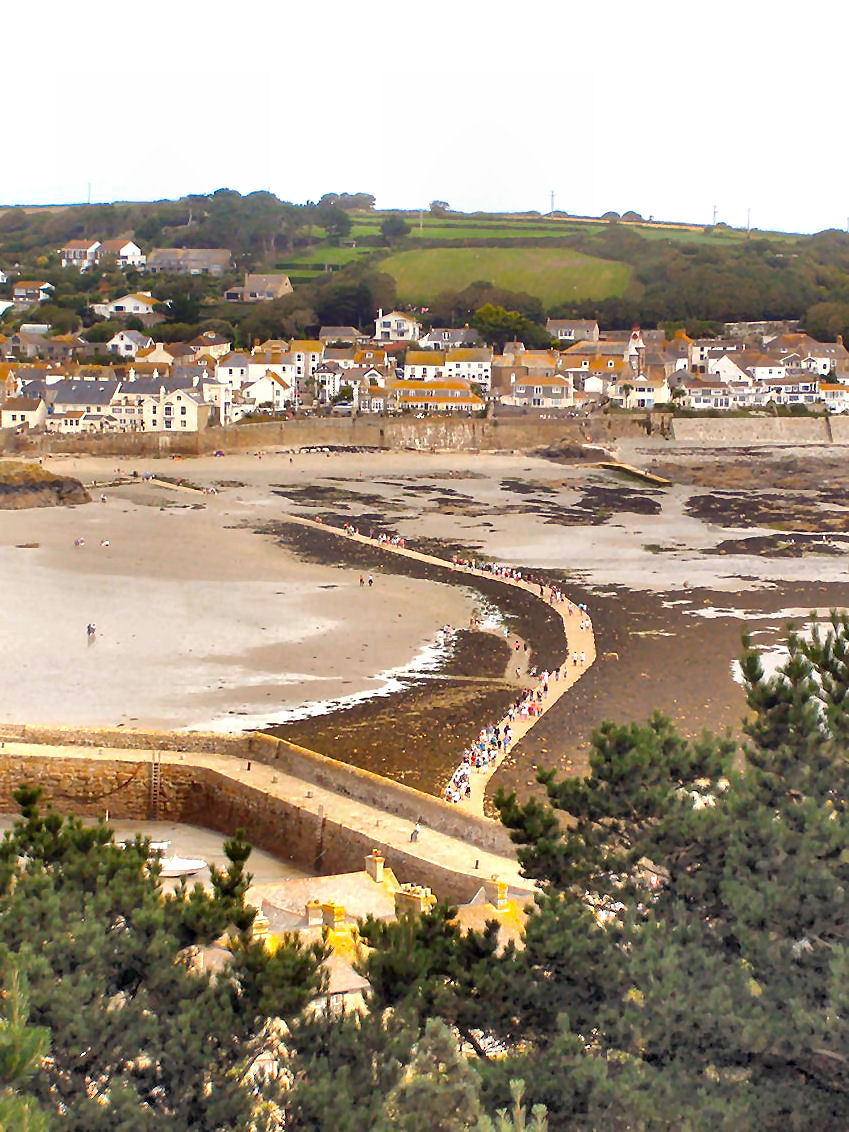
September's Atlantic can turn: the first equinoctial gales ground the Scilly boats and close the causeway walks at St Michael's Mount around storm tides. The Mount's causeway is walkable only for a window either side of low tide (about two to two and a half hours), and the island's ferry boats fill the gaps in fair weather — mistime it in any month and you queue or wait. Many seasonal cafés and the smaller attractions switch to winter hours from late September.
What to do next
Book the Minack and the St Ives festival dates first, split the stay between one north-coast and one south-coast base, and let the tide tables choose your Mount day.
Sources
- Met Office — Cornwall's climate: the mildest county regime in England, with sea temperatures peaking around September
- South West Coast Path Association — the 630-mile path, of which about 300 miles run along the Cornish coast
- Minack Theatre — the open-air season running roughly May to late September above Porthcurno
- St Ives September Festival — the two-week arts festival held since 1978
- European Commission / UK GI register — Cornish sardines (PGI) and the Cornish pasty (PGI, 2011)