Crete / Greece Things to do
What are the most worthwhile things to do in Crete on a first visit?
The short answer
Walk the Samaria Gorge to the sea, tour Knossos and its museum in Heraklion, wander Chania's Venetian harbor, and boat to Spinalonga — Crete's first visit runs west and center, with the east kept for the second trip you'll inevitably plan.
The answer, with local context
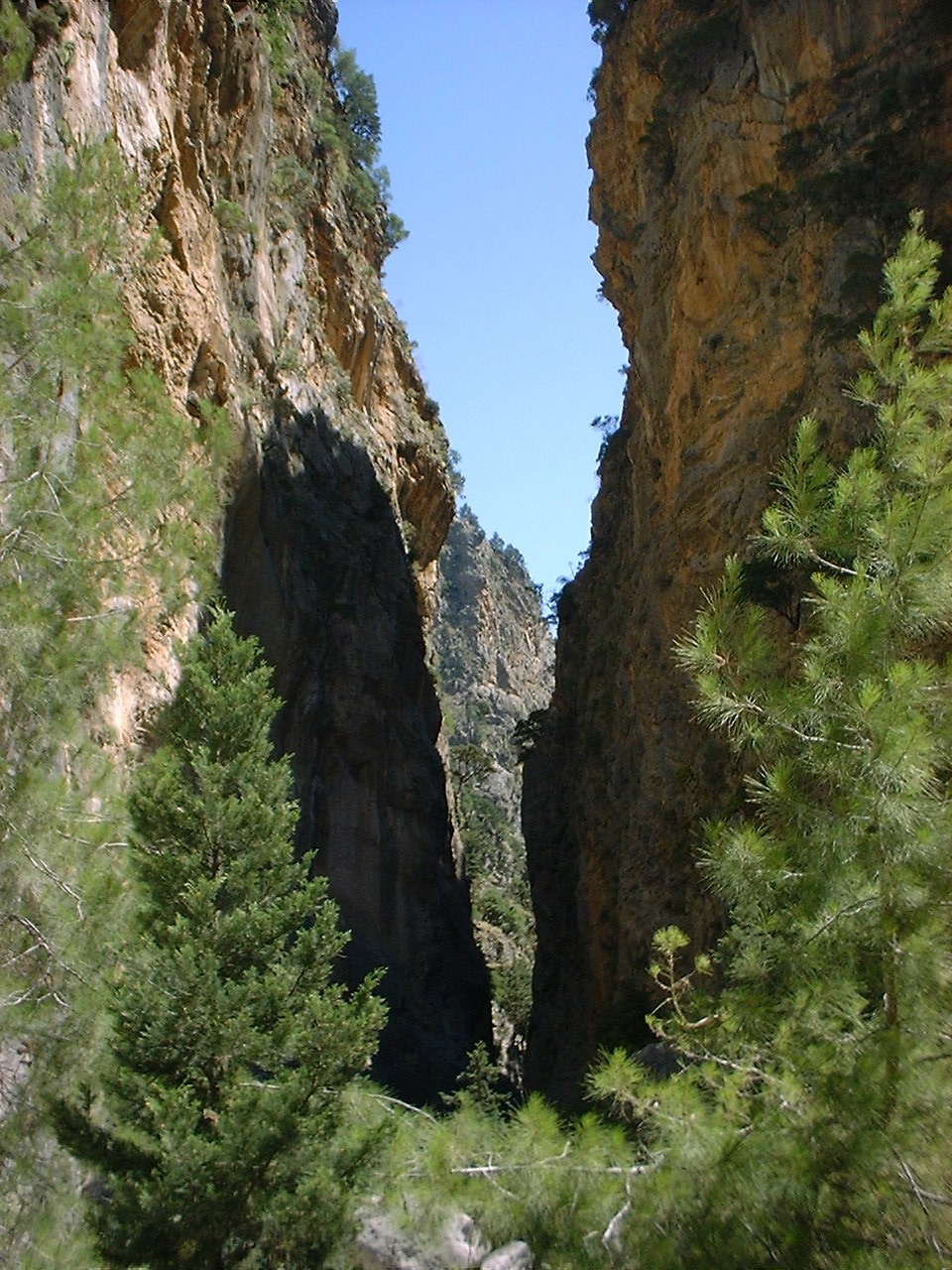
The gorge is the island's great walk and it is organized like a pilgrimage: buses climb from Chania to the trailhead at Xyloskalo on the Omalos plateau (4,100 ft / 1,250 m), and the path descends 10 miles (16 km) through the Samaria National Park (est. 1962) — past the abandoned village of Samaria, the kri-kri wild goats that are the park's emblem, and the Iron Gates, where the walls close to about 10 feet (3 m) apart and rise some 980 feet (300 m) — to the Libyan Sea at Agia Roumeli, from which ferries (there is no road) carry walkers to the buses at Sougia or Chora Sfakion. Entry is ticketed at the park gates (currently about €10), numbers are recorded in and out, and the whole traverse takes five to seven hours. It is a Biosphere Reserve landscape of cypress, pine and endemic flowers, and it sets the island's scale better than any drive.
The center holds the civilization. At Knossos, five kilometers south of Heraklion, Arthur Evans excavated and partly rebuilt Europe's first great palace complex — the seat of the Minoan civilization (c. 2800–1100 BC), its throne room, grand staircase and frescoed apartments sprawling over 22,000 m². In July 2025 UNESCO inscribed the six Minoan Palatial Centres — Knossos, Phaistos, Malia, Zakros, Zominthos and Kydonia — as a single World Heritage property (criteria ii, iii, iv and vi). Adult entry to Knossos is now €20 with timed slots in season; go at opening or late afternoon, and treat it as half of one exhibit: the other half is the Heraklion Archaeological Museum, the world's essential Minoan collection — the Phaistos Disc, the snake goddesses, the bull-leaping frescoes — displayed a walk from the harbor. The southern palace of Phaistos, an hour away over the Messara plain, gives the same civilization without reconstruction or crowds, staring at Mount Ida from its great court.
The west's city repays evenings. Chania's old town is a Venetian harbor town threaded with Ottoman and Jewish quarters: the great arsenali (shipyard halls), the 19th-century Egyptian lighthouse at the mole's end, the covered Agora market (1913, modeled on Marseille's) and the lanes of the Topanas and Splantzia quarters. The island fortress day belongs to Spinalonga, off the Gulf of Mirabello in the east: a Venetian sea-fortress (built 1579) that became one of Europe's last leper colonies, operating from 1903 until 1957 — reached by small boats from Plaka (ten minutes) or Elounda, and best walked early before the day boats. First-timers with a beach day should choose by coast: Elafonisi's pink-sand lagoon in the far southwest, or Balos, the turquoise lagoon under Gramvousa, reached by Kissamos boat or a rough dirt track — both are Natura 2000 landscapes whose fame now requires early starts.
Picture the place
At the Iron Gates the gorge becomes a corridor: cicadas loud in the pines above, the riverbed white stone underfoot, and the two cliffs so close that the sky is a bright stripe — then the path widens, and the Libyan Sea appears like a door opening.
The easily missed detail
Crete's mountains hide a second antiquity that sees a fraction of the palace crowds. At Zominthos — one of the six inscribed palatial centres — excavators found a vast Minoan ceremonial building at 3,900 feet (1,200 m) on the slopes of Psiloritis, the highest Minoan site known, near the Idaean Cave where myth says Zeus was raised. The mountain itself, at 8,058 feet (2,456 m) Crete's highest, is a UNESCO Global Geopark; a first visit with one spare day earns more wonder on Psiloritis than at another beach.
A practical rhythm
- Knossos at opening, museum after — The site at 8 a.m., lunch in Heraklion, the museum in the cool of the afternoon: the frescoes will explain what you walked
- Gorge as a full logistics day — Bus up from Chania, walk down, ferry out, bus back; carry water for the first half, refill at the springs as signed
- Spinalonga from Plaka — The short boat from Plaka beats the Elounda excursions; combine with lunch in Plaka's fish tavernas
What could complicate the plan
Samaria closes entirely in winter and on dangerous-weather days in season, and the return depends on the Agia Roumeli ferries — a missed boat means a night in the village (which locals assure you is no tragedy). Knossos runs timed entry in high season and its €20 ticket does not include the museum, which is separately ticketed. Balos's dirt road is excluded by many rental-car contracts, and the Kissamos boats are the safer logistics. Spinalonga sits on Greece's tentative heritage list with growing visitor pressure — mornings matter.
What to do next
Anchor the trip with three fixed points — Samaria day, Knossos + museum day, Spinalonga morning — and let Chania's evenings and one great beach fill the rest.
Sources
- UNESCO World Heritage Centre — Minoan Palatial Centres, inscribed July 2025 (property 1733; criteria ii, iii, iv, vi): Knossos, Phaistos, Malia, Zakros, Zominthos and Kydonia; Knossos's palace covers some 22,000 m²
- Greek Ministry of Culture (odysseus.culture.gr) — Knossos adult admission €20; the Heraklion Archaeological Museum and its Minoan collections
- Samaria National Park management (NECCA) — the 16 km traverse from Xyloskalo (1,250 m) to Agia Roumeli, the Iron Gates, and the park's 1962 establishment
- Greek National Tourism Organisation — Spinalonga: Venetian fortress of 1579, leper colony 1903–1957, reached by boat from Plaka and Elounda