Crete / Greece Food and drink
Where should I eat in Crete, and which local food or drink is worth trying?
The short answer
Dakos and lamb antikristo at a village taverna, a farm-table lunch in the mountains, and raki wherever it is offered — Crete is the island whose everyday cooking became the Mediterranean diet the world was told to copy.
The answer, with local context
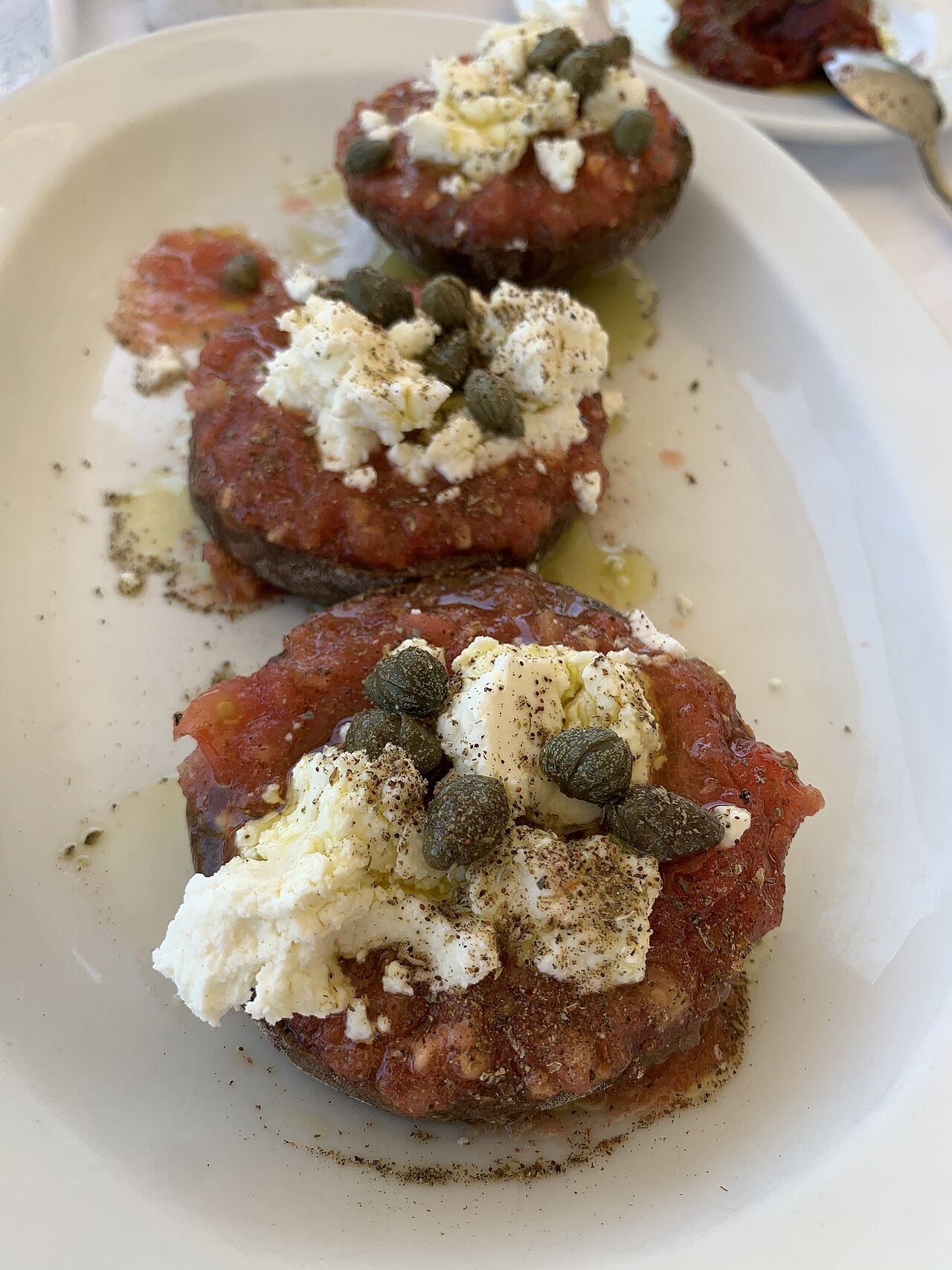
Cretan food begins with the oil: the island presses some of Greece's most prized extra-virgin olive oils — the PDO oils of Sitia in the east and Kolymvari in the west are the names to look for on bottles — and the traditional Cretan table, built on oil, wild greens, pulses, barley and little meat, is the one Ancel Keys's Seven Countries Study documented in the 1960s as the model "Mediterranean diet." Every taverna meal starts with its emblem: dakos, a barley rusk softened with grated tomato, crumbled myzithra cheese, oregano and a flood of oil — order it once and you will order it daily. The other starters to learn are chochlioi boubouristi (snails fried with rosemary and vinegar, a Chania specialty), kaltsounia (little pies of wild herbs or sweet myzithra, sometimes honeyed), and staka, the clotted, butter-rich cream served with eggs in the west.
Eat by landscape. On the west's mountain roads, the destination table is Ntounias in Drakona above Chania — a slow-food farm kitchen cooking its own produce in wood-fired pots, famous across Greece and reachable only by a winding half-hour climb. In Chania town, Tamam fills a converted 17th-century Ottoman hammam with a Crete-meets-the-east menu, and Chrisostomos, by the east bastion, is the locals' roast-meat address (its lamb and potatoes come from its own village supply). Heraklion's flagship is Peskesi, cooking a researched heritage menu from its own farm in a Venetian-era mansion in the old town. Everywhere, the dishes that mark the serious kitchen: gamopilafo, the Chania wedding rice cooked in meat broth and finished with stakovoutyro (the region's tangy butter); antikristo, lamb salted and roasted for hours facing — not over — an open fire in the Sfakia manner; and sfakianopites, the paper-thin cheese pies of the south, served hot with thyme honey.
The drink is made in every second village: raki — tsikoudia in the island's mouth — the clear grape-pomace spirit distilled after the harvest, whose late-autumn distillation season (the rakokazano) turns into rolling village festivals of cauldrons, music and first pours. Refusing a small glass is possible; refusing three is a social project. With food, order the island's own wines: the white Vidiano, rescued from near-extinction and now Crete's signature grape, and barrel-aged graviera cheese (Cretan Graviera holds PDO status) to finish, with a spoon sweet or honeyed kaltsounia. And graze the markets: Heraklion's and Chania's street markets (laiki) run on Saturdays and weekday mornings, mountains of greens, cheeses and oils sold by their makers — the island's larder with the lid off.
Picture the place
A mountain taverna at dusk: the dakos arrives glistening, a clay jug of house wine, the lamb turning slowly beside its fire rather than above it, and the owner's father materializing with two thumbnail glasses of raki "for the road being built."
The easily missed detail
Crete's most telling food statistic is on the label, not the menu: at Sitia, in the far east, the local cooperative's olive oil has won repeated international awards and the region's oil tradition runs back to Minoan presses — some of the island's olive trees are themselves monuments, with the great tree at Vouves (near Kolymvari) claimed to be 3,000 years old and still fruiting, its branches used to crown Olympic marathon winners in 2004. Order the house oil by origin; in Crete the taverna's own village oil is a credential, not a shortcut.
A practical rhythm
- One mountain lunch — Ntounias or a Psiloritis village taverna as the trip's centerpiece meal, at 2 p.m., with no evening plans that matter
- Taverna order of battle — Dakos and greens first, one roasted meat, house wine by the half-liter, raki accepted
- Market morning — A Saturday laiki for cheese, oil and honey to carry home; buy the oil in tins, the graviera vacuum-packed
What could complicate the plan
The famous farm kitchens are genuinely remote — Ntounias needs a car and daylight for the mountain road back, and it closes days without notice in the off-season. Village tavernas cook what the day gives them: gamopilafo and antikristo are often weekend or feast-day dishes, ordered by asking, not by menu. Raki hospitality is real and cumulative; drivers should negotiate the designated-driver exemption early and cheerfully.
What to do next
Book Peskesi or Chrisostomos for one city dinner, drive up to one mountain table for lunch, and let every other meal be the nearest village taverna with dakos on the board.
Sources
- Greek Ministry of Rural Development / EU PDO register — Sitia and Kolymvari olive oils and Cretan Graviera among Crete's protected designations
- Seven Countries Study (Keys) — the Cretan cohort whose traditional diet defined the Mediterranean diet model
- UNESCO Intangible Cultural Heritage — the Mediterranean diet, inscribed 2010 with Greece among the emblematic communities
- Visit Greece (GNTO) — tsikoudia/raki distillation season and the rakokazano festivals of late autumn