Crete / Greece When to visit
When should I visit Crete, Greece, for the best experience?
The short answer
Mid-May — the Samaria Gorge has just opened, the White Mountains still wear snow above wildflower trails, the sea is swimmable in the south, and the island has not yet filled for summer.
The answer, with local context
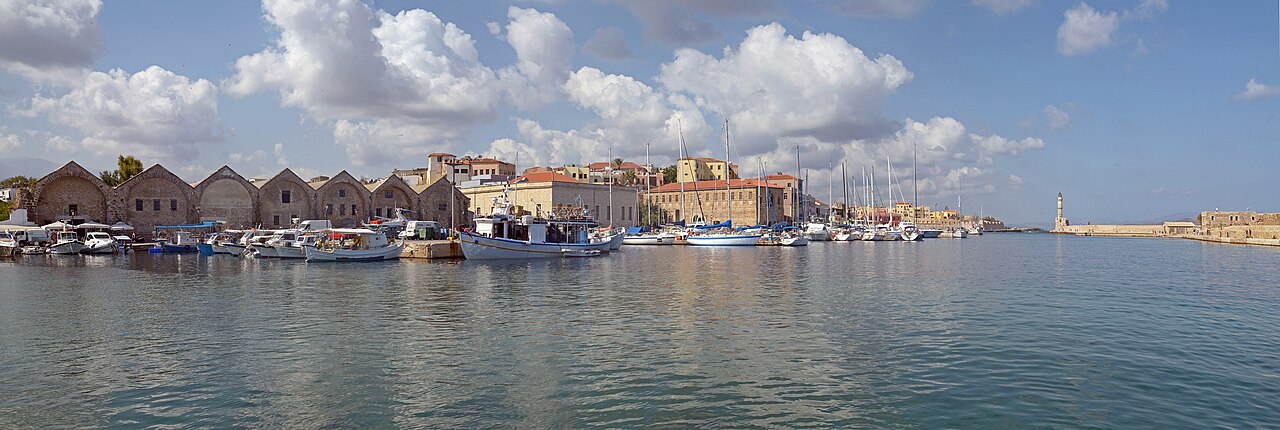
Crete is a country-sized island — Greece's largest, 8,336 km², running 160 miles east to west — and it runs on several seasonal clocks at once. Mid-May synchronizes them. Start in the west, in Chania prefecture: the Samaria Gorge, Greece's most famous walk, opens for the season around May 1 (weather permitting) and runs to mid-to-late October, and May is its finest month — the river still running in the bed, the cliffsides in flower, the 10-mile descent (16 km) walkable without August's furnace heat. The White Mountains (Lefka Ori) above still hold their snowfields into May, which gives Chania's Venetian harbor the island's signature spring backdrop: a warm seafront under white peaks.
The center and east follow a week behind. In Heraklion prefecture, May brings the archaeological season at its kindest — Knossos and the Heraklion Archaeological Museum before the cruise groups peak, temperatures near 77°F (25°C) rather than the 90s — and the island's agrarian spring is at table: artichokes, wild greens (horta), fresh myzithra and the first cherries. Rethymno, between the two, wears its Renaissance old town at its quietest. In the far east (Lasithi), the palm forest at Vai and the Gulf of Mirabello are warm and nearly empty; the exposed north coast's water is still refreshing in May (about 68°F / 20°C), while the sheltered south coast — the Libyan Sea shore of Matala, Plakias and Paleochora — swims a few degrees warmer and a month earlier.
July and August bring the full machine: the meltemi wind scouring the north coast, charter crowds at the big resorts, Samaria at 100°F (38°C) in its depths, and prices at their peak. September is May's only real rival — the sea reaches its warmest of the year (75°F-plus / 24°C) and the grape harvest starts — but the island is parched gold by then and the gorge's river is dry. May is Crete in green, with everything open and nobody in the way.
Picture the place
Chania harbor at 8 a.m. in May: fishing boats unloading under the Egyptian lighthouse, café chairs scraping out, and behind the Venetian rooftops the Lefka Ori standing white against a sky already promising 77 degrees.
The easily missed detail
May is when Crete's calendar of the land shows itself in ways summer visitors never see: this is the tail of the wildflower season on an island with around 1,700 plant species, some 10% found nowhere else on earth — the Akrotiri and Omalos plateaus are briefly alpine meadows. It is also the season of the year's great panigiria starting (village saints' feasts, beginning with St George's days in spring), when a village square, a whole roast lamb and raki appear in places no guidebook lists. Ask locally what is being celebrated this week.
A practical rhythm
- West to east — Chania and the gorge first (its season is youngest and the flowers freshest), then Rethymno, Heraklion, and the east as the sea warms
- Gorge early in the trip — Samaria can close day-to-day for weather even in season; schedule it first so a closure can be retried
- Swim south — Put beach days on the Libyan shore (Plakias, Matala, Paleochora) where May water is kindest
What could complicate the plan
Samaria's opening date is set by the park authorities each spring after inspection — in wet years it slips into mid-May, and heavy rain can close it on any given day. May's north-coast sea is bracing rather than warm, and the meltemi can preview itself on windy weeks. Some resort infrastructure (beach clubs, seasonal tavernas in the far east) opens fully only in June, though the cities and villages run year-round.
What to do next
Book the west first (Chania base, Samaria day by bus to Omalos and ferry back from Agia Roumeli), and keep the second half of the trip for the center and east.
Sources
- Samaria National Park / Natural Environment and Climate Change Agency (NECCA), Greece — the gorge's season, typically May to late October, and its 1962 national park designation
- Hellenic National Meteorological Service (EMY) — May in Crete: highs near 25°C; sea warming to about 20°C on the north coast, warmer in the south
- UNESCO Biosphere Reserves — the White Mountains and Samaria, designated a Biosphere Reserve in 1981
- Region of Crete — the island's four regional units (Chania, Rethymno, Heraklion, Lasithi) across 8,336 km²