Cusco / Peru When to visit
When should I visit Cusco, Peru, for the best experience?
The short answer
June — the driest month of Cusco's year by an enormous margin, and the month when Inti Raymi, the Corpus Christi season and the Qoyllur Rit'i pilgrimage all crowd into the same few weeks.
The answer, with local context
Cusco sits at 11,152 feet (3,399 m), and at that altitude the year divides simply: a dry season from May to October and a rainy season from November to April, with daytime highs that barely move — about 69°F (21°C) in the wettest month and the driest alike. What swings is the rain and the night. The airport weather station's averages put January, the wettest month, at 6.0 inches (153 mm) of rain spread over some 20 rainy days, with mild lows of 46°F (8°C). June inverts everything: 0.1 inches (3 mm) of rain on about one day, blazing high-altitude sun, and lows of 35°F (2°C), falling further in July, the year's coldest month, when dry-season nights touch freezing. June is therefore the month of maximum contrast — the clearest skies of the year bought with the coldest nights.
The festival calendar ratifies the weather. June is Cusco's jubilee month: Cusco Week runs June 18–24 and culminates on June 24 with Inti Raymi, the Festival of the Sun, staged in three acts at the Qorikancha temple, the Plaza de Armas and the esplanade of Sacsayhuamán above the city. Around it cluster the season's other great observances. Corpus Christi — declared Cultural Heritage of the Nation in 2004, and falling in late May or June by the Easter calendar — brings the images of fifteen saints and virgins in procession to the Cathedral. And in the days around Trinity Sunday, tens of thousands of pilgrims climb to the sanctuary of the Lord of Qoyllur Rit'i in the Sinakara valley, at some 15,400 feet (4,700 m), for the Snow Star pilgrimage that UNESCO inscribed on its Intangible Cultural Heritage list in 2011 — the largest Indigenous pilgrimage in the Andes, danced day and night under the glaciers of Ausangate.
Picture the place
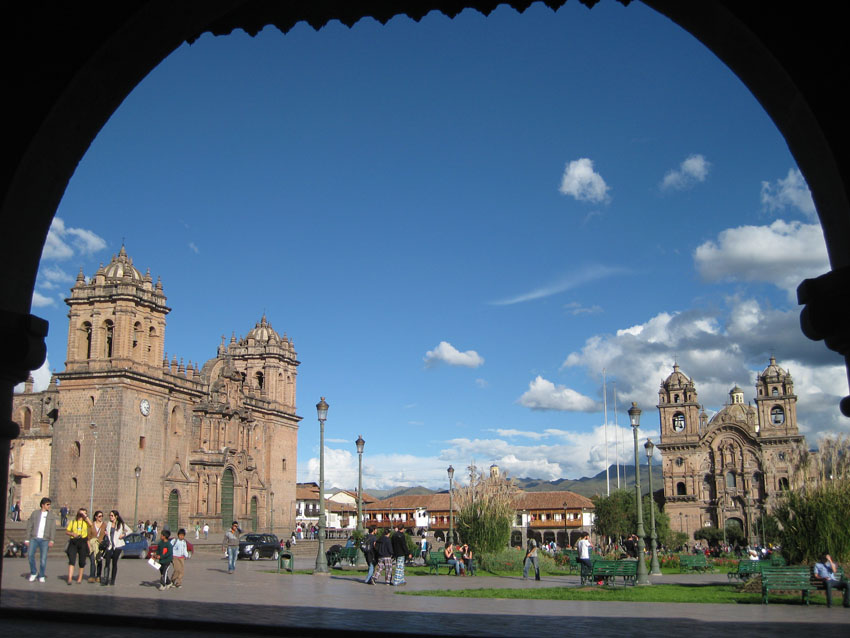
On a June morning the Plaza de Armas is rinsed clean by altitude light: the Cathedral and the Compañía church across the square, the arcades full of people in wool against a cold that the noon sun will entirely undo, and not a cloud anywhere in the enormous sky.
The easily missed detail
June's cold is a feature the brochures underplay: the same dry air that guarantees the views drops the temperature by more than 30°F (17°C) between noon and midnight, and the festival crowds are dressed for the night, not the day. Pack for the low of 35°F (2°C), not the high of 69°F (21°C) — Inti Raymi's main ceremony at Sacsayhuamán runs into the late afternoon on an exposed esplanade at 12,140 feet (3,700 m).
A practical rhythm
- Morning — Dry-season mornings are the city's reliable gold: archaeological sites and viewpoints before the wind, and any high excursion — Sacsayhuamán, the hills above San Blas — in the clear early hours.
- Midday — June midday is for the festival streets and the long lunch: the sun at 11,152 feet is fierce even in "winter," and the picanterías fill at one.
- Evening — Dress for a different season after dark: the processions, the Plaza's lights and a hot mate de coca in clothes you would wear in a northern November.
What could complicate the plan
June is also the peak of the peak: Inti Raymi week fills the city's hotels and the month's flights and trains, and anything with a fixed date — the festival seats at Sacsayhuamán above all — must be booked well ahead. The altitude is the other constant: at 11,152 feet, the first two days should be gentle whatever the month, and June's thin, dry air dehydrates faster than visitors expect. Travelers who trade June for September get the dry season's tail — warmer nights, thinner crowds, the first green still weeks away — and lose only the festivals; travelers who come in the rains get a green, empty city and must build every plan around the afternoon downpour.
What to do next
Fix the June dates around June 24, book the Inti Raymi seating and the Cusco hotels first, and give the city two slow days at the start for the altitude — the sights in the next answer reward the patience.
Sources
- SENAMHI / Cusco airport weather station averages — January the wettest month at 153 mm over about 20 rainy days; June at 3 mm on about one day, with highs near 69°F (21°C) and lows near 35°F (2°C); July the coldest month
- UNESCO Intangible Cultural Heritage — the pilgrimage to the sanctuary of the Lord of Qoyllur Rit'i, inscribed in 2011, held around Trinity Sunday at the Sinakara sanctuary
- Ministerio de Cultura (Peru) — Corpus Christi in Cusco, declared Cultural Heritage of the Nation in 2004; the June festival calendar and Inti Raymi on June 24