Cusco / Peru Food and drink
Where should I eat in Cusco, and which local food or drink is worth trying?
The short answer
Eat in the picanterías, drink in the chicherías, and time the city's great dish to its festival: chiri uchu at Corpus Christi, adobo for Sunday breakfast, cuy from a wood-fired oven, and chicha de jora wherever a red flag hangs over a doorway.
The answer, with local context
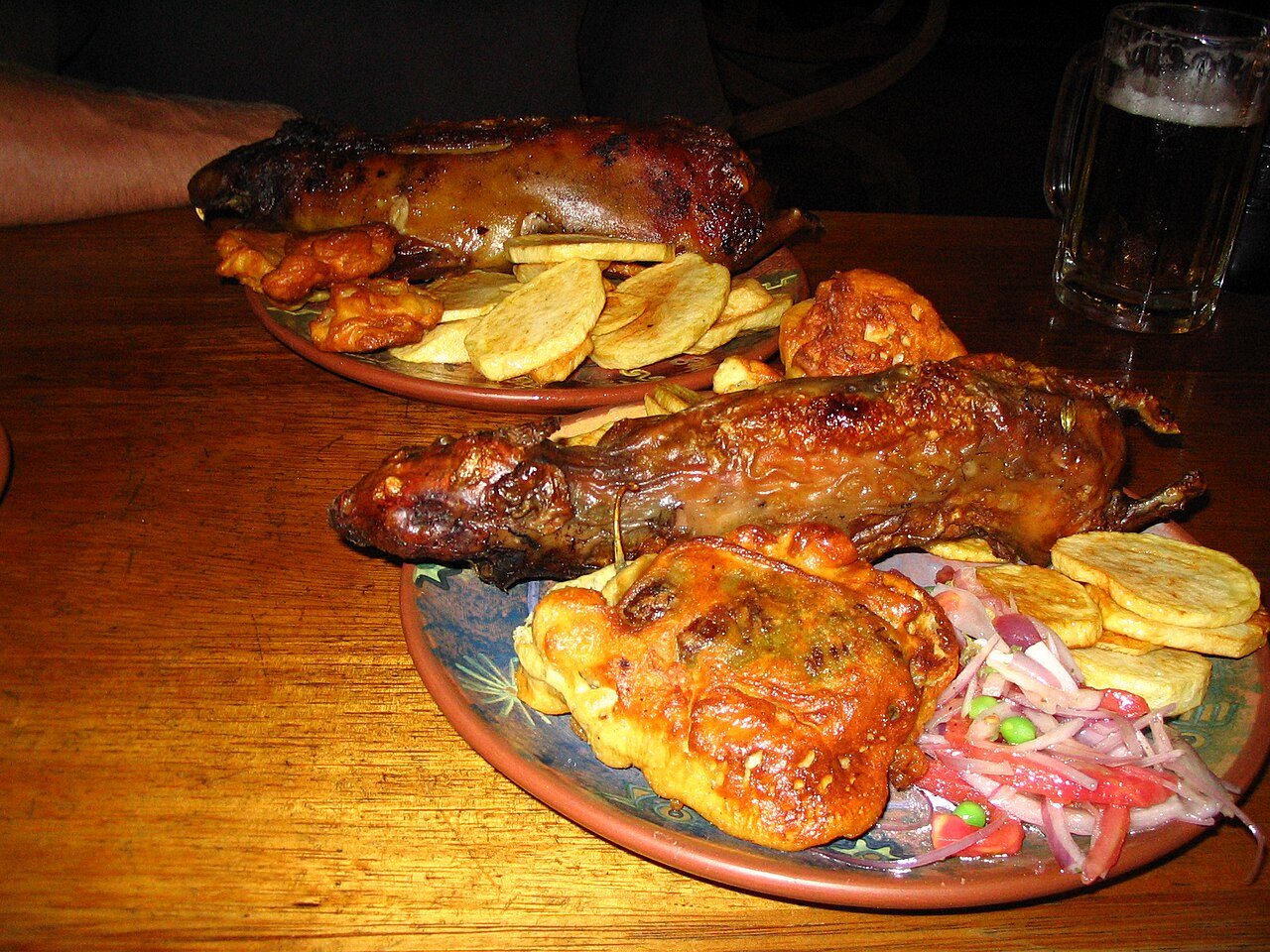
The chiri uchu is Cusco's edible census. Its name is Quechua for "cold chili," it is served cold — never heated — and it is the ceremonial dish of Corpus Christi, when stalls around the Plaza San Francisco build it to order: roasted cuy, boiled hen, charqui, chorizo and morcilla, fresh cheese, a corn tortilla, trout roe, rocoto, and cochayuyo, seaweed carried up from the coast as it has been since Inca times. Coast, highlands and jungle on one plate is precisely the point — the dish assembles the old empire's ecological floors. Outside June, the picantería — Cusco's traditional tavern, lunch-centered and unhurried — is where the city's cooking lives: chairo, the pre-Columbian farmers' soup built on chuño, potatoes freeze-dried by the Andean night frost; kapchi, a creamy stew of fava beans and potatoes that in the rainy season takes the wild mushrooms, setas, gathered from the eucalyptus groves; and pepián de cuy for those easing toward the guinea pig.
The cuy itself is a commitment worth making properly: marinated for twelve to twenty-four hours in ají panca, cumin, Maras salt and chicha de jora, then roasted in a wood-fired oven until the skin crisps. Sunday has its own institution — adobo cusqueño, pork marinated a day in chicha and ají panca and cooked overnight in clay pots, served as breakfast with the big, flat pan chuta of Oropesa, the bread town 19 miles (30 km) away; Cusqueños call the adobo levanta muertos, the raiser of the dead. The town of Saylla, on the city's edge, is the day-trip for chicharrón, pork confited slowly in its own fat and served with mote, the giant boiled corn. To drink, chicha de jora — germinated yellow corn, fermented to a gentle 2–3 percent — is older than the empire that drank it ceremonially, and its strawberry-blended descendant, the frutillada, uses the Sacred Valley's strawberries. A chichería announces itself without a signboard: a red or white plastic bag, or a bunch of flowers, hung over the door means the chicha inside is fresh.
Picture the place
In a picantería at Sunday midday the adobo arrives in a clay bowl still breathing steam — mahogany broth, a slab of pork, a rocoto floating — with a torn piece of Oropesa bread for the sauce, a glass of frutillada sweating beside it, and three generations of one family working through the same order at the next table.
The easily missed detail
The chichería's red flag is a freshness signal, not a logo: it goes up when a new batch of chicha has finished fermenting and comes down when the barrel runs dry, so the same doorway may be a chichería on Tuesday and an ordinary house on Friday. It is the oldest advertising system in the Andes, and it still outperforms the internet — ask locally which flags are up.
A practical rhythm
- Morning — Sunday is the fixed point: adobo for breakfast in a picantería or out in Saylla, with Oropesa bread, before the day's sightseeing — and on other mornings, the market's juice stalls and a caldo to start.
- Midday — The picantería lunch is the day's main meal: chairo or kapchi to open, pepián or chicharrón to follow, and a glass of chicha poured from the house barrel.
- Evening — Evenings are for the cuy dinner — ordered ahead at the better ovens, since the marinade alone takes a day — and a frutillada in San Blas to close.
What could complicate the plan
The calendar governs the menu: chiri uchu belongs to Corpus Christi and the June festivities, kapchi de setas to the rainy months when the mushrooms fruit, and a cuy ordered on impulse may arrive as a lesser, unmarinated version of itself. Altitude argues for sequencing too — the rich dishes, adobo and lechón and the cuy feast, sit better after two days of acclimatization than on the first night. And chicha is a living ferment served in working taverns: drink where the flag is fresh and the room is full, and treat the first glass as the experiment it is.
What to do next
Anchor a Sunday to the adobo, a June day to the chiri uchu stalls at Plaza San Francisco, and one evening to a cuy ordered the day before — and if the red flags are up on your street, follow them.
Sources
- Ministerio de Cultura (Peru) — Corpus Christi in Cusco and chiri uchu as its ceremonial dish: a cold plate of cuy, hen, charqui, cheese, corn, fish roe and cochayuyo seaweed
- PromPerú — the picantería tradition, Sunday adobo served with Oropesa bread, and the chicherías identified by a red flag or flowers over the door
- Municipalidad Provincial del Cusco — the June gastronomic programming of Cusco Week, listing kapchi de habas, timpu and pepián de cuy among the festival dishes