Dolomites / Italy Food and drink
Where should I eat in Dolomites, and which local food or drink is worth trying?
The short answer
Eat dumplings in a rifugio at 7,000 feet, speck and Schlutzkrapfen in a Val Gardena farmhouse inn, and one starred dinner in Cortina or Brunico — the Dolomites cook in two languages and both of them are worth learning.
The answer, with local context
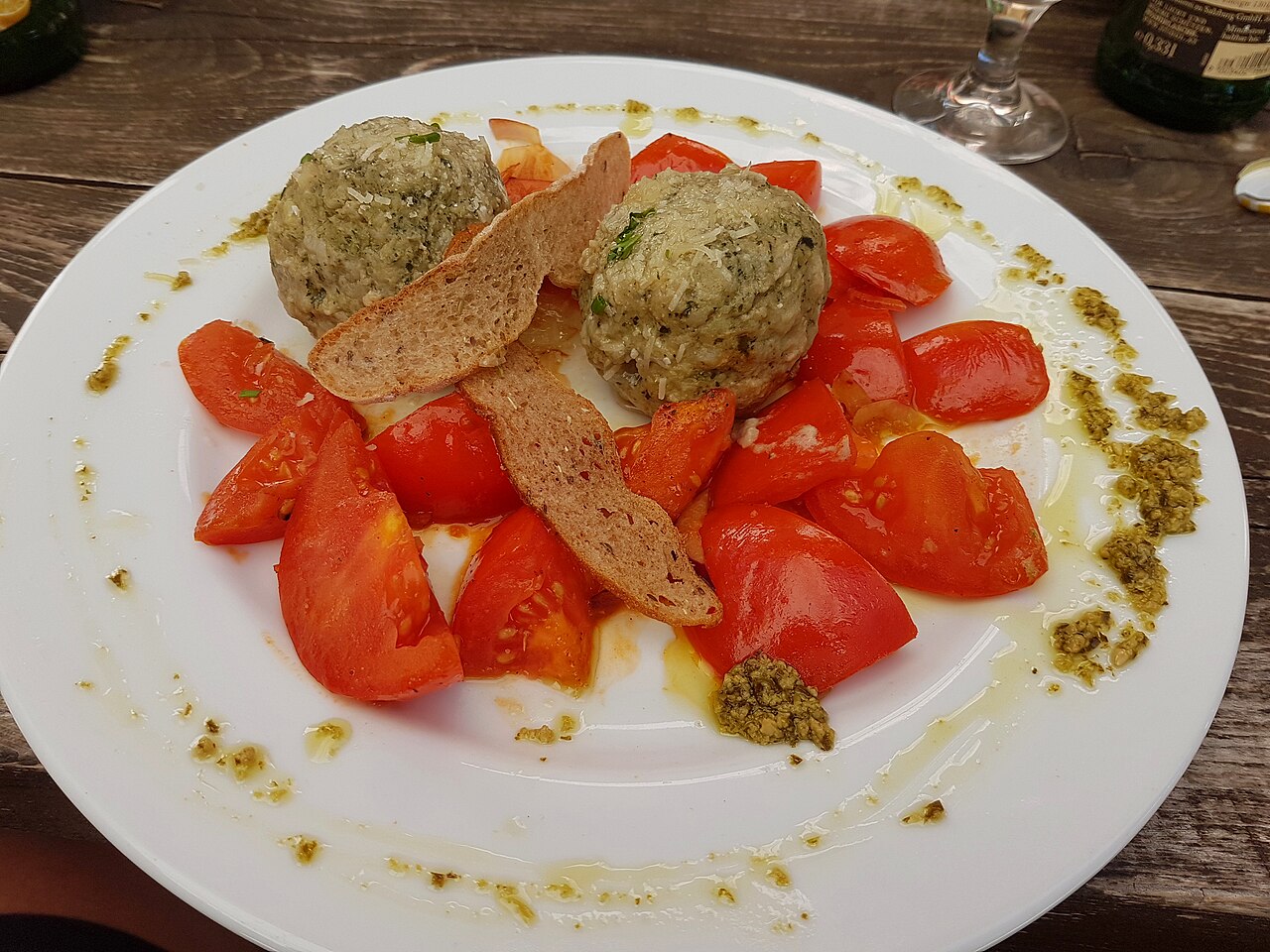
Altitude first: the rifugio is this range's great restaurant category, and lunch at a hut — reached by cable car or a morning's walk — is the Dolomites meal to design days around. The canon is Tyrolean-Ladin mountain cooking: canederli, the bread dumplings (in broth, or pressed flat with cheese as Pressknödel and fried), Schlutzkrapfen (half-moon ravioli of spinach and ricotta in brown butter), barley soup (Gerstensuppe), and speck platters — Südtiroler Speck holds EU protected status (PGI), its juniper-and-smoke curing a South Tyrolean signature. Huts with serious kitchens include Rifugio Averau above Passo Falzarego (famous for its pasta and its 360-degree terrace by the Cinque Torri) and Rifugio Scoiattoli facing them; around Cortina, Rifugio Vandelli guards the Sorapis trail. Hut rules are the authority here: lunch is first-come, kitchens wind down by mid-afternoon, dinner is for overnight guests, and the season runs with the lifts — roughly late June to late September for most high huts.
In the valleys, eat by language. The German-speaking north (Val Gardena, the Pusteria, the Isarco valley) does the full Tyrolean table — farmhouse inns (Gasthäuser) serving dumpling trios, roast pork, Graukäse (the pungent low-fat grey cheese, protected in its Aurina valley form) and apple strudel; the Isarco valley's farm taverns pour the region's white wines (Kerner, Sylvaner, and the Gewürztraminer named for Tramin village) under the autumn Törggelen tradition of new wine and chestnuts. The Ladin valleys keep their own dishes: turtres (fried spinach-and-ricotta pockets) and cajinci in Val Badia, where the farm-to-table movement is organized as a network of working mas (farms) opening their stube dining rooms. Italian-speaking Cortina and the Cadore tilt Venetian: casunziei all'ampezzana, Cortina's beetroot ravioli in poppy-seed butter — the single dish to order in town — and polenta everywhere.
The summit of the summit cuisine is real: Norbert Niederkofler's Atelier Moessmer in Brunico holds three Michelin stars for a rigorously local "Cook the Mountain" philosophy, his AlpiNN restaurant sits at 7,464 feet (2,275 m) atop Kronplatz above Brunico, and Cortina answers with SanBrite (one star, a farm "agri-cucina" in a former sawmill) — book all of them well ahead. For the glass: South Tyrol's reds are Lagrein (dark, plummy) and the lighter Schiava/Vernatsch; the south-facing slopes below the range also produce the Prosecco hills' wines within the Veneto plain. And for the pocket: a slice of speck and a roll of Graukäse from a valley deli makes the best trail lunch in the Alps.
Picture the place
Rifugio Averau at one o'clock: hikers' boots in a row by the door, a slate of speck and dumplings steaming in the mountain sun, and the Cinque Torri standing over the terrace like diners who arrived early and turned to stone.
The easily missed detail
The Dolomites' finest drink is altitude in a glass: the sparkling wines of Trento DOC and the Isarco valley's whites are grown on some of Europe's steepest, highest vineyards, but the true local pour at a hut is the Holunder- or Zirbenschnaps — elderflower or Swiss-pine schnapps, often homemade under license by the hut keeper. A thimble after dumplings is not a digestivo here; it is a greeting. Accept the first, pace the second: the descent is also part of the meal.
A practical rhythm
- Hut lunch as the day's anchor — Walk up in the morning, lunch at the rifugio by 1, descend by lift; never plan a hut dinner without a hut bed
- One valley, one language — A Tyrolean dumpling night in Gardena, a Ladin farm dinner in Badia, casunziei in Cortina: the range in three sittings
- Book the stars with the beds — Atelier Moessmer, AlpiNN and SanBrite need reservations as early as the hotels
What could complicate the plan
Rifugio kitchens keep mountain hours: lunch service ends early (many by 2:30–3 p.m.), high huts close for the season from mid-to-late September, and card payments fail where the signal does — carry cash at altitude. The Törggelen farm taverns of the Isarco open only in the autumn season (roughly October to mid-November) and book out with locals. In Cortina, the post-Olympic glow of 2026 keeps top tables scarce at weekends.
What to do next
Reserve the splurge dinner first, then plan two hut lunches (Averau and a Gardena hut) and one farmhouse night — the Dolomites menu reads itself once those are fixed.
Sources
- Michelin Guide Italy — Atelier Moessmer Norbert Niederkofler (Brunico, three stars); SanBrite (Cortina d'Ampezzo, one star); AlpiNN at Kronplatz (2,275 m)
- EU GI register — Südtiroler Speck (PGI) and the protected South Tyrolean cheeses and apples of the region
- Club Alpino Italiano / rifugio networks — hut seasons (late June to late September), lunch service and half-board booking conventions
- Consorzio Vini Alto Adige — the Lagrein, Schiava and Valle Isarco white varieties (Kerner, Sylvaner, Gewürztraminer)