Douro Valley / Portugal Things to do
What are the most worthwhile things to do in Douro Valley on a first visit?
The short answer
Ride the Douro line train to Pinhão, tour and taste at two contrasting quintas, take the river by rabelo boat, and spend half a day at the Museu do Douro in Régua — then drive east to the Côa Valley's Stone Age engravings.
The answer, with local context
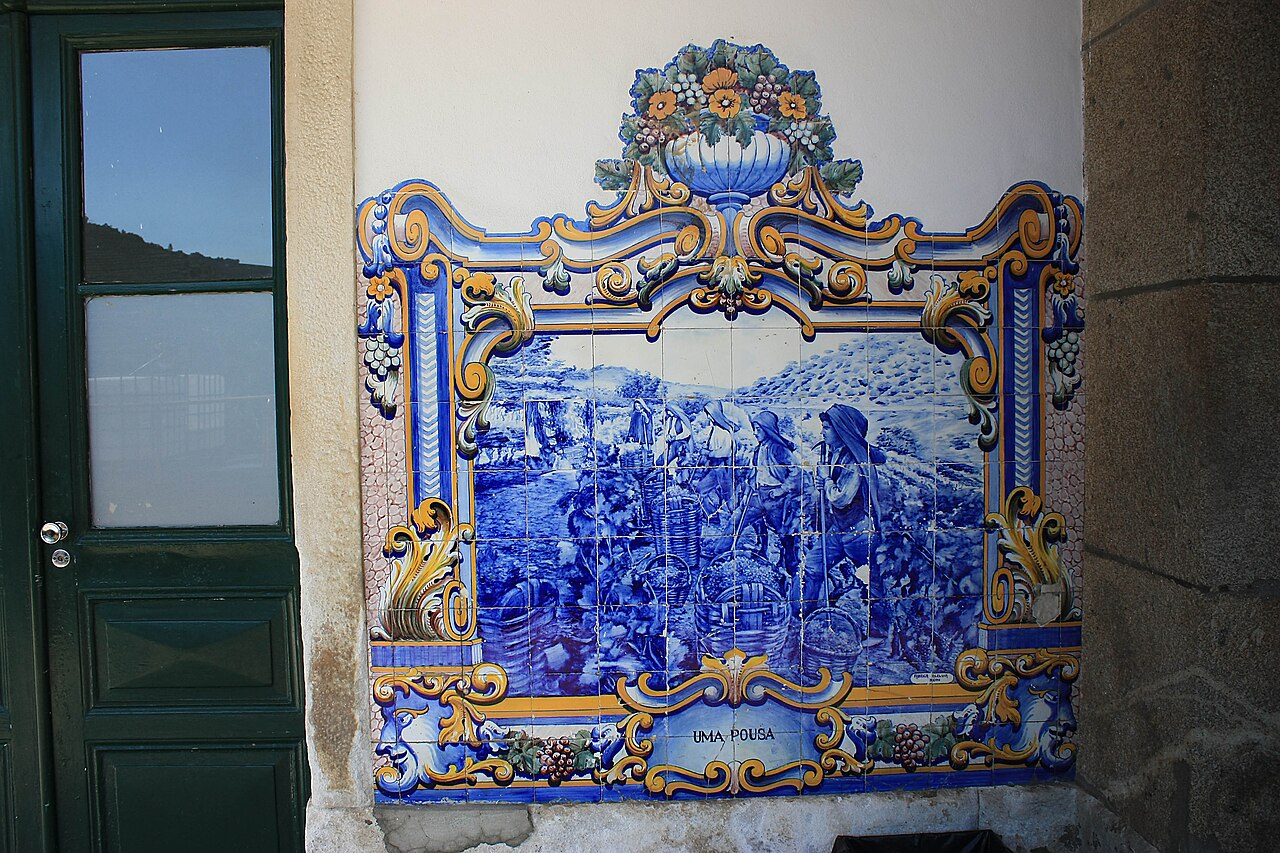
The arrival is the first attraction. The Linha do Douro from Porto's São Bento station runs 109 miles (175 km) to Pocinho, completed in 1887 along ledges cut into the schist, and its finest stretch — Régua to Pinhão to Tua — plays the river bend by bend with the terraces stacked above. Get off at Pinhão and look at the station before anything else: its façades carry 24 azulejo panels (1937) depicting the harvest cycle panel by panel — picking, treading, the rabelo boats loading barrels — the valley's whole economy in blue tile. Pinhão is the Cima Corgo's capital in miniature, a working wine village wrapped by famous names.
Choose your quintas as a pair of opposites, because the Douro's story is scale. For the great-house pole: Quinta do Bomfim, Dow's home farm a walk from Pinhão station, with its old lagares, barrel halls and vintage room; or Sandeman's Quinta do Seixo, a modern temple of glass and schist above the south bank, its terrace the valley's grandstand. For the family pole: Quinta de la Rosa, a working estate on Pinhão's edge that still foot-treads its top ports in granite lagares and runs a small hotel and restaurant, or Quinta das Carvalhas across the river from Régua, whose vineyard bus tour climbs the mountain of vines to a 19th-century round house at the top. Every serious visit should include one lagar, one barrel cellar and one terrace tasting — and in harvest season, ask about treading: a handful of estates still crush their finest grapes by foot because the human tread, unlike a press, does not crack the bitter pips.
The river itself is the third act: rabelo boats, the flat-bottomed cargo boats that once ran the barrels down to Vila Nova de Gaia (and capsized on the old rapids at Cachão da Valeira), now carry passengers on one- and two-hour cruises from Pinhão's quay, and the full-day cruise ships run Porto to Régua and back. On land, the Museu do Douro in Peso da Régua (opened 2008 in the old Casa da Companhia warehouse) gives the region its memory: the 1756 demarcation marked with granite pillars, the phylloxera catastrophe that reached the valley in 1863 (its abandoned terraces — mortórios — still scar the hills), and the benefit system that grades every plot of vines by letter. Drive the N222 between Régua and Pinhão, often called one of the world's great short drives, and stop at the São Leonardo da Galafura viewpoint, where the river makes its most famous S-bend portrait. With a spare day, go east beyond the wine: the Côa Valley Archaeological Park holds thousands of Paleolithic rock engravings — horses, aurochs, ibex pecked into schist panels in the open air over 20,000-plus years — a UNESCO site since 1998 and one of Europe's great prehistoric revelations, visitable by 4x4 tour from the Côa Museum at Vila Nova de Foz Côa.
Picture the place
From the Seixo terrace at golden hour the whole grammar of the valley reads at once: socalcos like contour lines made solid, the river a green mirror, a rabelo sliding through its own reflection, and Pinhão's white houses small as dice in the bend.
The easily missed detail
The valley has a second ancient landscape hiding in its east end: the Côa engravings survived because a dam project of the 1990s was stopped to save them — the archaeologists' slogan "engravings can't swim" won one of conservation's famous victories, and the site was inscribed just two years after the dam was cancelled. It is an hour from Pinhão and receives a sliver of the valley's visitors; the guided visits go at dawn and late afternoon in summer because the carvings read by raking light — book the early slot and the aurochs step out of the rock.
A practical rhythm
- Train up, boat midday, quinta late — São Bento to Pinhão in the morning, a one-hour rabelo at noon, the Seixo or Bomfim tour in the long afternoon light
- Régua for the museum — Give the Museu do Douro the first morning if you slept in Régua; context before consumption
- East on the last day — The drive to Foz Côa and the engravings pairs with a Douro Superior quinta and a night under the darkest skies in the valley
What could complicate the plan
Quinta visits are by appointment or fixed tour times, and the famous addresses fill in harvest and on summer weekends — book the two anchors before arrival. The train is scenic but slow and its last returns to Porto leave early by dinner standards; most visitors sleep in the valley rather than day-trip, and they are right. Summer heat closes the midday terraces to sense (100°F-plus afternoons are for cellars and boats), and the Côa tours are capped and weather-dependent.
What to do next
Book the train, then two quintas (one great house, one family estate), then the museum and one rabelo hour — the skeleton of a perfect first Douro.
Sources
- UNESCO World Heritage Centre — Alto Douro Wine Region (2001); the Prehistoric Rock Art Sites in the Côa Valley, inscribed 1998
- Museu do Douro, Peso da Régua — opened 2008 in the Casa da Companhia: the 1756 demarcation, phylloxera (from 1863) and the mortório terraces
- Infraestruturas de Portugal / CP — the Linha do Douro (completed 1887) and Pinhão station's 24 azulejo panels of 1937
- IVDP — the Cima Corgo quintas and the lagar tradition of foot-treading for top ports