Douro Valley / Portugal When to visit
When should I visit Douro Valley, Portugal, for the best experience?
The short answer
Late September into early October, for the vindima — the harvest fills the terraces with picking teams, the granite lagares are trodden again at the great quintas, and the valley's summer furnace has eased.
The answer, with local context
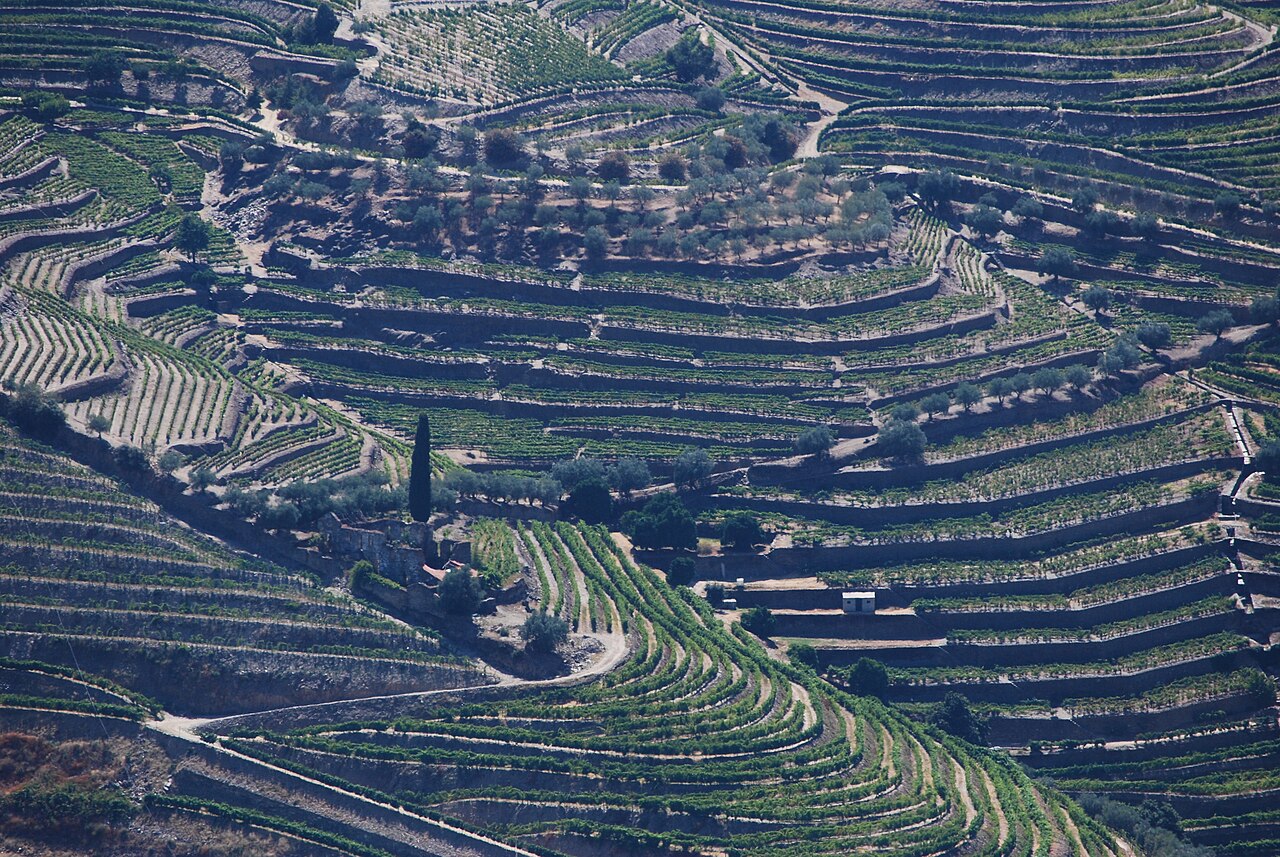
Read the valley in its three acts. The Baixo Corgo, around Peso da Régua in the west, is the greenest and gentlest; the Cima Corgo, centered on Pinhão, is the historic heart where the most famous quintas crowd the bends; the Douro Superior, running east toward the Spanish border, is the driest, hottest, wildest reach, all schist and almond groves. Harvest binds them: the vindima rolls downhill and downstream over roughly four weeks from mid-September, beginning in the Superior and finishing in the Baixo Corgo, so a late-September trip can chase it from the border to Régua. This is the one season when the Douro is a workplace you can join rather than a landscape you merely view — picking teams on the socalcos (the narrow, schist-walled pre-phylloxera terraces, many holding just one or two rows of vines), tractors queuing at the adega doors, and at estates that still tread, the evening lagar dances, when the cut of the grapes begins with lines of treaders in the granite tanks.
The weather argument is equally strong, because this valley's summer is a warning label: the Alto Douro, sealed from Atlantic air by the Marão mountains, bakes at 104°F (40°C) on July afternoons in the valley bottom, when the terraces shimmer and the only sensible vehicle is a boat. By late September the furnace is turned down to 79–82°F (26–28°C) in the Cima Corgo, the nights cool, the river keeps its summer warmth, and the vines take on their first russet. The Alto Douro Wine Region inscribed by UNESCO in 2001 — 24,600 hectares of this worked landscape, the showpiece of a demarcated region of 250,000 hectares drawn in 1756, the oldest in the world — is at its most legible now, when you can see exactly what the demarcation protects: some 48,000 hectares of vines farmed by around 20,000 growers, much of it still by hand.
The alternatives each trade something away. Spring (April–May) is gentle and green, with the vines flowering and the valley empty — but no harvest, cooler river days, and the quintas in their quiet mode. February–March brings the Douro Superior's almond blossom festivals around Vila Nova de Foz Côa, a lovely secret, with winter still in the wind. Winter itself is for the fireplaces of the quinta hotels. For the valley doing the thing it exists to do, there is only the vindima.
Picture the place
Pinhão at dusk in harvest week: the azulejo-tiled station emptying of the Porto train, pickers' trucks climbing the terraces with their lights on, and the smell of crushed grape and warm schist hanging over the whole bend of the river.
The easily missed detail
Harvest dates are set by ripeness, estate by estate — in hot years the vindima has begun in late August — so "late September" is a window, not a guarantee. The practical translation: book a quinta that runs harvest programs (several Cima Corgo estates let visitors pick and tread by arrangement) and email the estate a week before arrival to ask where their picking stands; the valley rewards this small homework with evenings in the lagar that no itinerary can promise cold. The river cruises and the Douro line trains run regardless — but the treaders dance only while there are grapes.
A practical rhythm
- Split the valley — Two nights around Pinhão (Cima Corgo) for the great quintas, one in the Douro Superior for the wild end of the river
- Train in, drive after — Ride the Linha do Douro from Porto to Pinhão so the valley reveals itself in order; hire the car (or driver) locally for the terraces
- Harvest evenings — Keep one night unplanned in Pinhão or Régua for a quinta's lagar session, which is announced days, not weeks, ahead
What could complicate the plan
Harvest is work: quinta tours are busiest, some estates restrict cellar visits during the crush, and the valley's small hotel stock (Pinhão especially) books out for the vindima weekends. September heat waves still happen — the early vindima weeks can touch 95°F (35°C). And the glamorous logistics have gears: the scenic N222 and the terrace lanes are slow, so distances on the map deceive; the valley is a place to cover less ground, better.
What to do next
Fix the last week of September or the first of October, book Pinhão beds early, and reserve one harvest-program quinta and one great-house tasting (Bomfim or Seixo) before you come.
Sources
- UNESCO World Heritage Centre — the oldest demarcated wine region in the world
- Instituto dos Vinhos do Douro e do Porto (IVDP) — the three sub-regions (Baixo Corgo, Cima Corgo, Douro Superior), some 48,000 ha of vines and the vindima's September–October run
- Instituto de Meteorologia (IPMA) — the valley's summer extremes near 40°C and September's fall to the mid-20s°C
- Comboios de Portugal (CP) — the Linha do Douro, Porto São Bento to Pocinho via Régua and Pinhão