Douro Valley / Portugal Food and drink
Where should I eat in Douro Valley, and which local food or drink is worth trying?
The short answer
Lunch at a quinta table among the terraces, dinner at Rui Paula's DOC on the river at Folgosa, and drink the valley in both its forms — a DOC Douro red with the meal and a tawny port after it.
The answer, with local context
The Douro's table begins with its own invention: this is the oldest demarcated wine region on earth (1756), and its signature pour — port — is a method as much as a drink: fermentation arrested with grape spirit (aguardente) at about 77% alcohol, leaving the wine sweet and strong at 19–22%, then aged as ruby in bottle or as tawny in the long barrel rows. A first visit should taste the range deliberately at one great lodge or estate: a white port and tonic as the valley's aperitif (its own invention of the last decades), a 10- or 20-year-old tawny for the nut-and-fig register, and a vintage or LBV for power. Then make the second discovery, the one locals insist on: the same grapes — Touriga Nacional, Touriga Franca, Tinta Roriz — make the DOC Douro table wines, dry reds (and increasingly fine whites) that carry the schist in a way port's sweetness veils. The modern table-wine era began with Barca Velha, first made in 1952 at Casa Ferreirinha from Quinta do Vale Meão fruit — Spain-border country — and a glass of a Cima Corgo red with dinner is the valley's current pride.
Eat at the two poles the valley does best. The quinta table: Quinta de la Rosa's Cozinha da Clara, in Pinhão, cooks the estate's own produce and wines into a set regional menu on a terrace over the river; Quinta do Vallado and Quinta do Seixo likewise run kitchens where the tasting menu is built around what the farm makes. The chef's table: DOC, Rui Paula's one-Michelin-star restaurant on a pier-like terrace over the water at Folgosa (between Régua and Pinhão), is the valley's fine-dining landmark — contemporary Portuguese cooking fed by Douro ingredients and the chef's own gardens. In Régua, Castas e Pratos does the modern-wine-bar version beside the station. For the traditional register, the tascas of Régua and Pinhão serve the valley's farmhouse canon: cabrito assado (roast kid), posta (thick grilled steak in the Trás-os-Montes manner), bacalhau in its local settings, and alheira sausages — everything portioned for harvest workers.
The side valleys add the footnotes worth a detour. Lamego, the small city south of Régua, is the valley's bakery and sanctuary town: order its bola de Lamego (a rich meat-filled bread), its presunto (cured ham), and the sparkling wines of the Raposeira cellars (founded 1898) poured in the caves below the sanctuary hill. In the Douro Superior, Favaios is famous for two things that pair at one sitting: moscatel do Douro, the golden fortified muscat made in few other places, and pão de Favaios, the four-cornered loaf from its wood ovens. Sweet finishes follow the wine: leite-creme (the Portuguese crème brûlée) and, with the tawny, the toasted almonds the valley grows on its dry upper slopes.
Picture the place
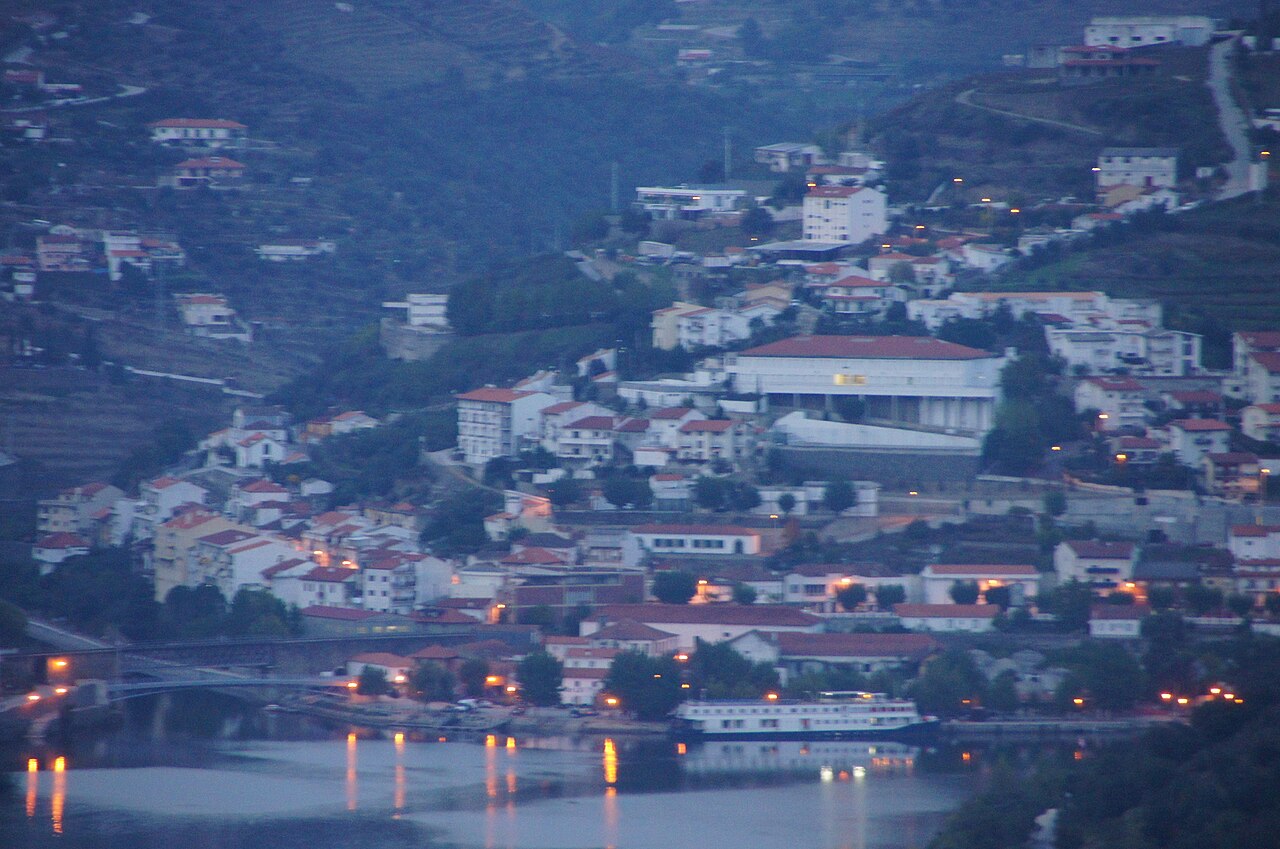
Dinner on the DOC terrace at Folgosa: the river going bronze below the deck, a glass of Douro red dark as the schist it grew in, and across the water the terraces stacking into shadow row by row as the swallows work the evening.
The easily missed detail
Order the tawny by age, not by brand: the categories are an official ladder — 10, 20, 30 and 40-year-old tawnies are blends whose stated age is an average certified by the IVDP, the Douro and Port wine institute — and the 20-year-old is the connoisseurs' sweet spot where freshness meets the nutty oxidation of the lodge. The other local literacy is the benefício letter on a grower's plot: grapes from A-graded vineyards command the top prices and go to the finest ports — ask your host what letter their terraces carry, and you have asked the valley's most respected question.
A practical rhythm
- Tasting order — White port and tonic at aperitif hour, DOC reds with dinner, the 20-year tawny as dessert's partner
- Quinta lunch, chef dinner — A farm-table lunch (de la Rosa or Vallado) and DOC for the splurge night; book both ahead
- Lamego on a market morning — Bola and presunto for the picnic bag, Raposeira's caves for the afternoon
What could complicate the plan
The valley's restaurant map is thin between the poles — outside Régua, Pinhão and the quinta hotels, dinner options are few, kitchens close early by city standards (last orders often by 9:30), and Sunday/Monday closures bite. DOC and the quinta restaurants book out in harvest and summer. Port tastings add up: at 20% alcohol, the wise itinerary spaces the cellars and gives one person the car keys — or takes the train.
What to do next
Reserve DOC and one quinta lunch, plan a structured port tasting at Bomfim or Seixo, and let the tascas of Régua handle the rest.
Sources
- IVDP (Instituto dos Vinhos do Douro e do Porto) — port production and categories: fortification to 19–22% alcohol; the age-indicated tawnies (10/20/30/40 years) and the benefício vineyard grading
- Michelin Guide Portugal — DOC by Rui Paula (Folgosa), one star, the Douro's fine-dining landmark
- Casa Ferreirinha / Sogrape — Barca Velha, first produced in 1952, the pioneer of Douro DOC table wines
- Câmara Municipal de Lamego — the Sanctuary of Nossa Senhora dos Remédios town's bola de Lamego, presunto and the Raposeira sparkling-wine cellars (1898)