Fiji country guide Trip planning
How can I plan a memorable first trip to Fiji without rushing?
The short answer
Build the trip inside the May-to-October dry season and give yourself the full 4 months the visa-free entry allows if you want it — FCDO advice updated 10 August 2026 confirms no visa is needed for visits of up to 4 months, which removes any paperwork pressure to compress the itinerary.
The answer, with local context
The pacing problem in Fiji is not distance, it is season and water. The Fiji Meteorological Service sets the cooler dry season at May to October and the warm wet season at November to April, and the difference between the two sides of the archipelago is larger than the difference between the seasons in some places: about 3,000 mm (118 inches) of rain a year at Suva against roughly 1,800 mm (71 inches) at Nadi, split by peaks reaching 1,300 m (4,265 ft). An unhurried trip therefore means choosing a coast as deliberately as choosing a month. National temperature averages of 20–27 °C (68–81°F), with coastal nights down to 18 °C (64°F) and maxima to 32 °C (90°F), mean clothing is a non-issue; rain is the whole question.
The cyclone record sets the outer boundary. Between the 1969 and 2010 seasons, 117 tropical cyclones developed within or passed through Fiji's Exclusive Economic Zone — an average of 28 per decade, usually between November and April and occasionally in October, with individual seasons producing anywhere from none to 6. River flooding occurs in nearly every wet season. None of that makes a wet-season trip impossible, but it makes a wet-season itinerary with fixed inter-island connections a bad bet.
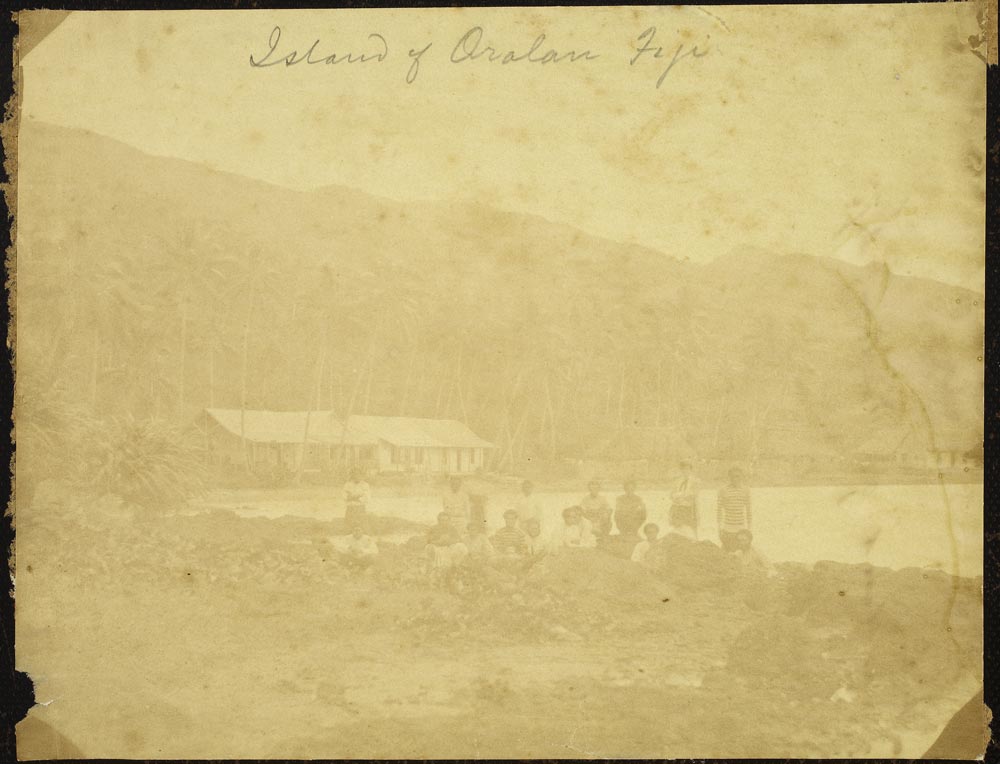
Then build in one thing that is not a beach. Levuka, on Ovalau Island, was inscribed on the World Heritage List in 2013 under criteria (ii) and (iv), was ceded to Britain in 1874 as Fiji's first colonial capital, and lost that status to Suva in 1882. It is protected under the Fiji World Heritage Decree 2013, with a management plan prepared in 2009–2010 and amended in 2013. Reaching it requires domestic transport and a night or two, which is exactly the kind of commitment a rushed itinerary squeezes out first.
The easily missed detail
The entry conditions have teeth beyond the visa waiver. FCDO advice specifies that your passport's expiry date must be at least 6 months after your arrival in Fiji, that you must present an onward or return ticket at border control together with a valid visa for your next destination if one is required, and that a yellow fever vaccination certificate is required if you are arriving from a country listed as a transmission risk. Business visitors need a business visitors permit valid for 21 days, which is shorter than many people assume and is separate from the tourist waiver. An onward-ticket requirement is the detail that most often undoes an open-ended plan.
A practical rhythm
- Pick the coast first — Nadi's side averages about 1,800 mm (71 inches) a year; Suva's averages about 3,000 mm (118 inches). That choice does more for your trip than any single booking.
- Pick the month second — May to October is the dry season, and it falls outside the November-to-April cyclone months apart from the occasional October storm.
- Add one non-resort night — Levuka needs a domestic connection and an overnight; it is the first thing a tight schedule loses.
What could complicate the plan
Agriculture and fisheries account for 8.4 percent of Fijian GDP and agriculture provides jobs for 83 percent of rural residents, per the US International Trade Administration's guide published 15 May 2026 — a profile that comes with uneven cold storage and supply, named in the same guide as a gap sub-sector. On the health side, CDC guidance advises against tap water for drinking, ice or brushing teeth where safety is not reasonably assured, and flags that some tropical reef fish carry toxins that survive cooking. Drought is the other half of the water story: severe droughts in 1987, 1992, 1997–98, 2003 and 2010 are linked to El Niño, and small islands have no mainland supply to fall back on. Finally, small-island conservation sites are not open access — Monuriki, 40.4 hectares, has been under active iguana recovery since goats and non-native rats were removed in 2011.
What to do next
The Fiji when-to-visit question in this group goes deeper on the Mamanucas and the dry-season figures; the Fiji food question covers kava's legal definition and where the wet and dry sides diverge in what they grow.
Sources
- UK Foreign, Commonwealth and Development Office, Fiji travel advice — 4-month visa-free stay, 6-month passport validity, onward ticket, yellow fever certificate, 21-day business visitors permit, update date
- Fiji Meteorological Service with the Pacific-Australia Climate Change Science and Adaptation Planning program — season months, national temperature range, Suva and Nadi rainfall, peak elevations, cyclone counts, drought years, wet-season flooding
- UNESCO World Heritage Centre, Levuka Historical Port Town — inscription year and criteria, 1874 cession, 1882 capital move, Fiji World Heritage Decree 2013 and management plan dates
- US International Trade Administration, Fiji Country Commercial Guide, agricultural commodities — GDP share, rural employment share, cold storage as a gap sub-sector
- US Centers for Disease Control and Prevention, CDC Yellow Book 2026, Food and Water Precautions for Travelers — water and reef fish guidance
- IUCN, Monuriki Island recovery account (2019), via the SPREP library — island area, 2011 eradication