Fiji country guide When to visit
When is the best time to visit Fiji for Mamanuca Islands?
The short answer
May through October, Fiji's cooler dry season as defined by the Fiji Meteorological Service, which sits almost wholly clear of the November-to-April tropical cyclone months.
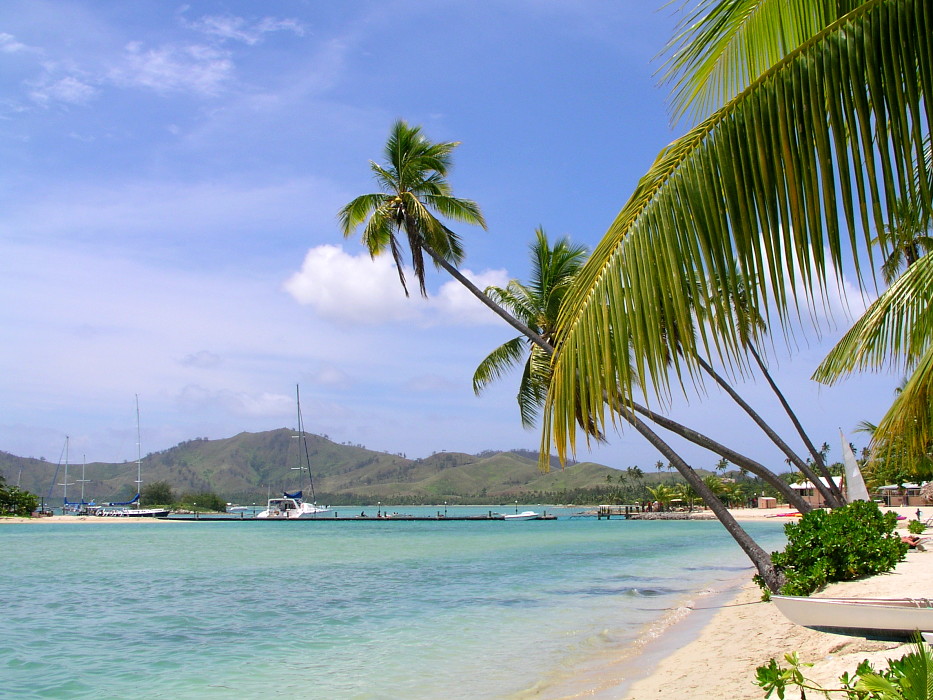
The answer, with local context
Fiji's year divides cleanly. A climate summary published by the Fiji Meteorological Service with the Pacific-Australia Climate Change Science and Adaptation Planning program sets the warm wet season at November to April and the cooler dry season at May to October. Annual average temperatures across the country run 20–27 °C (68–81°F); coastal nighttime averages can fall to 18 °C (64°F) and daytime maxima reach 32 °C (90°F), while the interiors of the main islands can see nights as low as 15 °C (59°F).
Where you are in the archipelago matters more than most visitors expect, and the Mamanucas sit on the right side of the divide. Rainfall is split by the mountains of Viti Levu and Vanua Levu, whose peaks reach up to 1,300 m (4,265 ft): Suva, on the southeast of Viti Levu, averages about 3,000 mm (118 inches) a year, while Nadi on the western side averages about 1,800 mm (71 inches) and has a well-defined dry season. The Mamanucas lie off that western, drier coast, which is why the dry-season contrast is more pronounced for them than for Fiji's capital.
Cyclones are the hard constraint on the other half of the year. The same summary records that 117 tropical cyclones developed within or passed through Fiji's Exclusive Economic Zone between the 1969 and 2010 seasons — an average of 28 per decade — occurring usually from November to April and occasionally in October, with seasonal counts ranging from none to 6. El Niño years bring drier and cooler than normal dry seasons at Suva; La Niña years are usually wetter, and river flooding occurs in nearly every wet season.
The easily missed detail
One Mamanuca island is a conservation site with a documented timetable, which is unusual for a small-island group and worth knowing before you book a day trip. Monuriki is a 40.4-hectare uninhabited island in western Fiji holding what an IUCN-published account describes as the third largest remaining population of the Fijian crested iguana. Domestic goats and non-native Pacific rats were removed in 2011, the same year 10 pairs — 20 founders — went into captive breeding; the first 32 captive-bred iguanas were released in 2015, and in 2017 a further 16 of the original founders plus 32 captive-bred offspring were reintroduced. Access to islands under active recovery work is managed rather than open, so this is not a landing to assume.
A practical rhythm
- May to July — The early dry season on the western side, where Nadi's 1,800 mm annual average is concentrated outside these months.
- August to October — Still dry, with coastal nights around 18 °C (64°F) and daytime maxima pushing toward 32 °C (90°F).
- November to April — Warm, wet and inside the cyclone window; of 117 cyclones logged in Fiji's EEZ over 42 seasons, these are the months they came in.
What could complicate the plan
Entry is easy but conditional. FCDO advice, publicly updated on 10 August 2026, states that a passport must have an expiry date at least 6 months after arrival in Fiji, that no visa is required for visits of up to 4 months, that an onward or return ticket must be shown at border control along with any visa needed for the next destination, and that a yellow fever vaccination certificate is required when arriving from a country listed as a transmission risk. Business visitors need a separate permit valid 21 days. Beyond paperwork, the dry season is the peak season, and the wet season's risk is not only cyclones: severe droughts in 1987, 1992, 1997–98, 2003 and 2010 are all linked to El Niño, so a dry-season trip in a strong El Niño year can mean water restrictions on small islands with no mainland supply.
What to do next
The Fiji places-and-experiences question in this group covers Levuka and the islands beyond the resort belt; the Fiji trip-planning question handles internal travel and timing across the whole archipelago.
Sources
- Fiji Meteorological Service with the Pacific-Australia Climate Change Science and Adaptation Planning program (Australian Bureau of Meteorology and CSIRO) — wet and dry season months, national temperature range, Suva and Nadi rainfall averages, peak elevations, cyclone counts and months, El Niño and La Niña effects, drought years
- IUCN, community-based conservation and recovery of native species, Monuriki Island, Fiji (2019), via the SPREP library — island area, goat and rat removal, captive breeding and reintroduction numbers and dates, population ranking
- UK Foreign, Commonwealth and Development Office, Fiji travel advice — passport validity, 4-month visa-free stay, onward ticket, yellow fever certificate, business visitor permit