Georgia country guide Food and drink
What local dishes should I try in Georgia, and where should I look for them?
The short answer
Try regional khachapuri, mountain-style khinkali, lobio and Kakhetian grilled dishes, seeking out traditional restaurants, bakeries and family kitchens across Georgia rather than relying on one standard menu.
The answer, with local context
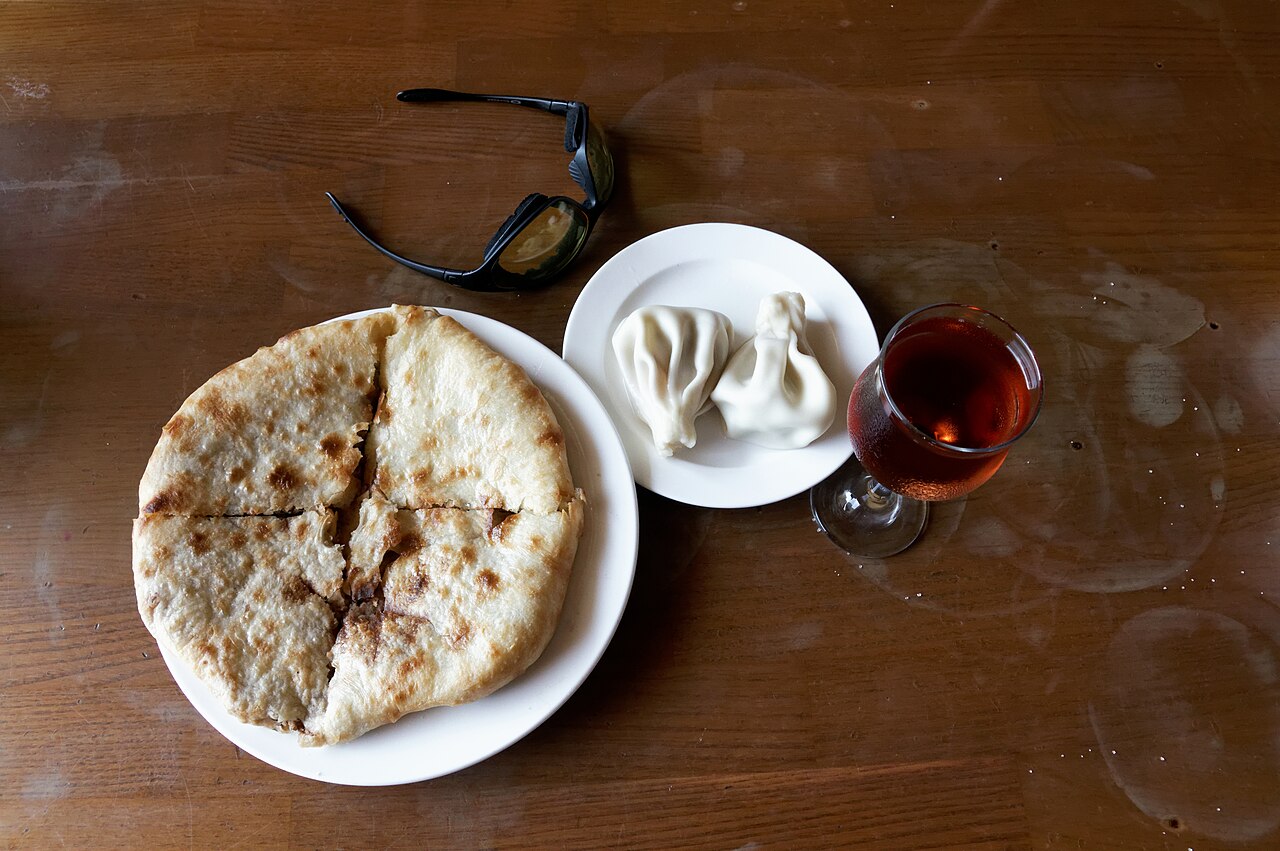
Georgian cuisine is highly regional. The national tourism authority identifies khachapuri, cheese-filled bread, as one of the country's defining food traditions. Imeretian khachapuri is generally round, while the Adjarian version is shaped like a boat and commonly contains cheese, butter and an egg.
Khinkali are pleated dumplings traditionally associated with the mountains of eastern Georgia. The classic meat version contains a seasoned filling and cooking juices. Georgia Travel identifies mountain savory as an important herb in some traditional preparations.
In the Kakheti region, mtsvadi is a common grilled-meat dish. Other local specialties include chakapuli, a spring stew typically prepared with lamb or kid, green sour plums and herbs such as tarragon.
Western Georgia offers different preparations. Lobio is a bean dish with regional variations, while pkhali combines chopped vegetables with walnut-based seasonings.
For a sweet, try churchkhela, made by repeatedly dipping nuts into thickened grape juice. Its preparation is closely connected with Georgia's harvest traditions.
Georgia also has a distinctive wine-production tradition. UNESCO inscribed the ancient Georgian qvevri winemaking method on its Intangible Cultural Heritage list in 2013. Qvevri are large earthenware vessels used for fermentation and storage, often buried in the ground.
The appellations behind those bottles are registered rather than informal. The dossier for Akhmeta, filed by Georgia's National Wine Agency and published on the UK's register of protected geographical names, carries appellation of origin No. 979, registered in 2020, and requires amber wine sold under the name to ferment only in qvevri on the grape marc, sealed until at least 1 February of the year after the vintage. Asking which appellation a carafe comes from is a more useful question than asking whether it is natural.
Picture the place
Khinkali arrives as a group of pleated dumplings, while Adjarian khachapuri has a raised bread crust surrounding melted cheese and egg. Churchkhela hangs in elongated strands when prepared for drying.
The easily missed detail
Khachapuri and khinkali are not fixed national recipes. Their fillings, shapes and accompaniments can vary substantially between mountain regions, western Georgia and the Black Sea coast.
A practical rhythm
Tbilisi: Try khinkali and a traditional bean or vegetable dish.
Imereti or Adjara: Sample a regional khachapuri preparation.
Kakheti: Explore locally prepared dishes and seasonal harvest foods.
What could complicate the plan
Walnuts are widely used in Georgian cooking, including sauces and vegetable preparations. Cheese, wheat, eggs and meat stocks also require attention for dietary restrictions.
What to do next
explains how to build a trip around Georgia's regional differences without spending most of the time in transit.
Sources
- Georgia Travel — regional culinary traditions.
- Georgia Travel — Kakhetian specialties.
- UNESCO Intangible Cultural Heritage — 2013 inscription and traditional technique.
- UK Government register of protected geographical food and drink names, Akhmeta / Akhmetis Mtsvane wine dossier — appellation number, registration year and the qvevri fermentation rule.