Haiti country guide Places and experiences
What should a first-time traveler see in Haiti beyond the obvious highlights?
The short answer
The other two components of the National History Park, plus the two sites Haiti has formally nominated for future inscription — the historic center of Jacmel, on the Tentative List since 2004, and the Matheux national historic park, a coffee, slavery and freedom route added in 2024.
The answer, with local context
Haiti has exactly 1 property on the World Heritage List and 2 entries on its Tentative List, having accepted the Convention on 18 January 1980. That short official inventory is useful rather than limiting, because it tells you precisely where the state has concentrated its heritage case.
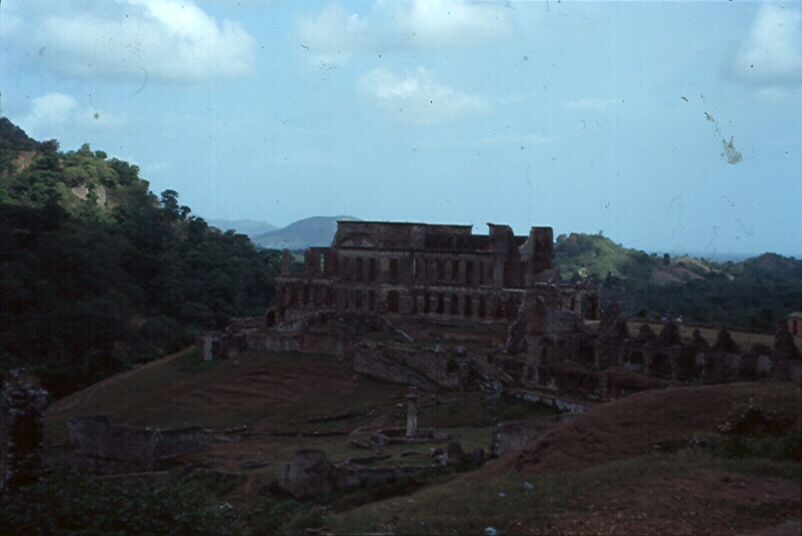
The Palace of Sans-Souci rewards the time most itineraries do not give it. UNESCO describes a complex of about 8 hectares — roughly 20 acres — set in a natural amphitheatre near Milot, built around a royal residence with administrative buildings, a crown prince's residence, stables, barracks, prisons, an arsenal, workshops, a hospital and gardens laid out with basins and fountains. It was looted after the king's death in 1820 and seriously damaged by the earthquake of 1842, yet the ruins survive largely intact.
Away from the monumental north, Haiti's largest inland water is Lac Azuéi, which UNEP-WCMC's Protected Planet records with a reported area of 287.36 km², about 111 square miles. It is a terrestrial and inland-waters protected area on the border plain east of Port-au-Prince, and it is the single biggest landscape feature a visitor can reach on a day's drive from the capital.
Island side trips are harder than the map suggests. The International Trade Administration's guide records that Île de la Gonâve holds the only airstrip among Haiti's offshore islands and that it is rarely used; every other island is reached by ferry or boat.
The easily missed detail
The Matheux nomination is not a building but a route. Its full title — Parc National Historique des Matheux – Chemin du café, de l'esclavage et de la liberté — frames the mountain range west of the capital as a connected landscape of coffee production, slavery and emancipation. Submitted to the Tentative List in 2024, it is the newest statement Haiti has made about what its heritage consists of, and it reads very differently from a fortress on a peak.
A practical rhythm
- Milot — Sans-Souci and the Citadelle share a single approach road; the palace is the flat half of the day and the one that explains the kingdom.
- Jacmel — The southern coastal town has been on Haiti's Tentative List since 2004 for its historic center, which is a street-grid visit rather than a monument visit.
- Border plain — Lac Azuéi's 111 square miles of water sit on the route east, and the lake is the reason to take that road rather than return the way you came.
What could complicate the plan
Internal movement is the binding constraint. The Commerce Department guide notes that roads outside major routes are often unpaved and unmarked, that Uber and Lyft do not operate, and that rental agencies frequently require drivers to be 21 to 25 even though 18 is the legal driving age. Air connections run from Port-au-Prince to many departments, which is often faster than driving, but the capital itself carries security conditions that the FCDO treats as a reason to advise against all travel. Ramiers and Sans-Souci have no restored visitor infrastructure comparable to the Citadelle's, so footing and shade are both limited.
What to do next
See the Haiti when-to-visit question for the Citadelle's own measurements and the seasonal window, and the food question for joumou soup and how pricing in gourdes actually works.
Sources
- UNESCO World Heritage Centre, Haiti States Parties page — Convention acceptance date, inscribed and Tentative List counts, Jacmel 2004 and Matheux 2024 entries
- UNESCO World Heritage Centre, National History Park — Sans-Souci area, buildings, 1820 looting, 1842 earthquake, Ramiers description
- Protected Planet (UNEP-WCMC), Lac Azueï — reported area and protected-area type
- US International Trade Administration, Haiti Country Commercial Guide: Business Travel — island access, road conditions, car rental and ride-hailing