Haiti country guide When to visit
When is the best time to visit Haiti for Citadelle Laferrière?
The short answer
December through April, because the US International Trade Administration dates Haiti's hurricane season from mid-May to late November, and the Citadelle sits at 970 m — roughly 3,182 feet — where a wet mountain track turns a straightforward climb into a slog.
The answer, with local context
Haiti's calendar is shaped less by temperature than by water. The Commerce Department's commercial guide for Haiti, last published on 27 May 2024, warns that even mild storms during the mid-May to late-November window cause flooding, and notes that electricity is typically available only 3 to 15 hours a day, with multi-day blackouts possible. Those two facts together argue for the drier months, when roads hold and a hotel generator has less to cover.
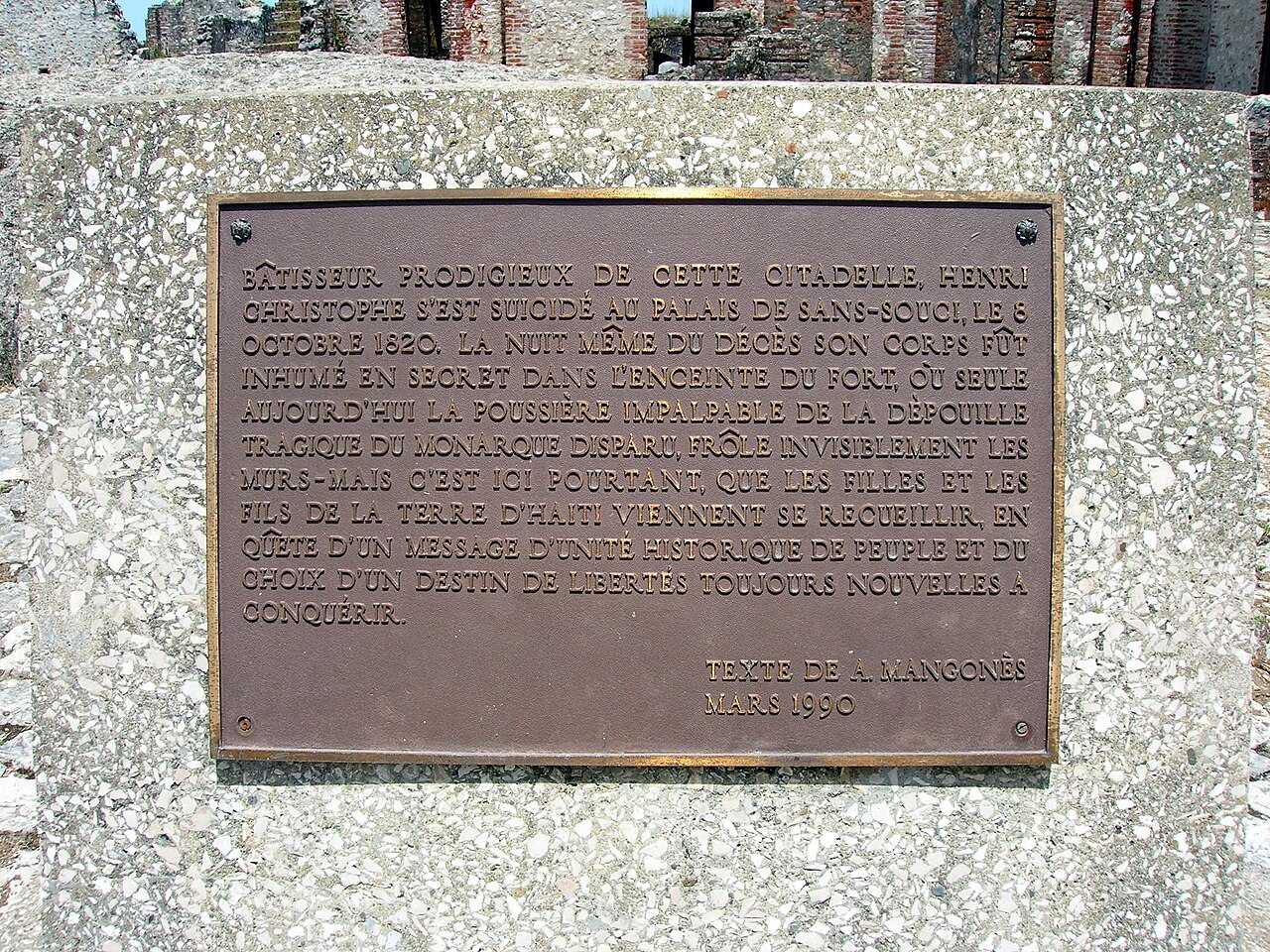
The fortress itself was never designed for comfortable access. UNESCO records that the Citadelle Henry was begun after independence was proclaimed on 1 January 1804, when Jean-Jacques Dessalines handed the project to General Henri Christophe, and that it was inaugurated in 1813. Plans are attributed to the Haitian Henry Barré, though Christophe is thought to have driven the design. The building covers about 1 hectare and is laid out as a quadrilateral of 4 buildings with flanking towers around a central courtyard, sized to hold a garrison of 2,000 men and 5,000 at need.
The surrounding protection came much later. Haiti created the National History Park by presidential decree in 1978, covering 25 km² — about 9.7 square miles — and UNESCO inscribed it in 1982 under criteria (iv) and (vi): as an eminent example of a structure type illustrating Haiti at the dawn of its independence, and for the universal significance of the first state founded in the modern era by enslaved people who had won their freedom.
Picture the place
Pic Laferrière carries the fortress on a ridge nearly 3,200 feet up, so the courtyard sits above most of the weather that crosses the northern plain. The flanking towers break the wind from four directions at once, and the approach is a steady gradient rather than a staircase — which is why dry ground matters more here than a few degrees of air temperature.
The easily missed detail
The inscribed property is not one monument but three, spread across a 25 km² park: the Citadelle on its peak, the Palace of Sans-Souci on the plain near Milot, and the Site of Ramiers, a small plateau carrying wall foundations and 2 pairs of fortified redoubts with a direct sightline to the Citadelle. Treating the visit as a single stop is the most common planning mistake; the components sit at genuinely different elevations and need separate time.
A practical rhythm
- Early start — Begin at Milot on the plain, where the palace ruins stand, and work uphill rather than attempting the summit in the middle of the day.
- Summit hours — The Citadelle's courtyard and flanking towers are the long part of the visit; budget for a full circuit of a 1-hectare structure, not a photograph.
- Descent — Ramiers is the component most people skip, and it is the only one that gives you the Citadelle from the outside at a distance.
What could complicate the plan
This is the constraint that overrides every other consideration: the UK Foreign, Commonwealth and Development Office advises against all travel to Haiti, and the Commerce Department's guide records that the State Department had Haiti at Level 4, Do Not Travel, as of 27 July 2023. Commercial air access and internal road security both change quickly. The same guide notes that common GPS apps do not reflect security conditions, including gang-controlled areas of Port-au-Prince, so a route that looks routine on a phone may not be.
What to do next
The Haiti trip-planning question in this guide sets out the entry fee, departure tax and 90-day stay rule; the places question covers Sans-Souci, Jacmel and the Matheux coffee route in detail.
Sources
- UNESCO World Heritage Centre, National History Park — criteria, 1978 decree, park area, Citadelle altitude, construction dates, garrison capacity, component descriptions
- UNESCO World Heritage Centre, Haiti States Parties page — inscription year 1982
- US International Trade Administration, Haiti Country Commercial Guide: Business Travel — hurricane season dates, electricity supply, GPS and security note, advisory level as cited
- UK Foreign, Commonwealth and Development Office, Haiti — advice against all travel