Kiribati country guide Food and drink
What local dishes should I try in Kiribati, and where should I look for them?
The short answer
Fresh-caught tuna and reef fish in coconut, babai (pit-grown swamp taro) at feast level, breadfruit in season, and te karwe — coconut toddy, sweet at dawn and something else by dusk — eaten where i-Kiribati eat: guesthouse tables, Tarawa's small restaurants and markets, and the maneaba floor.
The answer, with local context
An atoll pantry is sand, salt and ingenuity: the soil is crushed coral, so Kiribati's table is built from the lagoon, the coconut palm and a short honour-roll of plants that tolerate both. The protein is fish — skipjack and yellowfin from EEZ waters among the richest tuna grounds on Earth (licence fees from foreign fleets, coordinated through the Parties to the Nauru Agreement's vessel-day scheme, fund a large share of the state), reef fish from the lagoon, and shellfish gathered at low tide. The daily forms are elemental: grilled or fried whole fish, raw fish (ika mata-style) in coconut cream, fish in coconut curry at guesthouse tables, and imported rice (the modern staple that arrived with the ships and never left) under nearly everything. Coconut is the second cuisine entire: grated into dishes, drunk green, and — as te karewe (toddy) — tapped from the cut flower-spathe of the palm, collected twice daily by climbers; drunk fresh within hours it is a sweet, faintly fizzy soft drink, boiled down it becomes kamwaimwai syrup (the atolls' caramel, poured over breadfruit and babai), and left to ferment it turns into the sour toddy that fuels a different register of evening.
The feast foods carry the culture. Babai — giant swamp taro grown in pits dug down to the freshwater lens, composted for years (a single corm can take 2–4 years or more to mature) — is prestige food, presented at maneaba feasts and first-birthday and wedding celebrations, its size a measure of the family's standing and patience. Breadfruit (mai), roasted or boiled in season, and pandanus fruit chewed fresh or dried into stored rolls: with babai, fish and coconut, these are the pre-import table, and they are what a maneaba feast still centres. On Kiritimati add lobster and mantis shrimp from the flats' edges (export-grade, served at the island's hotels) and note the protected line: the coconut crab, the great land crab, is protected in Kiribati — do not ask for it.
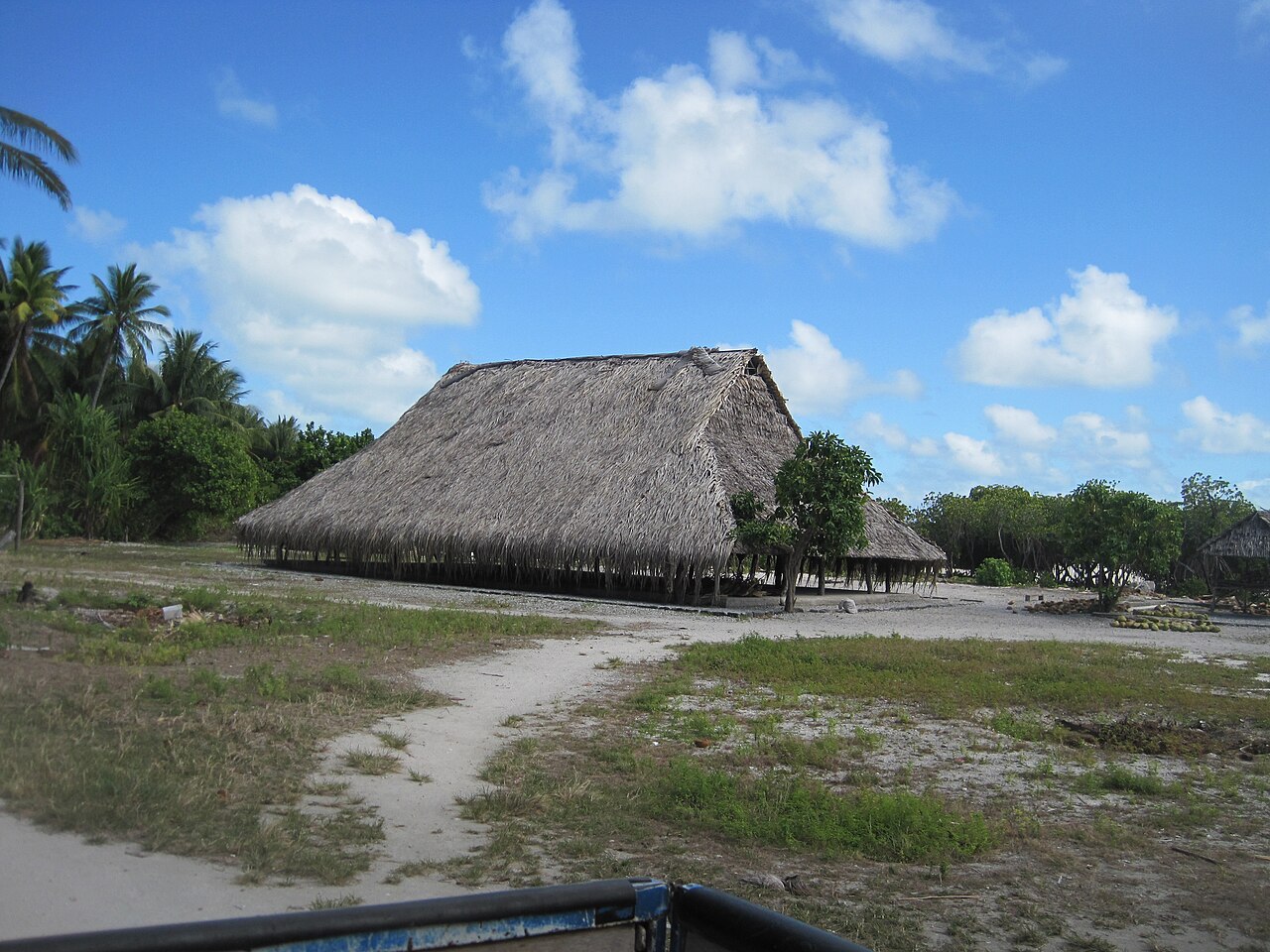
Where to eat is a short, honest list. Tarawa: the hotels (the government-run Otintaai and Mary's Motel) serve fish-and-rice plates and the occasional curry; Bairiki and Betio hold small local and Chinese restaurants; the markets (Bairiki's market and the Betio waterfront) sell the day's catch, toddy syrup, pandanus and imported treats by the stall; bakeries turn out the sweet buns that travel everywhere. Beyond Tarawa, your table is your guesthouse's — outer-island council guesthouses cook what the island caught and grew that day, which in Kiribati is not a limitation but the entire point: the meal is the island, on a plate, and eating on the maneaba floor as a guest at a feast (cross-legged, in clan order, food presented before speeches) is the country's true dining room.
Picture the place
Dawn at a Tarawa market stall: a yellowfin split and gleaming on banana leaves, green coconuts stacked beside bottles of amber toddy syrup, and the vendor planing babai corms grey-purple in the early light.
The easily missed detail
Toddy is a clock, not a drink: the same coconut spathe yields a sweet morning karwe, a gently sparkling midday one, and a sour fermented pour by evening, so "fresh toddy" is a time-of-day order, and the dawn collection (the climber up the palm before the heat, bottle in teeth) is the version travelers remember. The paired detail is water discipline: Tarawa's groundwater is brackish and its rainwater precious, so the ice in your drink and the water on your salad are decisions, not defaults — guesthouse kitchens boil and filter; follow their lead exactly.
A practical rhythm
- Market first — Bairiki or Betio in the morning for the catch, the syrup and the day's imports off the ship
- Guesthouse dinners — Eaten where you sleep, ordered by the island's day, not a menu
- Feast if invited — A maneaba occasion accepted with both hands: babai, whole fish and speeches in that order
What could complicate the plan
Supply is the complication: fresh vegetables and fruit beyond coconut, breadfruit and pandanus are ship-dependent (imports arrive on multi-week cycles, and between ships the shops thin out), refrigeration is limited, and food hygiene runs on island systems — choose cooked-fresh, drink treated water, and temper raw-fish enthusiasm to the day's catch at reputable tables. Sunday shuts restaurants and shops across these strongly Christian islands; alcohol is restricted or banned on some outer islands by council rule (and sour toddy is its own jurisdiction — ask before carrying any). Dietary flexibility is limited: vegetarian plates beyond rice-and-coconut exist in Tarawa's few restaurants, rarely beyond. And feast food is protocol food — babai is grown for occasions, not stocked for tourists; an invitation, not an order, is how it reaches you.
What to do next
In Tarawa, eat at Mary's or the Otintaai once, then put yourself on guesthouse-and-market rations — and if a maneaba feast invitation comes, clear the evening.
Sources
- Kiribati National Tourism Office — local foods, toddy (karewe) and market guidance
- Parties to the Nauru Agreement — the vessel-day scheme and Kiribati's tuna fishery significance
- Kiribati cultural sources — babai pit cultivation and maneaba feast protocol; the protected status of coconut crab
- U.S. Department of State / CDC travel health — water and food precautions for Kiribati