Kyoto / Japan Things to do
What are the most worthwhile things to do in Kyoto on a first visit?
The short answer
Work through the UNESCO property rather than a list of famous names — the Historic Monuments of Ancient Kyoto were inscribed in 1994 under criteria (ii) and (iv), and the inscription covers Kyoto, Uji and Otsu Cities, not the city center alone.
The answer, with local context
That official title is the most useful itinerary tool Kyoto offers, because it tells you the designation is distributed. Component sites sit in the eastern hills, in the northwest, in the south, and outside the city in Uji and across the prefectural line in Otsu. A first visit that stays within a two-mile radius of Kyoto Station is not seeing the property; it is seeing a corner of it.
The practical shape that falls out of this is three sectors. The eastern hills hold Kiyomizu-dera above the Higashiyama slopes and the Gion quarter at their foot. The northwest holds Kinkaku-ji and, further out along the Hozu River, the Arashiyama district with its bamboo grove. The south holds Fushimi Inari Taisha, where vermilion torii gates line the trails up Mount Inari, and beyond it Uji — the tea town named in the World Heritage property's own title. Nijo Castle, in the center, is the shogunal counterpoint to all the temple architecture.
Timing one set-piece against the rest is worth doing deliberately. Jidai Matsuri, the Festival of the Ages, falls on October 22 — a single-date event, unlike the month-long July festival, so it either fits your trip or it does not. Building a first visit around it anchors the whole itinerary to one afternoon.
Picture the place
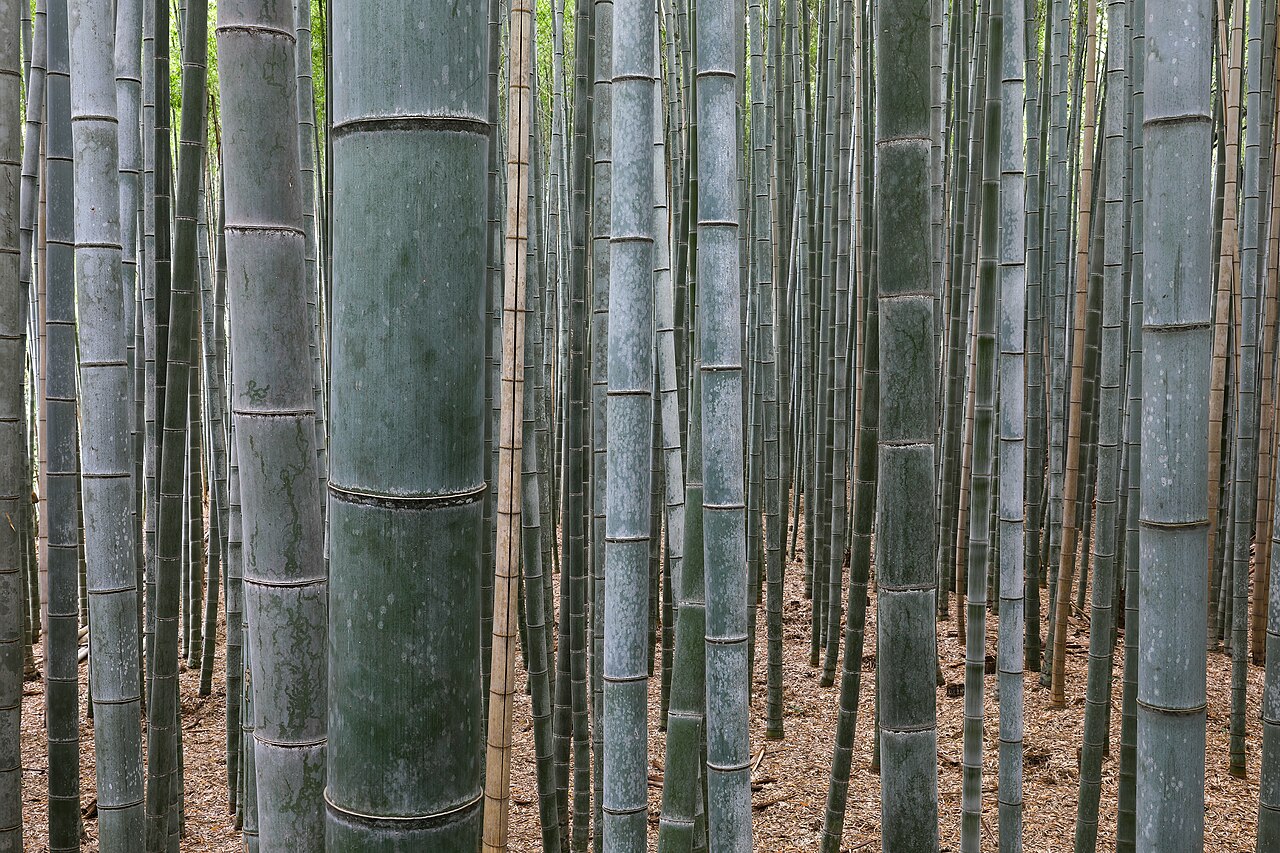
Arashiyama's bamboo grove is a managed stand rather than a wild forest: the culms grow close and straight, tall enough that the light arriving at the path is green and diffuse even at midday, and the sound inside the grove is mostly the stalks moving against each other.
The easily missed detail
Uji is the component of this World Heritage property that almost everyone drops, and it is the one that explains Kyoto's relationship with tea. It is named in the inscribed property's official title alongside Kyoto and Otsu, which means a visit there is not a day trip away from the heritage site — it is a visit to part of it.
A practical rhythm
- East — Kiyomizu-dera and the Higashiyama slopes, with Gion below them.
- Northwest — Kinkaku-ji, then Arashiyama and the bamboo grove along the river.
- South — Fushimi Inari's torii trails on Mount Inari, continuing to Uji.
What could complicate the plan
The sites in this property are mostly working temples and shrines on hill slopes, approached by stone steps and gravel paths, and some have gardens that close well before their outer precincts do. On the national picture, the US Department of State has Japan at Level 1, Exercise Normal Precautions, issued May 15, 2025, so the constraints on a Kyoto itinerary are logistical rather than security-related: distance between the three sectors, and the fact that two of them are separate rail lines out of the center.
What to do next
The Kyoto when-to-visit question in this chapter covers the climate figures and the festival calendar, and the temples-without-crowds question gives the gate hours that decide when to arrive at Kiyomizu-dera.
Sources
- UNESCO World Heritage Centre, World Heritage List — property name covering Kyoto, Uji and Otsu Cities, 1994 inscription, criteria (ii) and (iv)
- Kyoto City Tourism Association, events calendar — Jidai Matsuri date
- US Department of State, Japan travel advisory — advisory level and issue date