Kyoto / Japan When to visit
When should I visit Kyoto, Japan, for the best experience?
The short answer
Late October and November, or the first half of May — Kyoto's warmest month averages a high of 92.7°F (33.7°C) in August and its wettest is July at 8.80 inches, so the shoulder months avoid both the heat and the rain peak.
The answer, with local context
The Japan Meteorological Agency's 1991–2020 normals for the Kyoto station are blunt about the summer. August runs to a mean high of 92.7°F, which is 33.7°C, in a city sitting in a basin ringed by hills on three sides — air that does not move. July is the wettest month of the year at 223.6 mm, or 8.80 inches, the tail of the rainy season. June through August is therefore the combination most likely to cost you an afternoon.
The festival calendar pushes in the same direction. Kyoto's four landmark events are spread across the year: Aoi Matsuri on May 15, Gion Matsuri across the whole of July 1 to 31, the Gozan Okuribi bonfires on August 16 and Jidai Matsuri on October 22. Two of the four fall inside the hottest, wettest part of the year, which is a real trade — Gion Matsuri is a month-long fixture and the single biggest reason to accept a July visit.
What makes the shoulder months more than a weather preference is the density of what you are moving between. The Historic Monuments of Ancient Kyoto were inscribed by UNESCO in 1994 under criteria (ii) and (iv), and the property's official name — Kyoto, Uji and Otsu Cities — tells you it reaches beyond the city limits. Visiting in a month when walking between sites is comfortable changes how much of that property you actually reach.
Picture the place
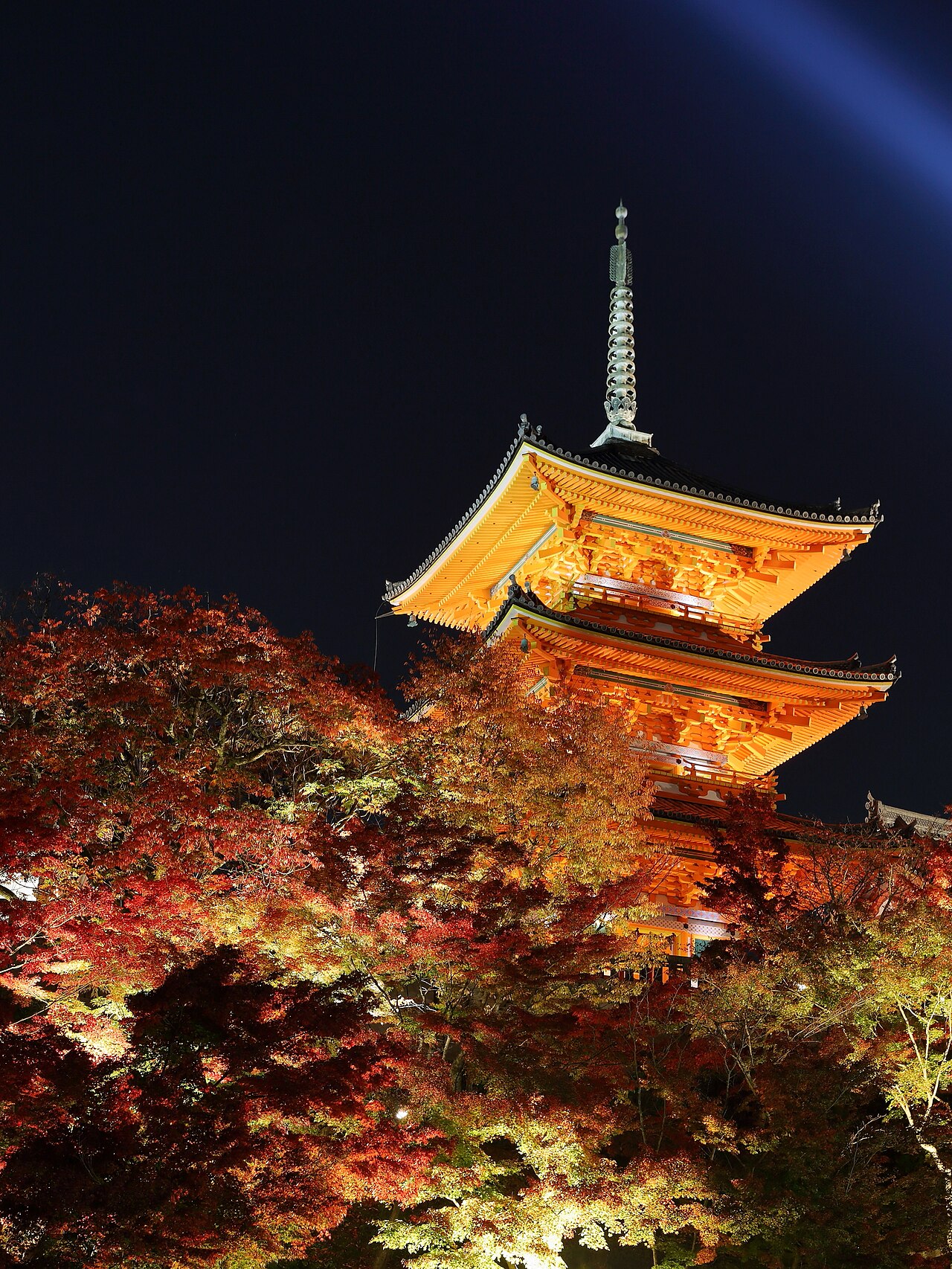
The basin that traps August heat is the same geography that gives Kyoto its autumn: hills close on three sides, with temple precincts set into the lower slopes, so the color turns on the hillsides above the city before it reaches the gardens below.
The easily missed detail
Japan charges an International Tourist Tax of 1,000 yen per departure, in force since January 7, 2019. It is a small sum and it is not optional, and it is one of the few Japan-wide travel costs that does not vary by season — useful mainly as a reminder that the price differences between Kyoto months come from lodging and flights, not from the country's own levies.
A practical rhythm
- Mid-May — Aoi Matsuri on the 15th, before the June rains build toward July's 8.80 inches.
- July — Gion Matsuri runs the full month, which is the one argument for accepting the wettest month of the year.
- Late October — Jidai Matsuri on the 22nd, with the hillsides turning and August's 92.7°F long past.
What could complicate the plan
Published festival dates mark only the start and end of an event, and a month-long listing such as Gion Matsuri does not mean something happens on every day within the range. The heat is a genuine access issue rather than a comfort one: temple precincts in the hills are reached by stone steps and unshaded approaches, and an August afternoon at 92.7°F is hard work on them.
What to do next
The Kyoto temples-without-crowds question in this chapter covers the gate hours and night-viewing windows that decide a day's shape, and the things-to-do question sets out which sites sit inside the World Heritage property.
Sources
- Japan Meteorological Agency, Kyoto station normals — warmest and wettest month figures, 1991–2020 normal period
- Kyoto City Tourism Association, events calendar — Aoi Matsuri, Gion Matsuri, Gozan Okuribi and Jidai Matsuri dates
- UNESCO World Heritage Centre, World Heritage List — property name, 1994 inscription, criteria (ii) and (iv)
- National Tax Agency of Japan, International Tourist Tax — the 1,000 yen per-departure rate and its start date