Latvia country guide When to visit
When is the best time to visit Latvia for Riga Old Town?
The short answer
May, or September into early October — warm enough for a city built to be walked, and either side of the June-to-August peak of the tick-borne encephalitis transmission season that the CDC identifies in Europe, which matters the moment a Riga trip adds a forest day.
The answer, with local context
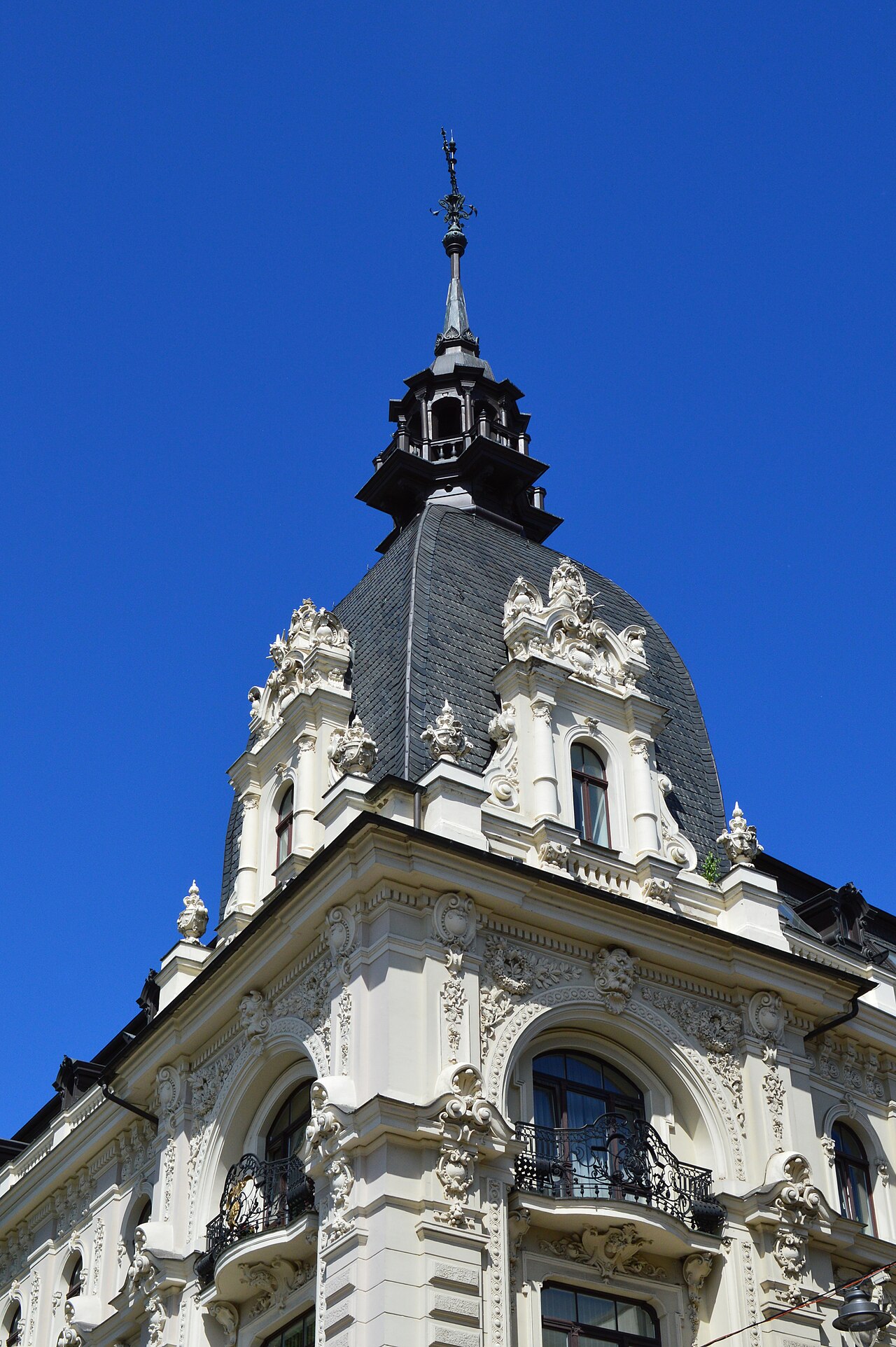
Riga rewards slow walking, and the reason is quantified. UNESCO inscribed the Historic Centre of Riga in 1997 under criteria (i) and (ii), by Committee decision 21 COM VIII.C, and its description is unusually numerical: about 50 high-value Art Nouveau buildings stand in the medieval part of the center and more than 300 across the rest of the Historic Centre, a density that made early-1900s Riga the greatest concentration of Art Nouveau architecture in Europe. The city was founded as a port town in 1201 and prospered on trade with central and eastern Europe between the 13th and 15th centuries as a key Hanseatic League center. The inscription also covers 19th-century wooden architecture, including imposing neoclassical wooden buildings in the suburbs laid out in that century.
That is an above-eye-level city. Art Nouveau detail sits on upper floors and gables, which means the long light of May and September serves it far better than the low winter sun that barely clears the rooflines.
Latvia's own calendar of living heritage is thin but important. The Baltic song and dance celebrations were inscribed by UNESCO in 2008, the Suiti cultural space on the Urgent Safeguarding List in 2009, and timber rafting in 2022; Latvia ratified the 2003 Convention on 14 January 2005.
Picture the place
Riga's Art Nouveau is a facade art — masks, caryatids and stylized foliage carried across whole street fronts — so the useful hours are the ones when the sun is low enough to rake across a building rather than drop straight down it.
The easily missed detail
A Riga trip that adds one day in the countryside changes its health profile completely. The CDC's Yellow Book names Latvia among the countries with the highest recent incidence of tick-borne encephalitis, with transmission running April through November and peaking June through August in European countries. It also says risk is negligible for travelers who remain in urban or unforested areas and avoid unpasteurized dairy. In other words, the city itself is not the issue; the forest walk is. Roughly 5,000 to 10,000 cases are reported each year from endemic countries, incubation typically runs 7 to 14 days with a range of 2 to 28, and about 3 in 4 infections are asymptomatic.
A practical rhythm
- Morning — Start in the medieval core, where about 50 of the high-value Art Nouveau buildings stand within a compact area.
- Afternoon — Move out to the 19th-century suburbs for the wooden architecture that UNESCO names as part of the same inscription.
- Shoulder evenings — May and September give usable evening light over a city whose best detail is 3 or 4 stories up.
What could complicate the plan
Latvia uses the euro and the State Department notes that only euros are accepted, with a currency limit of 10,000 euros or the equivalent on both entry and exit. Medical care is described as improving but often short of Western standards, with limited equipment and resources; the general emergency number is 112 and the medical emergency number 113. Ambulances are mainly an urban service, and in rural areas a taxi or private vehicle may reach a hospital faster. Most Latvian providers do not accept US insurance and medical evacuation insurance is strongly recommended. Demonstrations are frequent and may be triggered by political, economic, holiday or international events.
What to do next
For Kuldīga, the Struve Geodetic Arc and the national park that fills the Gauja valley, read the Latvia answer on sights beyond the obvious highlights in this chapter.
Sources
- UNESCO World Heritage Centre, Historic Centre of Riga — criteria, inscription year and decision code, Art Nouveau building counts, foundation date, Hanseatic period, wooden architecture
- CDC Yellow Book 2026, Tick-Borne Encephalitis — incidence ranking, transmission season and peak, risk profile, case numbers, incubation period
- US Department of State, Latvia country information — currency rules, emergency numbers, medical care and evacuation guidance, demonstrations
- UNESCO Intangible Cultural Heritage, Latvia — element years and list types, Convention ratification date