Lima / Peru Things to do
What are the most worthwhile things to do in Lima on a first visit?
The short answer
Give the first visit three anchors: the UNESCO-listed historic center with the San Francisco catacombs, the Larco Museum's 45,000 pieces of pre-Columbian Peru in Pueblo Libre, and the pre-Inca pyramid of Huaca Pucllana rising out of modern Miraflores — then walk the cliff-top malecón from Miraflores into bohemian Barranco.
The answer, with local context
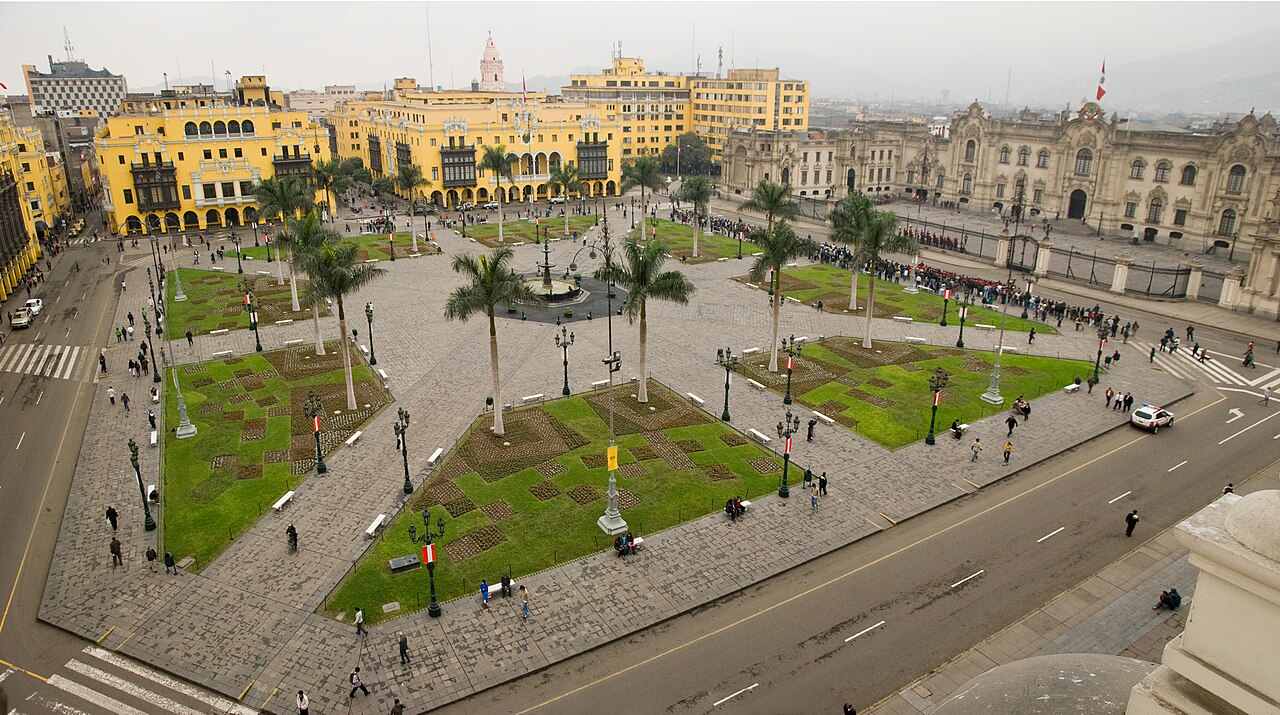
Begin where the city began. Francisco Pizarro founded Lima in January 1535 in the Rímac valley, and the Historic Centre of Lima was inscribed by UNESCO in 1988 and extended in 1991, protected as the "Ciudad de los Reyes," the City of Kings. Its Plaza Mayor is ringed by the Government Palace, the Cathedral — where Pizarro's own remains lie, their identity confirmed by DNA testing only in the late 20th century — the Archbishop's Palace with its carved wooden balconies, and the Municipal Palace. A few blocks away, Plaza San Martín was opened in 1921 for the centenary of independence, and the two squares joined by the Jirón de la Unión pedestrian street make the center a single walkable argument about Peru's first four centuries.
The center's unforgettable interior is below ground. The Basilica and Convent of San Francisco, part of the World Heritage property, holds a library of some 25,000 volumes, including incunabula and manuscripts from the 15th century — and beneath it, the catacombs: from the convent's beginnings in the mid-1500s until 1810, an estimated 70,000 Limeños were buried in the vaults below the church, their bones later arranged in ossuary patterns that fill the chambers today. It is the largest ossuary in the Americas, and the guided descent through it is the colonial city's essential counterweight to its gilded altars.
Lima's second shock is its age before the Spanish. The Museo Larco, founded in 1926 by Rafael Larco Hoyle — who began collecting at 25 — holds more than 45,000 artifacts spanning some 5,000 years of Peruvian cultures, housed in an 18th-century viceregal mansion that itself stands over a 7th-century pyramid; it was among the first museums in the world to publish its entire inventory online, and its visible-storage galleries let you walk past thousands of catalogued ceramics in the stacks. Then, in the middle of upscale Miraflores, Huaca Pucllana stops every first-time visitor: a great stepped pyramid of hand-made adobe bricks, built by the Lima culture between about 200 and 700 AD — seven platforms rising some 72 feet (22 m) — its bricks laid upright like books on a shelf, a spacing the builders used to absorb earthquakes. Finish the loop in the evening at the Parque de la Reserva, where the Circuito Mágico del Agua holds the Guinness World Record as the largest fountain complex in the world, and 30 minutes south, if the days allow, the sanctuary of Pachacamac — the coast's great pre-Inca oracle, administered by the Ministry of Culture — extends the story a thousand years further back.
Picture the place
At Huaca Pucllana at dusk the floodlights come up on the adobe terraces while the apartment towers of Miraflores glitter behind them — a 1,500-year-old pyramid holding its own block in the modern city, alpacas grazing in its enclosure, and the site restaurant's tables filling along the edge of the excavations.
The easily missed detail
The historic center's famous wooden balconies are not decoration but climate machinery and social technology: in a rainless city they could be built of wood without rotting, and their latticed screens let the women of the colonial house watch the street unseen. The Cathedral holds the matching irony — the tomb long venerated as Pizarro's displayed the wrong skeleton for centuries, until DNA evidence identified the genuine remains; the verified body now rests in its own chapel.
A practical rhythm
- Morning — The historic center belongs to the morning: Plaza Mayor at opening time, the San Francisco catacombs on the first guided entry, and Santo Domingo's cloisters before the midday crowds and the changing of the guard at the Government Palace.
- Midday — Pueblo Libre takes the middle of the day: the Larco's galleries and garden café are Lima's calmest lunch, and the museum's storage vaults repay the slowest hour you can give them.
- Evening — Walk the malecón from Miraflores into Barranco as the light goes — the Parque del Amor, the Bajada de Baños under the Bridge of Sighs, then the fountains of the Magic Water Circuit once dark falls.
What could complicate the plan
Lima's scale is the complication: the airport sits in Callao, the historic center inland, the Larco in Pueblo Libre and the hotels on the coast — each transfer can take the better part of an hour in traffic, so the three anchors belong on separate half-days, not one heroic circuit. The center also empties and changes character after dark; visit it in the morning and sleep on the coast. Monday closures catch museum-goers — verify the day's openings before crossing the city for a single site, and book Huaca Pucllana's evening tours ahead, as they sell out.
What to do next
Day one: historic center and catacombs in the morning, malecón at dusk. Day two: Larco at midday, Huaca Pucllana at nightfall, and the food answer for everything in between.
Sources
- UNESCO World Heritage Centre — the Historic Centre of Lima, inscribed in 1988 and extended in 1991, including the San Francisco convent complex
- Museo Larco — founded in 1926 by Rafael Larco Hoyle; a collection of more than 45,000 artifacts in an 18th-century mansion built over a 7th-century pyramid, with its full inventory published online
- Ministerio de Cultura (Peru) — administration of Huaca Pucllana, the Lima-culture ceremonial center of about 200–700 AD with its seven adobe platforms, and of the Pachacamac sanctuary south of the city
- Guinness World Records — the Magic Water Circuit in the Parque de la Reserva certified as the world's largest fountain complex