Lima / Peru Food and drink
Where should I eat in Lima, and which local food or drink is worth trying?
The short answer
Eat ceviche at a Miraflores or Barranco cevichería at one o'clock sharp, book one of the world's top tables — Maido, ranked No. 1 in 2025, or Central, No. 1 in 2023 — and end the day with anticuchos from a street grill and a pisco sour where it was invented.
The answer, with local context
Lima's claim rests on documents, not slogans. In 2023 Central became the first South American restaurant to take the No. 1 spot on the World's 50 Best Restaurants list, its menus organized by altitude — ecosystems served from below sea level to Andean heights of 13,000 feet (4,000 m) — through its research arm, Mater Iniciativa. In 2025 Maido, Mitsuharu Tsumura's Nikkei restaurant in Miraflores, took the same No. 1, and Lima placed three more restaurants on that list: Kjolle at No. 9, Mérito at No. 26 and Mayta at No. 39. The same period brought the deeper honor: in December 2023, at its session in Kasane, Botswana, UNESCO inscribed the practices and meanings of Peruvian ceviche on the Representative List of the Intangible Cultural Heritage of Humanity — a dish Peru had already declared national heritage in 2004 and celebrates every June 28 on National Ceviche Day.
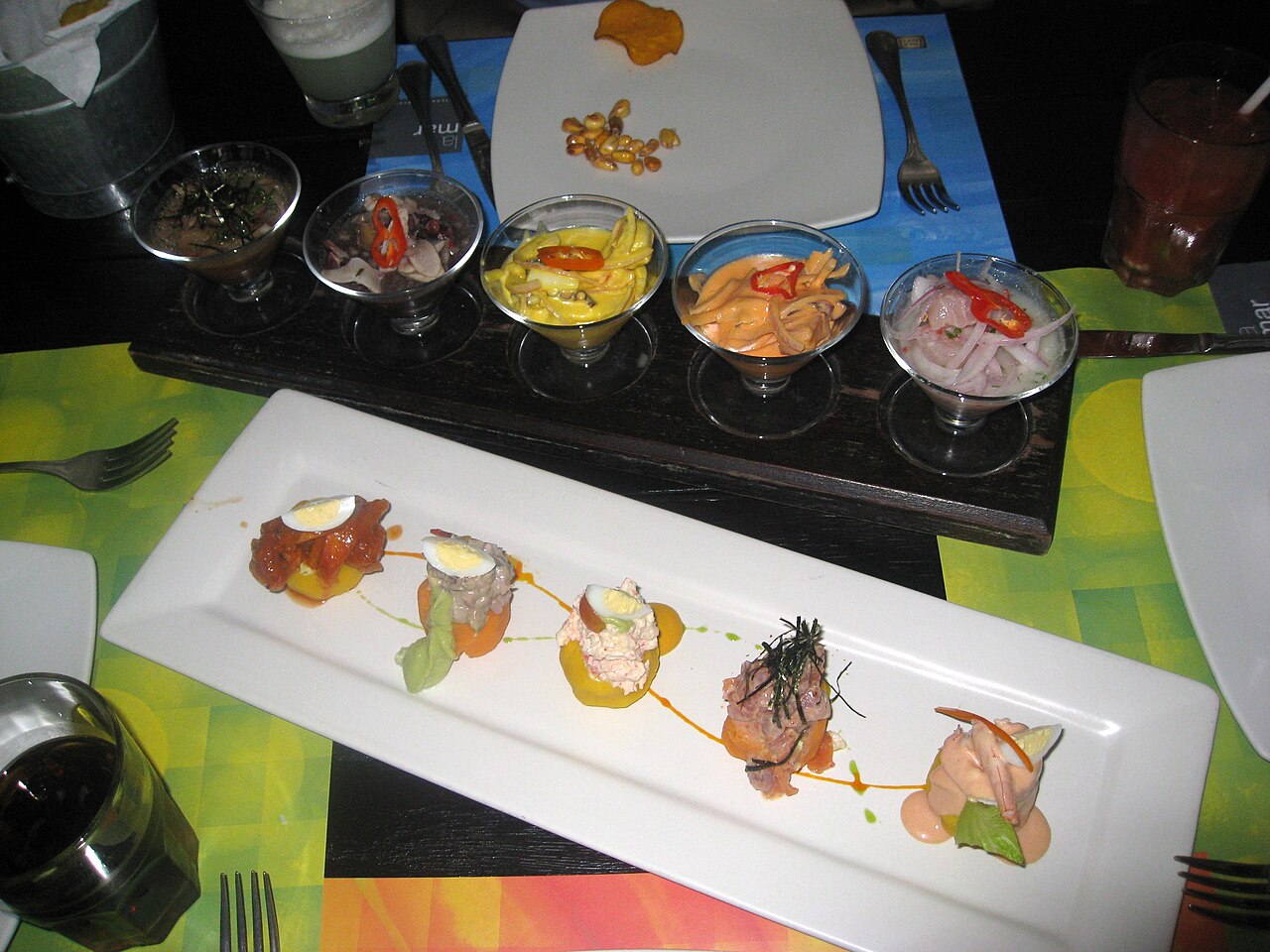
So begin with ceviche, and obey its law: it is a lunch dish, eaten at the peak of freshness, never at night — the cevicherías open late morning and many close by mid-afternoon. The Peruvian form is exact: fresh fish in lime juice — the leche de tigre — with ají limo chili, red onion, salt, served with sweet potato and choclo, the large-kernel Andean corn. Its Nikkei sibling is the tiradito: the same cure over sashimi-thin slices, a form born of Lima's Japanese community — the tradition that runs from the city's old Nikkei kitchens to Maido, and that trained chefs as far-flung as Nobu Matsuhisa, who learned his trade in Lima. Around the flagship dish, the city layers its other worlds: the anticuchos, skewers of beef heart grilled over charcoal at street stands from dusk; the chifa restaurants of the Barrio Chino, where Cantonese technique met Peruvian ingredients after Chinese workers arrived from 1849 and produced, among other things, the soy-and-ginger logic inside lomo saltado; and the picarones, pumpkin and sweet-potato rings fried to order and drenched in chancaca syrup, sold from carts in Barranco's evening streets.
The drink is a legal document too. Peruvian pisco is protected by denomination rules with real teeth: distilled from eight permitted grape varieties in the southern coastal valleys, distilled to proof with no water added afterward, never aged in wood, no additives permitted. The pisco sour built on it — pisco, lime, syrup, egg white, a dash of Angostura on the foam — was created in Lima in the early 1920s at Morris' Bar by the American bartender Victor Vaughen Morris, refined into its modern form within the decade, and is honored with a National Pisco Sour Day on the first Saturday of February; the Gran Hotel Bolívar in the old center still serves its oversized version, the Catedral. Peru has meanwhile collected the World Travel Awards title of World's Leading Culinary Destination repeatedly, including in 2025 — the industry echo of what the cevicherías already knew.
Picture the place
At a Miraflores cevichería at one o'clock the room is at full tilt: waiters crossing with trays of ceviche and jugs of chicha morada, the fish cut to order behind the counter, every table at the same delicious stage of the same meal — and by four, the doors are chained and the staff are eating the last of the day's fish themselves.
The easily missed detail
The ceviche's clock is chemical as well as cultural: the lime cure begins to toughen the fish within the hour, which is why the great cevicherías cut and cure to order and why the dish refuses dinner. The matching detail is on the plate's edge — the sweet potato and choclo are not garnish but engineering, the sweetness and starch set against the acid and heat, and a ceviche served without them is a sentence missing its punctuation.
A practical rhythm
- Morning — Breakfast is the market: a chicharrón sandwich or a tamal in Surquillo Market's aisles, and a walk past the fish stalls that supply the noon ceviche — the freshness argument made visible.
- Midday — The main event: ceviche at one o'clock at a dedicated cevichería, tiradito beside it, and the afternoon surrendered to the historic center or the Larco, as this group's sights answer lays out.
- Evening — Dusk belongs to the grills and the bars: anticuchos and picarones in Barranco, a pisco sour at a classic hotel bar — and the tasting-menu reservation, booked weeks ahead, on whichever night it falls.
What could complicate the plan
The top tables are the bottleneck: Maido and Central book out weeks to months ahead, and Kjolle with them, so the reservation precedes the flight booking, not the reverse. The ceviche clock cuts the other way — arrive at a famous cevichería at three and you may find the day's fish finished and the kitchen closing. And the pisco has a border dispute: Chile claims the spirit and a version of the sour as its own, which in Lima is not a controversy but a loyalty test — order the Peruvian form, with the egg white and the bitters, and be ready to defend it.
What to do next
Reserve the tasting menu today, put a cevichería lunch on the first full day at one o'clock, and let one Barranco evening run on anticuchos, picarones and a single, properly made pisco sour.
Sources
- UNESCO, Intangible Cultural Heritage — the practices and meanings associated with Peruvian ceviche, inscribed on the Representative List in December 2023 at the Kasane session; ceviche declared part of Peru's national heritage in 2004, with National Ceviche Day on June 28
- The World's 50 Best Restaurants — Central ranked No. 1 in 2023, the first South American restaurant to top the list; Maido No. 1 in 2025, with Kjolle (No. 9), Mérito (No. 26) and Mayta (No. 39) also listed
- World Travel Awards — Peru named World's Leading Culinary Destination repeatedly, including 2025
- Peru's pisco denomination rules — eight permitted grape varieties; distilled to proof with no water added, no wood aging and no additives