Loire Valley / France When to visit
When should I visit Loire Valley, France, for the best experience?
The short answer
Late May into June, or the first three weeks of September — Tours averages a high of 67.3°F (19.6°C) in May and 71.8°F (22.1°C) in September with roughly 2 inches of rain a month, and both windows fall inside Chambord's long 9:00 a.m. to 6:00 p.m. season rather than its short winter day.
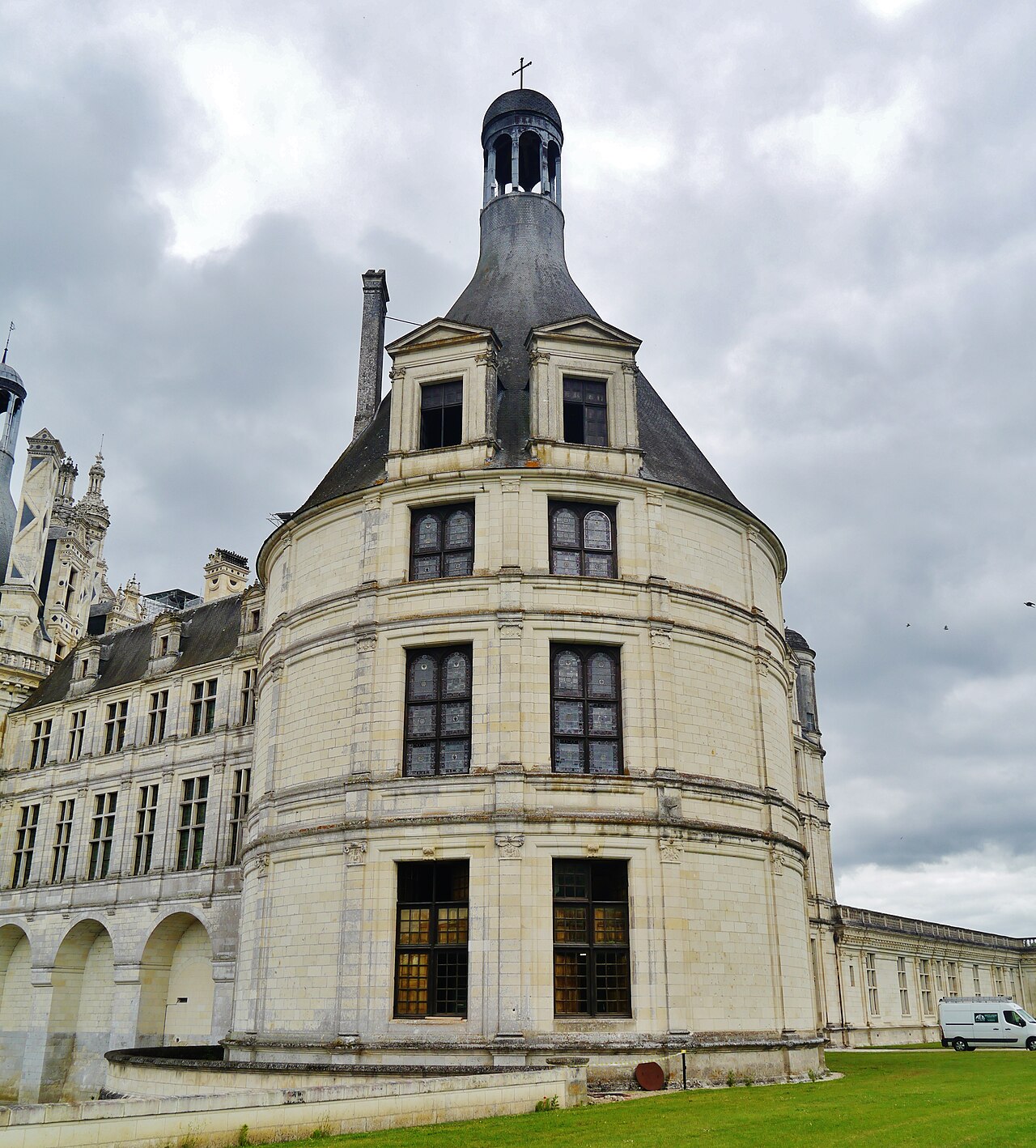
The answer, with local context
The Loire runs 280 km through the inscribed landscape, from Sully-sur-Loire east of Orléans to Chalonnes west of Angers, so the valley is a driving and cycling region rather than a single stop. Météo-France's 1991–2020 normals for the Tours station put June at a high of 74.1°F (23.4°C) and a low of 54.7°F (12.6°C) on 53.2 mm of rain, and July at 78.6°F (25.9°C) on just 46.6 mm. August is marginally the warmest month at 78.8°F (26.0°C) and the driest at 44 mm.
Sunshine is the figure that really separates the months. Tours collects 228.5 hours of sun in June and 247.1 in July, then 191.3 in September — and only 122.9 in October, a drop of nearly 70 hours in four weeks. Annual totals are 1,884.8 hours of sunshine against 677.8 mm of rain.
Opening hours move with that light. The Domaine national de Chambord runs a 9:00 a.m. to 6:00 p.m. day from late March to late October, then shortens to 9:00 a.m. to 5:00 p.m. for the winter stretch, with last entry 30 minutes before closing and the French gardens shutting half an hour ahead of the château itself.
Picture the place
In the second half of October the valley keeps its warmth but loses its daylight fast — the figures show barely half September's sunshine — so the long low light across the formal parterres arrives early in the afternoon, and because the gardens shut 30 minutes ahead of the château they empty first.
The easily missed detail
Chambord closes on scattered Mondays in the low season — published dates include 5, 12, 19 and 26 January, 2 February, and 9, 16 and 23 March — but the estate states those closures do not apply during French school holidays in any zone. The surrounding park, by contrast, is free to enter, and the car parks run 24 hours a day with card payment at automatic terminals, so an early or late walk in the estate costs nothing but the parking fee.
A practical rhythm
- Late spring — May's 214.2 hours of sunshine and 57.7 mm of rain give long garden mornings without July crowding.
- High summer — Expect a Chambord Live weekend on 26–28 June, when the château stays open to 6:00 p.m. but estate roads close from 1:00 p.m.
- Early autumn — September's 71.8°F (22.1°C) high and 51.8 mm of rain still sit inside the 6:00 p.m. closing season.
What could complicate the plan
The State Department places France at "Level 2 – Exercise increased caution" in an advisory issued 28 May 2025 and last updated 11 August 2025, citing terrorism, frequent strikes and protests that disrupt transport, and pickpocketing at tourist sites. A US passport must be valid at least 3 months beyond your departure from the Schengen area and carry at least 1 blank page, and France does not accept the 12-page US emergency passport for entry. Chambord itself closes on 1 January and 25 December.
What to do next
Read the Loire things-to-do answer in this group for what a day at Chambord actually costs, and the food answer for how Vouvray's appellation rules shape a tasting stop near Tours.
Sources
- Météo-France, climate normals 1991–2020, Tours station 37179001 — monthly temperature, rainfall and sunshine
- Domaine national de Chambord — seasonal hours, last entry, Monday closures, park and parking access
- UNESCO World Heritage Centre, The Loire Valley between Sully-sur-Loire and Chalonnes — length of the inscribed river stretch
- US Department of State, France travel advisory — advisory level, dates and passport rules