Loire Valley / France Food and drink
Where should I eat in Loire Valley, and which local food or drink is worth trying?
The short answer
Eat by the river's three tables — goat cheese and rillettes in the Tours center, cabernet franc country cooking in the Chinon west, and the great wine villages at both ends (Sancerre east, Muscadet west) — with a troglodyte oven lunch in the Saumur caves for the valley's strangest meal.
The answer, with local context
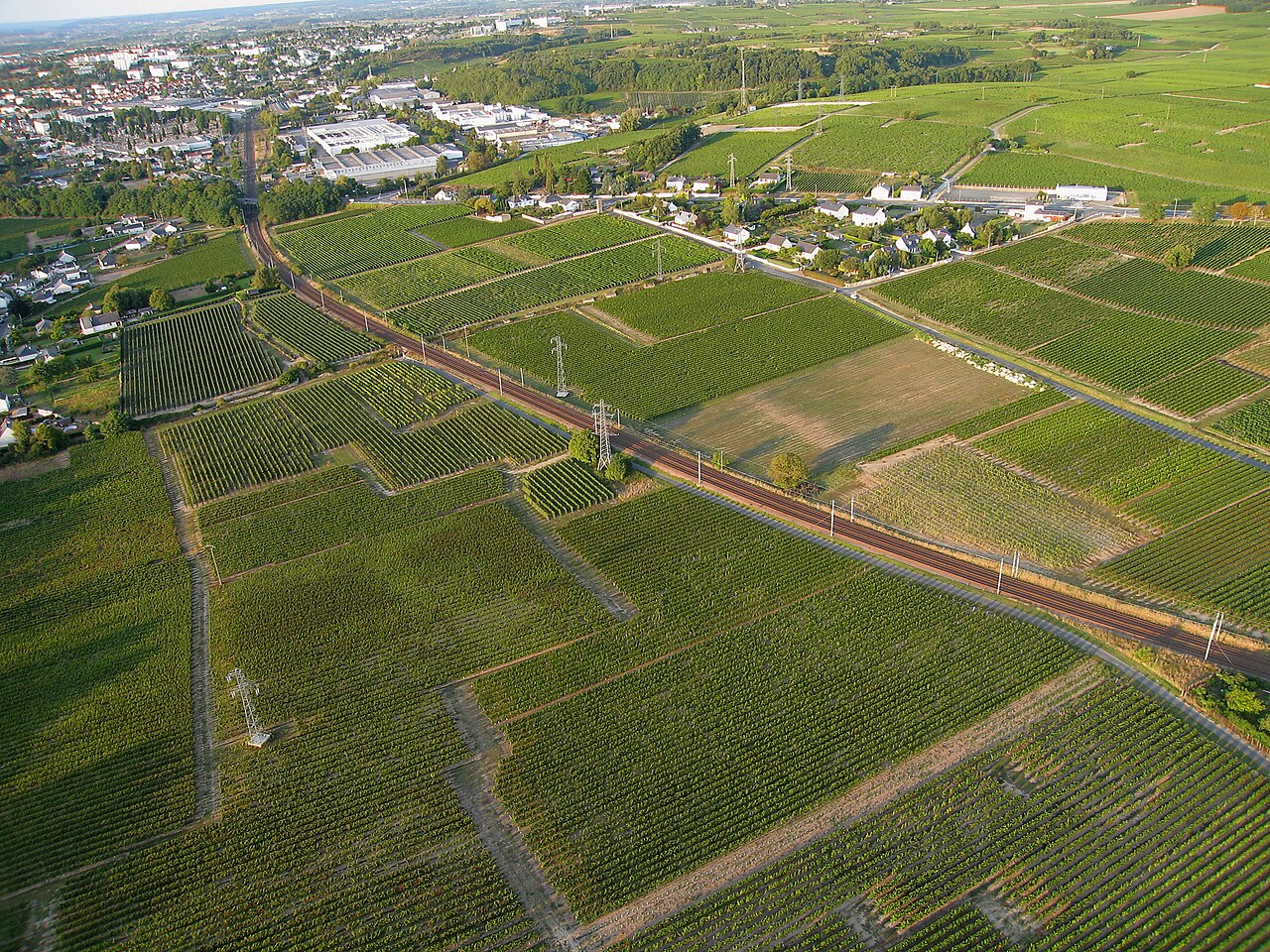
The valley's pantry is a map of its appellations, and there are more than 50 wine AOCs along the river. Start at the center: Tours and its old town (Place Plumereau's half-timbered square) eat rillettes de Tours — slow-cooked potted pork, protected by a PGI, spread on toast with a glass of Vouvray; the Vouvray vineyards sit 15 minutes east, pouring chenin blanc in every register from bone-dry to the great moelleux, in tasting rooms cut into the same tuffeau cliffs as the villages' caves. The cheese is Sainte-Maure de Touraine, an ash-rolled goat log with a rye straw through its middle (AOP since 1990), made in the countryside south of Tours and sold at every market — buy it at the Halles de Tours or the Amboise market and test the straw: it should slide out clean. Markets are the valley's restaurants of the morning: Amboise's (Sunday, on the riverbank, among France's largest) and Loches' and Chinon's feed the trip's picnics.
The wine compass runs the full valley. East: Sancerre and Pouilly-Fumé on their chalk hills, sauvignon blanc at its world source, with the goat cheese of Crottin de Chavignol (the village is inside the Sancerre vines) as the appointed pairing. Centre-west: Chinon, Bourgueil and Saumur-Champigny — cabernet franc's homeland, reds priced for drinking rather than collecting, served in the cave restaurants of Chinon (where the medieval fortress town keeps restaurants in the rock, like the troglodyte tables at Turquant and Souzay-Champigny) with fouées — the little puffed breads baked in wood-fired cave ovens and filled with rillettes, goat cheese and mogettes beans. West end: Saumur's sparkling houses (the tuffeau caves of Bouvet-Ladubay, founded 1851, and Ackerman, 1811, the oldest) pour the valley's celebration wine, and beyond Angers the Muscadet vineyards run to Nantes and the oyster coast. The sweet register belongs to the Layon valley south of Angers (Coteaux du Layon and Quarts de Chaume, chenin at its most honeyed).
For the sit-down splurge, the valley's Michelin map clusters at the center: the tables of Tours and its villages, the château-hotel dining rooms around Amboise and Blois, and in the west the starred houses of Saumur and Angers cook the river's fish — Loire sandre (pike-perch) and salmon when licensed, beurre blanc over everything, the sauce Nantes gave the world. The valley's own dessert arrives from its eastern edge: the tarte Tatin, caramelised upside-down apple tart invented at the Hôtel Tatin in Lamotte-Beuvron in the Sologne (the 1880s, by the Tatin sisters' famous accident), served warm with crème crue in every self-respecting bistro from Orléans to Angers — and the poire tapée, the flattened dried pear of Rivarennes, revived by a village association, is the souvenir the locals actually keep.
Picture the place
A cave restaurant near Saumur at lunch: the tuffeau wall weeping cool behind your chair, a basket of fouées still ballooned from the oven, and a Chinon red breathing on the stone table.
The easily missed detail
The valley's living food museum is underground and growing: the champignonnières. The tuffeau caves around Saumur and Bourré grow France's mushrooms — the champignon de Paris, blue-footed pleurotes, shiitake — in the dark at a constant 54°F (12°C), and the working farm at Bourré (the Caves des Roches) tours visitors through galleries carved with the village itself in miniature. Lunch on mushrooms where mushrooms are the landscape: no other French region eats its own geology this literally.
A practical rhythm
- Markets before restaurants — Amboise Sunday or Tours' Halles for the picnic layer (rillettes, Sainte-Maure, a Vouvray) before any booking
- Wine by the day, not the glass — One appellation per day (Vouvray, then Chinon, then Sancerre if the road goes east) beats a scattershot tasting crawl
- Book the west's cave tables — Troglodyte restaurants seat few and fill weekends; reserve, and take the cool cave over a hot terrace in July
What could complicate the plan
Tasting rooms and long roads are the tension in this answer. France allows 0.5 g of alcohol per liter of blood at the wheel — 0.25 mg per liter of exhaled air — and only 0.2 g per liter for anyone still on a probationary licence, while this answer's cellars run from the Sancerre hills in the east to the Muscadet coast in the west — further apart than the 280 km of inscribed river lying between them. A day that tastes in Vouvray and ends in Chinon therefore needs a spitting bucket or a passenger at the wheel. The markets are the other fixed point, because they are a morning trade rather than an all-day one, so a picnic assembled after noon is assembled from a supermarket. And the cave tables are small rooms cut into tuffeau, which fill at weekends weeks ahead — a walk-up Saturday dinner underground is the one promise here that cannot be kept in July.
What to do next
Anchor one dinner in Tours' old town, one lunch in a Saumur-side cave, and let the markets build the rest.
Sources
- INAO (Institut national de l'origine et de la qualité) — the AOP/AOC register: Sainte-Maure de Touraine AOP, Crottin de Chavignol AOP, the Loire wine appellations (Vouvray, Chinon, Sancerre, Muscadet and 50+ more)
- Bureau Interprofessionnel des Vins du Val de Loire (InterLoire) — the valley's wine geography from Sancerre to the Muscadet coast
- Syndicat des Rillettes de Tours — the PGI-protected Tours rillettes
- Loire Valley Tourism (CRT Centre-Val de Loire) — the covered markets, the troglodyte restaurants and the Caves des Roches mushroom galleries at Bourré
- Service-public.fr (Direction de l'information legale et administrative, France) — (retrieved November 5, 2026)