Luang Prabang / Laos Food and drink
Where should I eat in Luang Prabang, and which local food or drink is worth trying?
The short answer
Eat the town's own canon: or lam, the pepperwood stew; kaipen, crispy Mekong river weed, torn and dipped in jeow bong; and a breakfast bowl of khao soi — at Tamarind for the guided version, the morning market for the real one, and the night market's food alley for the grazing one.
The answer, with local context
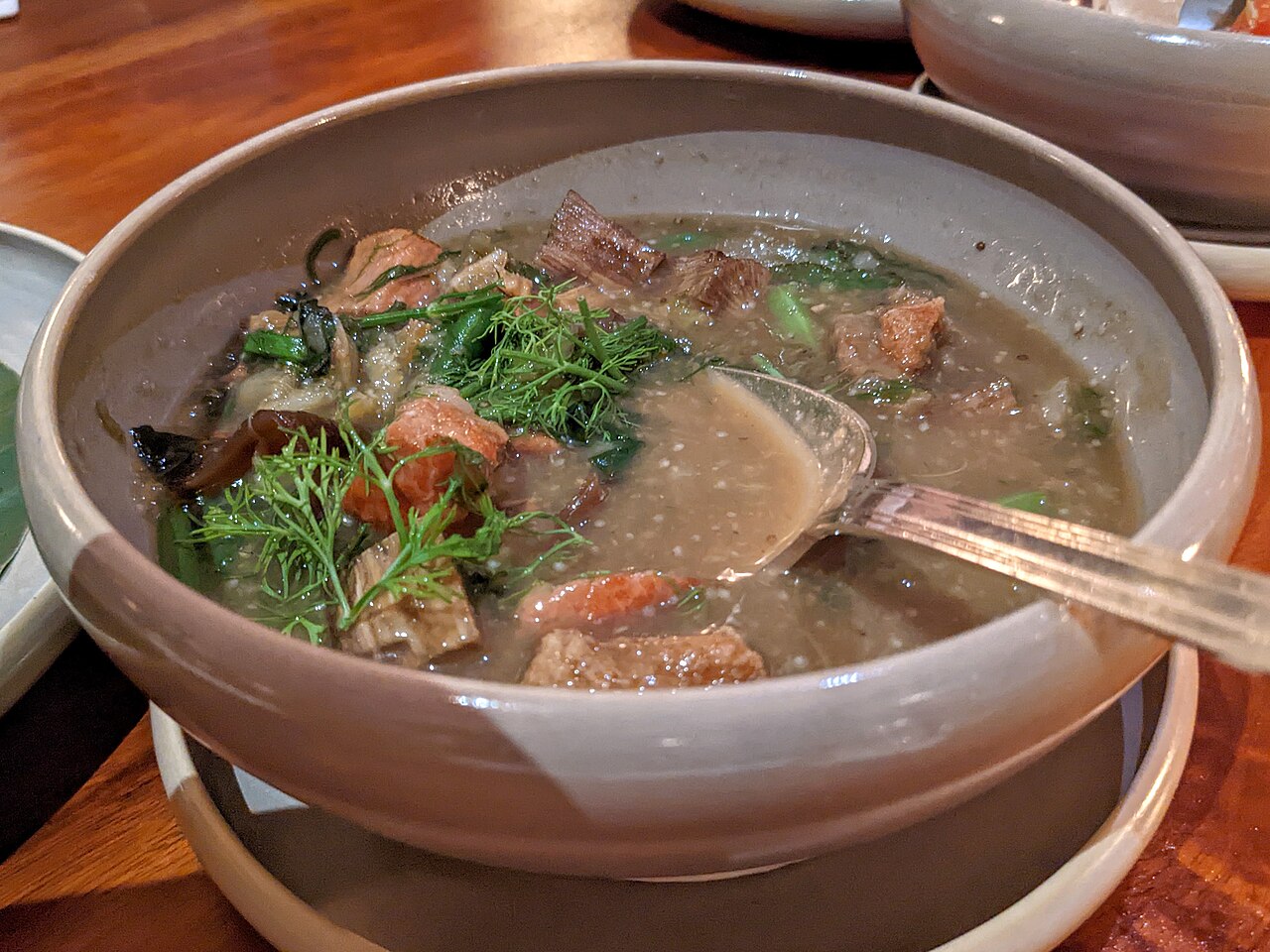
Luang Prabang has dishes that belong to it alone, and the first is or lam: a thick, slow stew of buffalo — or ox, chicken or pork — with eggplant, beans and herbs, defined by mai sakhan, a pepperwood vine whose bark gives the dish a woody heat that blooms into a gentle numbness on the tongue. It is the town's signature, and the addresses for it are known: Tamarind, chef Joy Ngeuamboupha's restaurant on the Nam Khan riverfront, serves it as part of tasting platters that function as a Lao menu translated — dips, stuffed lemongrass, sun-dried beef — and runs the town's benchmark cooking school; on the Kuang Si road, the all-bamboo Bio Bamboo restaurant draws Lao families from as far as Vientiane for its or lam. A bowl at a good restaurant runs about ₭90,000. Paired with the stew comes the town's great snack: kaipen, sheets of algae harvested from the Mekong's rocks in the dry season, pressed with sesame, garlic and tomato, sun-dried and flash-fried into crisp green-black crackers, eaten by tearing and dipping into jeow bong — a sweet, smoky chili dip bulked with slivers of dried buffalo skin. Khaiphaen, the vocational training restaurant run by the Peuan Mit program across from Wat Choum Khong, is named after the snack and reinvests all its profits in training disadvantaged young people for hospitality work.
Breakfast is a bowl with a misleading name: khao soi Luang Prabang is nothing like the Thai curry noodle soup — here it is wide, flat rice noodles in a clear pork broth, crowned with a spoonful of fermented soybean, tomato and minced pork, eaten at market stalls for a few thousand kip more than nothing. The morning market, in the lanes beside Phousi, is where the town's food day starts: khao piak sen noodle pots, grilled sticky rice cakes, hang peung — grilled honeycomb in banana leaf — and stacks of drying kaipen in season. The French thread runs alongside: Le Banneton's croissants and the khao jee pate baguette carts, stuffed with pâté, pork floss and pickled papaya, are the colonial era's durable breakfast. Evenings belong to the night market's food alley off Sisavangvong Road, where the stalls grill Mekong fish and sai oua — the herb-loaded pork sausage shot through with lemongrass, galangal and kaffir lime — and the vegetarian buffet lane serves the town's cheapest full meal by the heaped bowl.
Picture the place
In the food alley the smoke from a dozen charcoal grills threads up through the market lamps, whole river fish blacken on one side while sausages gloss on the other, and every low table carries the same trio — a basket of sticky rice, a dish of jeow, and a stack of green kaipen waiting to be torn.
The easily missed detail
Kaipen is a river-level report you can eat. The algae grows on Mekong rocks only when the water runs low and clear in the dry season, so the sheets exist from roughly December to April — and their harvest is one of the reasons Luang Prabang watches the river's falling level each winter with a cook's interest. Order kaipen in the wet season and you are eating last season's stock; order it in January and it may have been on a drying rack above the river the week before.
A practical rhythm
- Morning — Breakfast in the market lanes after the alms ceremony: khao soi or khao piak sen at a noodle stall, then a baguette and coffee — Le Banneton for the French version, a cart for the street one.
- Midday — Midday is the teaching meal: Tamarind's tasting platter, which arranges the jeow dips, sausages and or lam into a single legible introduction to the town's cooking.
- Evening — Evenings graze: the night market food alley for grilled fish, sai oua and the buffet lane, or a nam khan riverside table at Dyen Sabai across the bamboo bridge when the river is low enough for it to stand.
What could complicate the plan
The bamboo bridge to the Nam Khan's far bank — and the restaurants beyond it — is seasonal infrastructure: it is built by a local family each dry season, charges a small toll, and is dismantled before the monsoon swells the river, so a wet-season evening plan that depends on it dissolves. Or lam's sakhan heat is real and cumulative; the stew is ordered mild at your own risk of eating a different dish. And the town eats early: market stalls wind down by nine, kitchens close earlier than visitors expect in a heritage town that wakes at five, and a late dinner is a plan made at lunch.
What to do next
Book Tamarind for your first lunch and its cooking class if you have a spare day, breakfast once in the morning market lanes, and keep one evening for the food alley with a plate of kaipen and jeow bong to start.
Sources
- Tamarind Restaurant and Cooking School, Luang Prabang — the tasting platters of jeow dips and or lam (about ₭90,000 a bowl), stuffed lemongrass, and its market-tour cooking classes
- Khaiphaen Restaurant (Peuan Mit / Friends-International) — the training restaurant named for kaipen, the crispy Mekong river weed unique to Luang Prabang, with all profits reinvested in its students
- Luang Prabang Morning Market and Night Market food alley — khao soi and khao piak sen breakfast stalls, hang peung and grilled sticky rice, and the evening grills of Mekong fish and sai oua