Luxor / Egypt Things to do
What are the most worthwhile things to do in Luxor on a first visit?
The short answer
Explore Karnak's Great Hypostyle Hall, see the painted royal tombs in the Valley of the Kings, and visit Hatshepsut's terraced mortuary temple, then finish with Luxor Temple on the Nile's east bank.
The answer, with local context
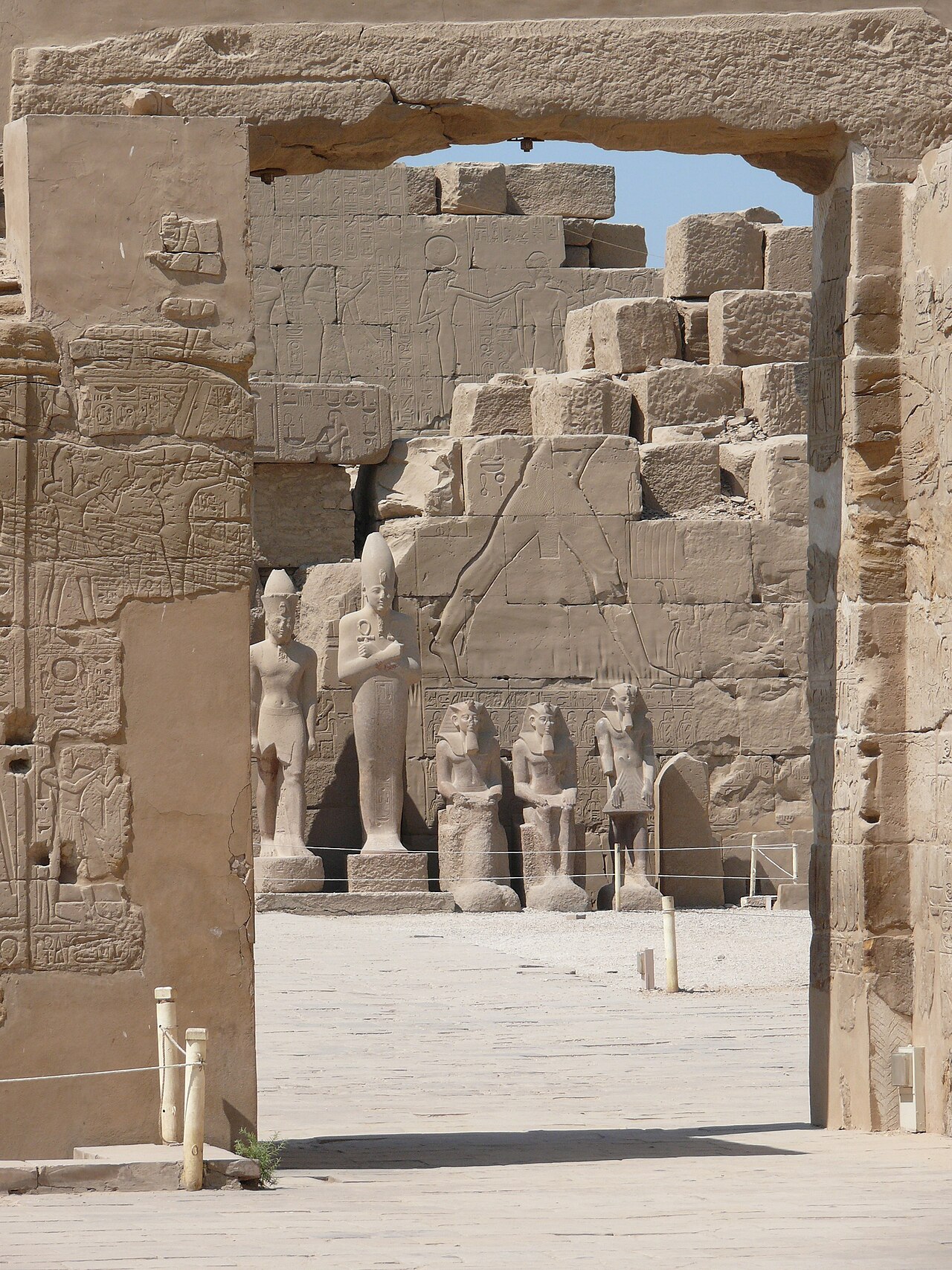
Karnak is one of the largest temple complexes of ancient Egypt. Its best-known architectural feature, the Great Hypostyle Hall, contains 134 enormous stone columns. UNESCO records the hall as approximately 102 meters wide and 53 meters deep. The twelve taller central columns reach approximately 20.4 meters (67 feet), while the Egyptian antiquities ministry identifies the remaining columns as approximately 15 meters (49 feet) high.
The hall was developed principally under the Nineteenth Dynasty kings Seti I and Ramesses II, whose reigns fall in the thirteenth century BCE. Nearby stands an obelisk erected by Hatshepsut, nearly 30 meters (98 feet) tall and weighing more than 300 metric tons. Karnak also contains a sacred lake, the Temple of Khonsu, smaller chapels, pylons, and monumental gateways.
The Egyptian Ministry of Tourism and Antiquities currently lists Karnak as open daily from 6 a.m. to 5 p.m. Its published foreign-adult admission is 600 Egyptian pounds, covering the main Karnak Temple and its Open Museum. The separate Temple of Mut has its own admission category.
Across the Nile, the Valley of the Kings preserves a radically different approach to royal burial. Its earliest confirmed New Kingdom royal burial was that of Thutmose I, who reigned around 1504–1492 BCE. Rather than building large visible pyramids, rulers selected tombs excavated into the desert cliffs. The antiquities ministry currently lists the valley as open 6 a.m.–5 p.m., with a published 750-pound foreign-adult admission for general access.
Some tombs require additional tickets. The tomb of Ramesses VI, KV9, was begun for Ramesses V and later enlarged by his successor. Its decoration includes the Book of Gates, Book of Caverns, Amduat, and astronomical scenes. The ministry lists a separate 220-pound foreign-adult ticket for KV9; this is not included in the general valley admission.
At Deir el-Bahari, Hatshepsut's mortuary temple introduces a completely different architectural form. Its terraces rise in front of a steep cliff, and the reliefs include an account of an expedition to Punt. The antiquities ministry publishes 6 a.m.–5 p.m. visiting hours and a 360-pound foreign-adult entrance ticket for the Deir el-Bahari archaeological site.
Picture the place
Karnak's tall columns stand in dense rows beneath an open sky. The Valley of the Kings is a dry, rocky landscape of cliffs and excavated tomb passages, while Hatshepsut's temple stretches horizontally across a series of monumental terraces beneath a towering rock face.
The easily missed detail
The royal tombs, Karnak's temples, and Hatshepsut's mortuary temple had different functions. The Valley of the Kings housed royal burials; Karnak was a major cult center dedicated especially to Amun; and Deir el-Bahari provided a mortuary setting for rituals associated with deceased rulers. Visiting all three explains ancient Thebes more clearly than treating every monument as simply another temple.
A practical rhythm
First day, morning — Karnak: Explore the Great Hypostyle Hall and surrounding precincts.
Second day, early morning — West bank: Visit selected tombs in the Valley of the Kings, followed by Hatshepsut's temple.
Second evening — Luxor Temple: See the east-bank monument and the architectural additions of Amenhotep III and Ramesses II.
What could complicate the plan
The separate fees matter. The published 600-pound Karnak ticket, 750-pound Valley of the Kings ticket, 220-pound KV9 ticket, and 360-pound Deir el-Bahari ticket purchase different admissions, rather than one combined Luxor pass. Tomb openings can change for conservation reasons, and underground passages can involve steep or confined routes. UNESCO identifies tourism pressure, flooding, and conservation requirements among the long-term challenges affecting Ancient Thebes.
What to do next
identifies the most comfortable months for these exposed archaeological sites. suggests local meals and traditional bread to seek around the east-bank city and nearby Upper Egyptian communities.
Sources
- Egyptian Ministry of Tourism and Antiquities, Karnak — column dimensions, historical construction, opening hours, and admission.
- Egyptian Ministry of Tourism and Antiquities, Valley of the Kings — tomb history, access, and general tickets.
- Egyptian Ministry of Tourism and Antiquities, Tomb of Ramesses VI — separate ticket and tomb decoration.
- Egyptian Ministry of Tourism and Antiquities, Deir el-Bahari — architecture, Punt reliefs, and admission.
- UNESCO World Heritage Centre, Ancient Thebes — World Heritage components and monument functions.
- U.S. Department of State, Egypt Travel Advisory — safety guidance affecting archaeological travel.