Luxor / Egypt Food and drink
Where should I eat in Luxor, and which local food or drink is worth trying?
The short answer
Seek out Upper Egyptian aish shamsi bread, okra stew, and bessara, looking in traditional restaurants and local bakeries on the Nile's east and west banks rather than relying only on hotel dining.
The answer, with local context
Luxor's cuisine reflects the agricultural communities of Upper Egypt. One of its most distinctive foods is aish shamsi, literally sun bread. Unlike ordinary baladi bread, it is traditionally made with dough allowed to rise in the sun before baking. The Egyptian newspaper Al-Ahram documents its continuing importance in Upper Egyptian towns and villages, especially during Ramadan, when families may prepare multiple loaves for meals throughout the month.
The traditional preparation is associated with village baking rather than one modern branded restaurant. Around Luxor, local bakeries and food markets are better settings for encountering this bread than international hotel buffets. Its thick, rounded form and characteristic fermentation distinguish it from the flatter baladi bread commonly found throughout Egypt.
Another Upper Egyptian specialty is bamya, an okra stew that may be prepared with meat, tomatoes, onions, and spices. Bessara uses fava beans or other legumes cooked and mashed with seasonings. These dishes offer different textures from the leafy molokhiya soup associated with wider Egyptian cooking.
The nearby town of Esna, within Luxor Governorate but south of Luxor city, provides a documented example of preserving regional cooking. An Egyptian restaurant feature published in July 2025 described Okra, a women-run restaurant developed through the Esna Kitchen initiative in 2023. Its menu examples included okra stew, bessara, shalolou, madida, brown lentils, and sun-dried Upper Egyptian bread.
The same feature identified sakheena as a fish-based preparation involving spices. It also described Okra's use of a historic building in Esna and its connection with local food heritage. Esna is a separate excursion, however, not a restaurant neighborhood within central Luxor. Its 2025 menu is evidence of the area's culinary traditions rather than proof that every dish remains available.
For a meal within Luxor city, the east-bank commercial streets around the souk and Nile Corniche provide access to Egyptian kitchens, bakeries, and cafés. On the west bank, the residential and agricultural communities around the archaeological sites provide another context for traditional bread and home-style food. A tawagen dish—meat, vegetables, or okra slow-cooked in a clay pot—is another useful option to seek by its actual ingredients.
Picture the place
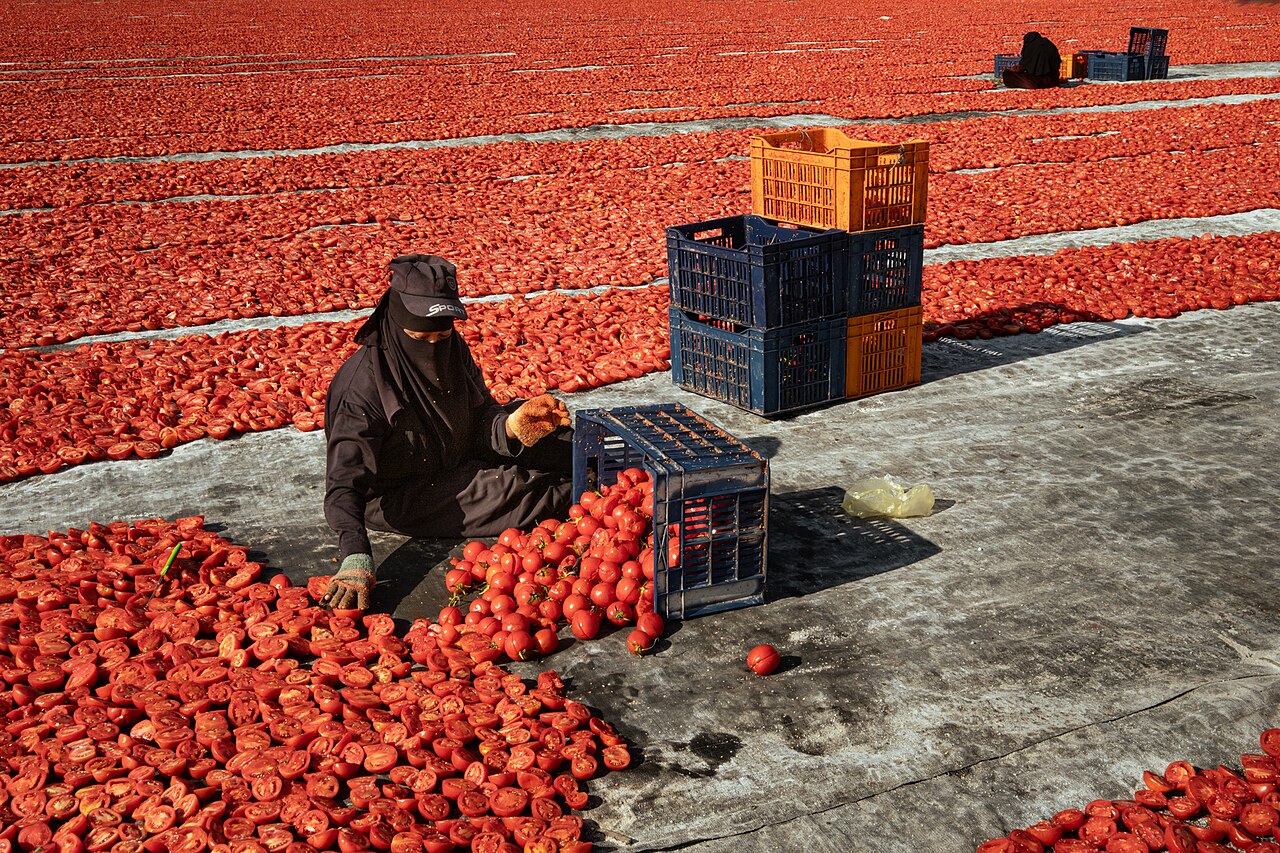
Sun bread has a substantial, rounded form with a browned crust. Okra stew contains recognizable green pods in a tomato-rich sauce, while bessara is a thicker legume preparation. The agricultural landscape around Luxor also supports produce drying; photographs taken in the area document tomatoes being cut and laid out to dry.
The easily missed detail
Aish shamsi is a distinctive Upper Egyptian bread, not merely another name for baladi bread. Its sun-assisted fermentation and thicker form make it worth seeking separately. A visitor ordering only the bread automatically served with a restaurant meal may never encounter it.
A practical rhythm
Breakfast — Local bakery: Look for traditional bread, particularly aish shamsi when freshly available.
Lunch — Egyptian kitchen: Try bamya, bessara, or a clay-pot vegetable or meat preparation.
Another day — Esna: If traveling south of Luxor, explore the town's food heritage and locally prepared Upper Egyptian dishes.
What could complicate the plan
Aish shamsi contains wheat and is not suitable for gluten avoidance. Okra dishes may contain meat stock, while bessara recipes vary by kitchen. The Esna restaurant's published menu and operating arrangements date from a 2025 account and are subject to change. Egypt's summer heat also affects the handling of prepared foods, making the CDC's advice on thoroughly cooked meals particularly relevant.
What to do next
explains Luxor's east-bank and west-bank monuments. identifies the cooler months for combining those archaeological visits with food stops.
Sources
- Al-Ahram Weekly, “Local Ramadan Vibes” — sun bread and Upper Egyptian Ramadan traditions.
- Cairo 360, “From Bamya to Bessara and Sun-Dried Bread” — 2025 documentation of regional dishes and Esna Kitchen.
- Explore Luxor, “Bread of Life” — Upper Egyptian bread and local bakery traditions.
- U.S. Centers for Disease Control and Prevention, Food and Water Precautions — food-handling guidance.