Luxor / Egypt When to visit
When should I visit Luxor, Egypt, for the best experience?
The short answer
November through February is the strongest season for visiting Luxor's open-air temples and royal tombs, with January averaging a daytime high of 73°F (23°C) compared with 107°F (41.4°C) in July.
The answer, with local context
Luxor lies in Upper Egypt, approximately 435 miles (700 kilometers) south of Cairo, beside the Nile. Its climate is substantially hotter and drier than that of Egypt's Mediterranean coast. The Egyptian Meteorological Authority's 1981–2010 climate normals, published by the World Meteorological Organization, record a January average nighttime low of 43°F (5.9°C), rising to 46°F (7.8°C) in February.
The transition toward summer is rapid. March averages a daytime high of 85°F (29.5°C). April rises to 96°F (35.3°C), May to 102°F (39°C), and June to 106°F (41.3°C). Even October averages 96°F (35.3°C), making November's 84°F (29°C) average high a more comfortable prospect for long archaeological visits.
Rain contributes very little to the seasonal difference. January's average precipitation is just 0.06 inches (1.6 mm), while June, July, and August record essentially zero rainfall. The Egyptian Meteorological Authority reports an annual rainfall total of only a few millimeters in the monthly series.
The weather is consequential because Luxor's archaeological attractions occupy extensive, exposed terrain. On the east bank, Karnak's temple buildings and enormous courts require outdoor walking. On the west bank, the Valley of the Kings sits among rocky desert hills, while Hatshepsut's temple stands against the cliffs at Deir el-Bahari. UNESCO inscribed these monuments as part of Ancient Thebes with its Necropolis in 1979, under criteria (i), (iii), and (vi).
Picture the place
Green fields and palm trees line parts of the Nile, but the landscape changes abruptly on the western side of Luxor. Beyond the cultivated riverbank rise pale desert cliffs, cut by valleys containing the entrances to ancient royal tombs.
The easily missed detail
Winter mornings are considerably cooler than winter afternoons. January's historical average range runs from 43°F (5.9°C) overnight to 73°F (23°C) during the day. Visitors taking an early river crossing or arriving at the west-bank tombs near opening time can encounter cool conditions before spending the afternoon on sun-exposed stone.
A practical rhythm
6 a.m. — West-bank tombs: Begin at the Valley of the Kings during its published morning opening period.
Late morning — Deir el-Bahari: Visit Hatshepsut's terraced mortuary temple before the hottest hours.
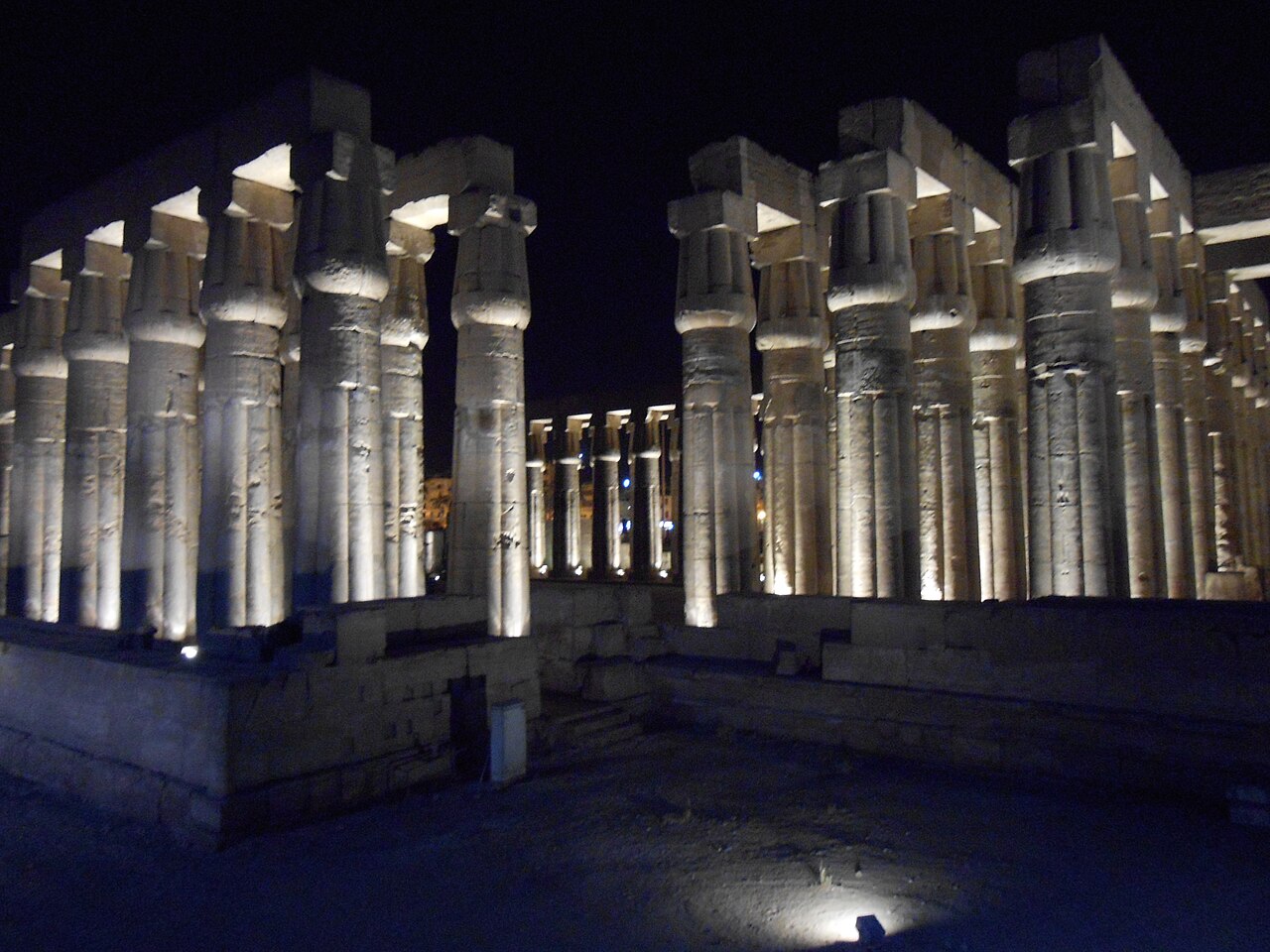
Later afternoon — Luxor Temple: Explore the east-bank monument during its published opening period, which extends to 8 p.m.
What could complicate the plan
Luxor's July average high exceeds its January average by roughly 34°F (18.4°C). Its western archaeological sites offer limited natural shade, and the distances between the Valley of the Kings, Deir el-Bahari, and east-bank temples require transport. The U.S. State Department also advises increased caution in Egypt, with more severe restrictions applying to particular regions outside Luxor.
What to do next
identifies the individual monuments and ticketing rules. explores traditional Upper Egyptian bread, stews, and market foods.
Sources
- World Meteorological Organization, Luxor Climate Normals — Egyptian Meteorological Authority temperature and rainfall figures, 1981–2010.
- UNESCO World Heritage Centre, Ancient Thebes with its Necropolis — location, inscription, monument geography, and criteria.
- Egyptian Ministry of Tourism and Antiquities, Valley of the Kings — west-bank setting and opening hours.
- Egyptian Ministry of Tourism and Antiquities, Luxor Temple — operating hours and architectural history.
- U.S. Department of State, Egypt Travel Advisory — national and regional security guidance.