Madagascar country guide Food and drink
What local dishes should I try in Madagascar, and where should I look for them?
The short answer
Try romazava and ravitoto in the highlands, grilled zebu brochettes along the coast, and koba or mofo gasy from traditional markets to experience Madagascar's distinctive combinations of rice, greens, meat, and locally grown ingredients.
The answer, with local context
Rice is fundamental to Malagasy meals. Madagascar's embassy in France identifies it as approximately 60% of the traditional diet in its culinary description. A meal known as sakafo commonly includes a portion of rice accompanied by meat, vegetables, or a broth. The traditional restaurant type called a hotely is one place to seek everyday Malagasy preparations.
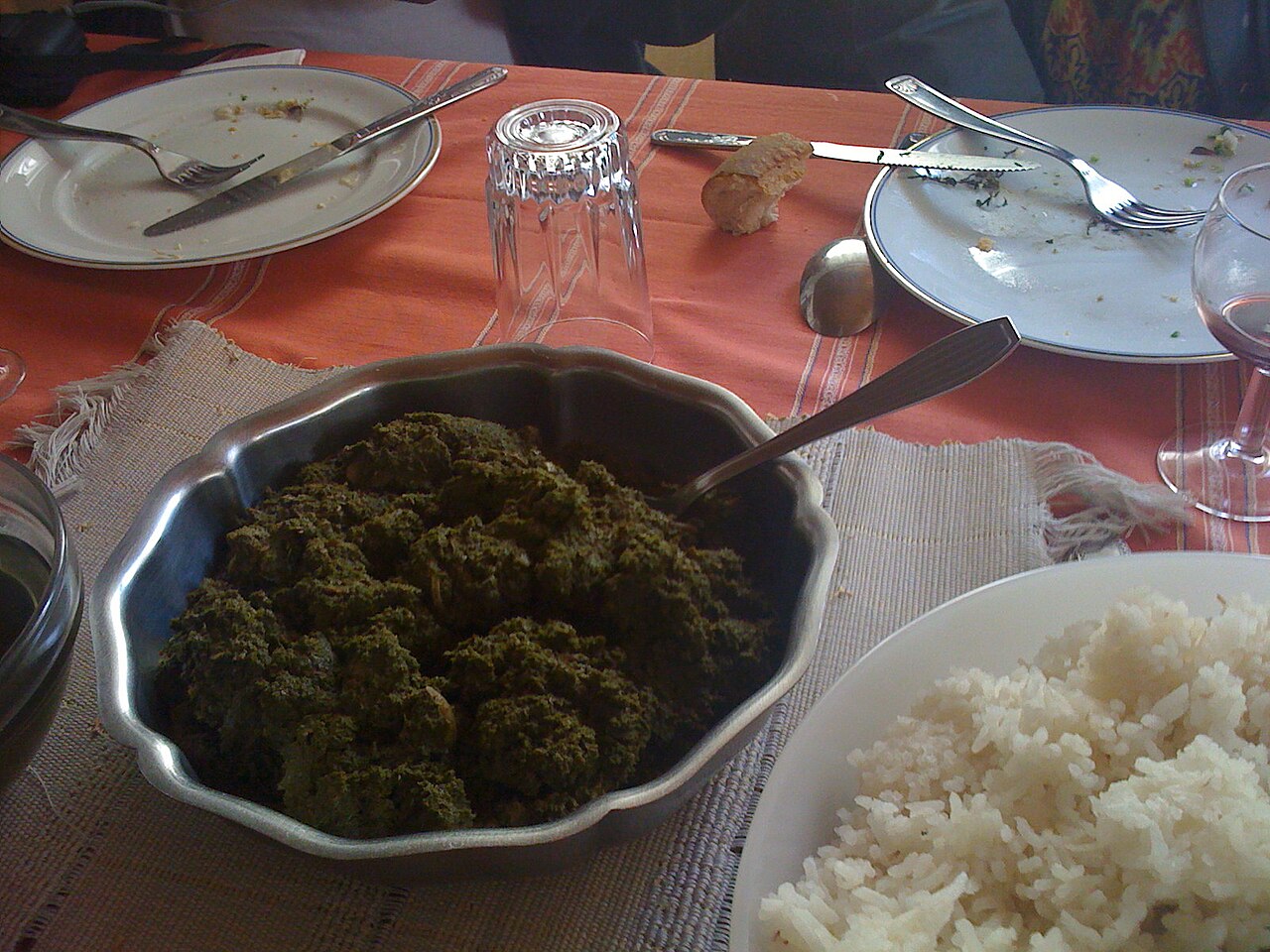
Two dishes reveal how the same ingredients can be used differently. Romazava is a broth containing meat—often zebu or chicken—and leafy vegetables. Madagascar's national tourism board identifies anamalaho, also known as brèdes mafane, as a characteristic green. Ravitoto instead uses pounded cassava leaves, cooked slowly with meat. The national tourism board describes a beef preparation, while the embassy's culinary guide identifies a traditional pork version.
Regional food becomes more distinctive along the coast. The tourism board documents masikita, grilled zebu skewers, commonly served with antsary, a preparation of green papaya or carrot. Another meat dish, henan'omby ritra, involves cooking zebu until the liquid reduces. Varanga is made from shredded zebu fillet and is associated with older royal food traditions.
The northeastern coast, including the Sainte-Marie region, has different ingredients. Madagascar's embassy identifies seafood and crustaceans prepared with coconut milk, as well as chicken or duck dishes using vanilla. Northern coastal cooking and highland meat-and-rice dishes therefore provide substantially different meals.
For breakfast, vary amin'anana combines rice with leafy greens. It may be eaten with kitoza, strips of dried or smoked meat. Traditional market snacks include mofo gasy, a rice-based cake, mofo sakay, a spicy fried preparation, and ramanonaka. They are not the same food simply because they share the word mofo.
Sweet foods and drinks offer another set of ingredients. Koba ravina combines sticky rice, banana, and crushed peanuts, wrapped in banana leaves. Ranon'ampango is a traditional drink made by adding water to toasted rice residue remaining in a cooking pot. Madagascar's tourism board also identifies vanilla, cloves, and wild voatsiperifery pepper among the island's characteristic flavorings.
Picture the place
Ravitoto has a dense, dark-green texture from its finely crushed leaves, while romazava is a lighter broth with pieces of meat and vegetables. Koba is wrapped in banana leaves, concealing a compact rice-and-banana filling.
The easily missed detail
Ravitoto is not necessarily pork-based. The Madagascar embassy describes a pork version, but the national tourism board documents one made with beef. A visitor avoiding a particular meat should ask about the actual preparation rather than relying on the dish's name. Koba also contains peanuts, which are easy to overlook because its filling is enclosed in leaves.
A practical rhythm
Breakfast — Traditional bakery: Try mofo gasy or vary amin'anana with kitoza.
Lunch — Malagasy hotely: Order romazava or ravitoto with rice.
Coastal dinner — Zebu or seafood: Look for masikita with antsary, or a northeastern coconut-based seafood preparation.
What could complicate the plan
Peanuts are a principal ingredient in many koba preparations. Romazava may contain more than one type of meat, and some versions include shrimp. The State Department describes Madagascar as predominantly a cash economy, with many smaller restaurants and shops not accepting cards. The CDC's international food guidance also recommends special care with raw produce, untreated water, and cooked foods that have been held at unsafe temperatures.
What to do next
provides a route linking the highlands with a second region, making it easier to experience different food traditions. identifies the landscapes and cultural areas that distinguish those regions.
Sources
- Madagascar National Tourism Board, Gastronomy — romazava, ravitoto, zebu dishes, koba, traditional breakfasts, and spices.
- Embassy of Madagascar in France, Meals and Drinks — rice, regional food differences, coconut dishes, traditional drinks, and restaurant culture.
- U.S. Department of State, Madagascar Travel Guidance — local currency and restaurant payment arrangements.
- U.S. Centers for Disease Control and Prevention, Food and Water Precautions — food handling and water safety.