Malé and atolls / Maldives Things to do
What are the most worthwhile things to do in Malé and atolls on a first visit?
The short answer
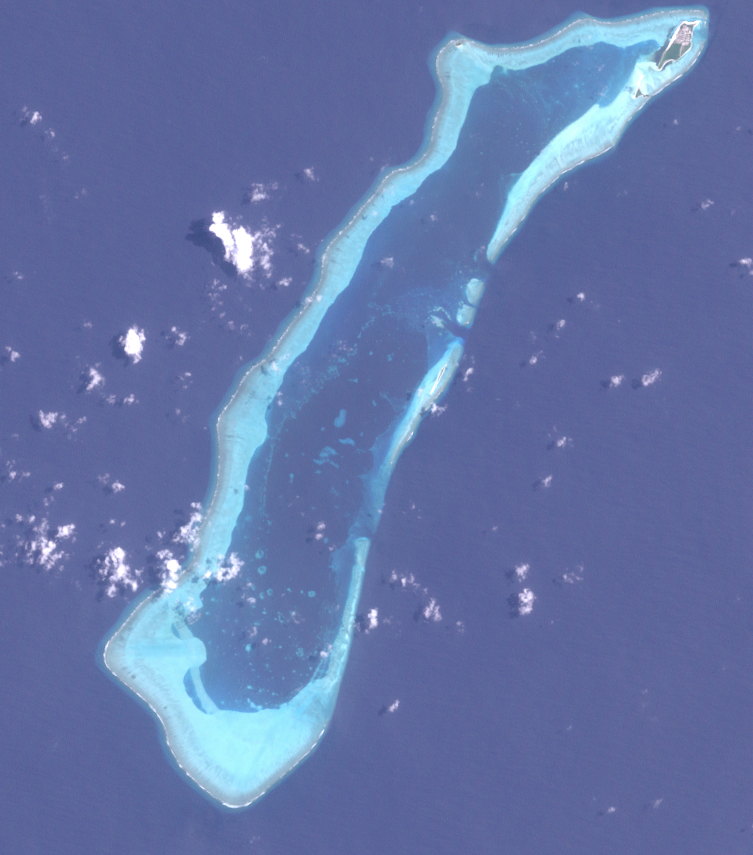
See the country from the air at least once — the European Space Agency's Copernicus imagery shows roughly 1,200 islands strung along the atoll chain, with over 80% of the land less than one meter above sea level.
The answer, with local context
That statistic is the single most important fact about what there is to do here, because it explains the form of the whole country. A land surface almost entirely under a meter in elevation means no hills, no rivers and no interior — the attractions are the reef, the lagoon and the islands themselves. The chain sits about 700 km southwest of the southern tip of India, and the atolls are coral structures rather than continental land. A seaplane or domestic flight transfer is not just transport; it is the only way to see the geometry the country is made of.
Malé is the counterweight to the resort islands. The capital sits on the southern edge of North Malé Atoll, also known as Kaafu Atoll, and was historically the royal seat of the Maldivian dynasties. Its old walls and royal palace were removed during redevelopment after the monarchy was abolished, and the island has since been extended by landfill — which is why a dense modern city stands where a walled capital used to be. A day in Malé is the only part of a Maldives trip that is urban.
For the natural side, the designation to know is UNESCO's: Baa Atoll was designated a biosphere reserve under the Man and the Biosphere Programme in 2011, and it is the atoll that contains Hanifaru Bay, the Maldives' best-known manta ray and whale shark aggregation site. On the cultural side, the Maldives has no inscribed World Heritage property; the country's coral stone mosques, including Malé's Hukuru Miskiy, sit on its UNESCO Tentative List. Being precise about that distinction matters — the Maldives' heritage case is live, not settled.
Picture the place
From above, each atoll reads as a ring of reef enclosing a pale lagoon, with the inhabited and resort islands as small green dots on the rim and the open ocean dropping to deep blue immediately outside it. The Huvadhu and Addu atolls in the south are the largest rings in the chain.
The easily missed detail
Guesthouse tourism on inhabited islands is a genuinely different trip from resort tourism, and the tax code marks the line. Green tax is charged at US$12 per tourist per day at resorts and on vessels, but at US$6 per day at hotels and guesthouses on inhabited islands with 50 or fewer rooms. That reduced rate exists because the government treats small inhabited-island accommodation as its own category — which is the clearest official hint that it is a real option, not a compromise.
A practical rhythm
- Malé — The capital island on the southern edge of North Malé Atoll, the only urban day in the country.
- Baa Atoll — UNESCO biosphere reserve since 2011, and Hanifaru Bay's manta aggregation.
- From the air — A transfer flight over a chain where 80% of the land is under a meter in elevation.
What could complicate the plan
Entry is easy but conditional. A free visa of up to 30 days is issued on arrival to all nationalities, with no pre-arrival visa needed, but a Traveller Declaration must be completed and submitted within 96 hours before travel, which can be filed electronically through IMUGA. You need a machine-readable passport with at least one month's validity, a valid onward ticket, and either sufficient funds — stated as US$100 plus $50 per day — or a confirmed reservation at a tourist resort or hotel. Employment is not permitted on this visa.
What to do next
The Malé and atolls when-to-visit question in this chapter gives the monsoon calendar that governs sea conditions on transfers, and the food question covers eating on inhabited islands.
Sources
- European Space Agency, Copernicus Sentinel-3 image of the Republic of Maldives — island count, elevation statistic, distance from India, atoll geography
- Permanent Mission of the Maldives, entry to Maldives — visa on arrival, Traveller Declaration, passport, onward ticket and funds requirements
- Maldives Inland Revenue Authority, green tax FAQ — resort and small-guesthouse green tax rates
- UNESCO Man and the Biosphere Programme — Baa Atoll biosphere reserve designation, 2011
- UNESCO World Heritage Centre — Maldives has no inscribed property; the coral stone mosques are on the Tentative List