Malé and atolls / Maldives When to visit
When should I visit Malé and atolls, Maldives, for the best experience?
The short answer
January to March — the Maldives Meteorological Service's dry northeast monsoon, and the only part of the year with about 10 to 11 hours of sunshine a day against 7 to 9 hours in every other month.
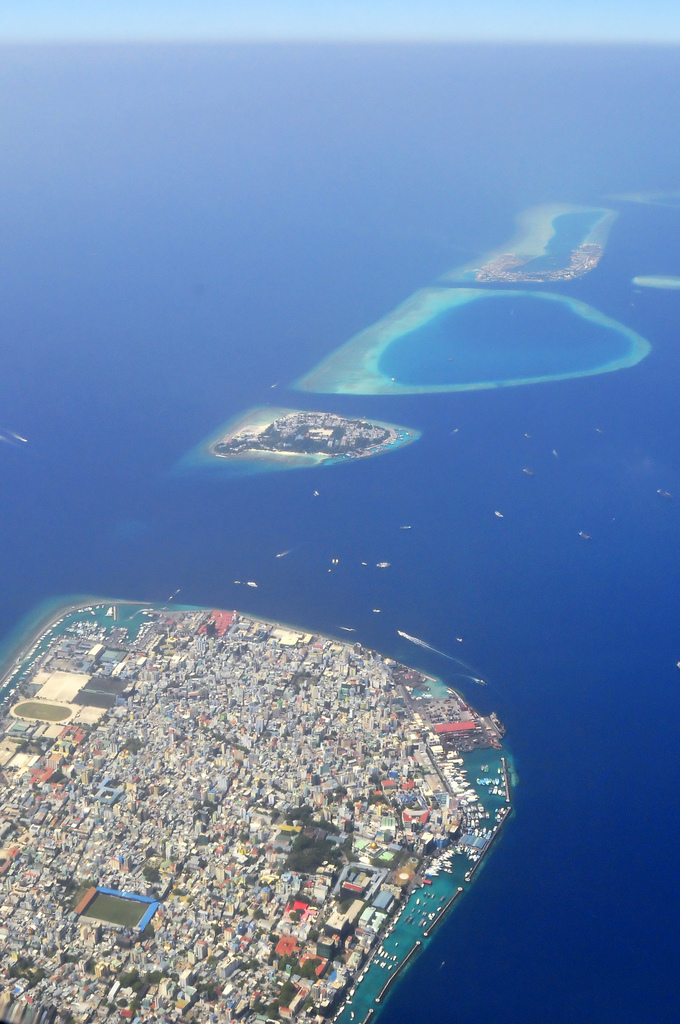
The answer, with local context
The national weather service splits the Maldivian year cleanly. The southwest monsoon, the wet season, runs from mid-May to November. The northeast monsoon, the dry season, runs from January to March. December and April are transitional months between the two. Rainfall is heavier during the southwest monsoon, and the sunshine figures track the same division: 10 to 11 hours a day from January to March, and 7 to 9 hours a day in the remaining months.
Temperature is almost a non-variable. The average range across the country is 25°C to 32°C — 77°F to 90°F — moderated by the surrounding sea. The warmest period is March and April, up to the onset of the southwest monsoon in mid-May. The national extremes on record are narrow for a tropical country: a high of 36.0°C, or 96.8°F, at Kadhdhoo Meteorological Office on 12 September 1991, and a low of 18.2°C, or 64.8°F, at Hanimaadhoo Meteorological Office on 23 December 2002.
Where you go matters as much as when, because rainfall increases from north to south. The annual average is 1,779 mm in the northern atolls — 70.0 inches — rising to 1,966 mm, or 77.4 inches, in the central atolls and 2,218 mm, or 87.3 inches, in the south. A southern atoll in the wet season is a materially different proposition from a northern one. The heaviest 24-hour rainfall on record, 228 mm or 9.0 inches, fell at Addu City in the far south on 24 November 2015.
Picture the place
Rain in the Maldives is usually showery and short-lived, with sunny periods in between — which is why a wet-season day is not a lost day here in the way it would be in a monsoon climate on the mainland. The weather service describes exactly that pattern, and it is the reason the gap between a 70-inch year in the north and an 87-inch one in the south reads smaller on the ground than on paper.
The easily missed detail
The cost side of the calendar does not move with the weather. Green tax has been charged at US$12 per tourist per day at resorts, hotels and on vessels since 1 January 2025, with a reduced US$6 rate for hotels and guesthouses on inhabited islands with 50 or fewer rooms. Maldivians, resident permit holders and children under two at check-in are exempt. So the dry season costs the same in tax as the wet one — the premium you pay for January to March sits in room rates, not in the levy.
A practical rhythm
- January to March — Dry northeast monsoon, 10 to 11 hours of sunshine a day.
- March and April — The warmest stretch of the year, running up to the mid-May monsoon onset.
- Mid-May to November — Southwest monsoon, with the north drier than the south by 17 inches a year.
What could complicate the plan
The US Department of State advises travelers to exercise increased caution in the Maldives due to terrorism, noting that likely targets include tourist locations, transportation hubs, markets and shopping malls, and that attacks on remote islands could delay the response from authorities — a consideration specific to a country where most beds are on outer islands. Seasonally, the practical constraint of the southwest monsoon is not the rain but the sea state on transfer legs between islands.
What to do next
The Malé and atolls things-to-do question in this chapter covers the geography of the atoll chain, and the food question deals with eating on inhabited islands rather than in resorts.
Sources
- Maldives Meteorological Service, climate — monsoon seasons, temperature range, record extremes, regional rainfall averages, sunshine hours, rainfall character
- Maldives Inland Revenue Authority, green tax FAQ — green tax rates from 1 January 2025 and exemptions
- US Department of State, Maldives Travel Advisory — advisory wording and stated risks