Malé and atolls / Maldives Food and drink
Where should I eat in Malé and atolls, and which local food or drink is worth trying?
The short answer
Eat tuna, in its three Maldivian forms — mas huni for breakfast, garudhiya at midday and grilled fihunu mas in the evening, all of which you will find on inhabited islands rather than on a resort buffet.
The answer, with local context
Maldivian cooking rests on three ingredients: tuna, coconut and the starch that travels well on a coral island. Mas huni is shredded smoked or tinned tuna mixed with grated coconut, onion and chili, eaten with roshi flatbread at breakfast. Garudhiya is the clear tuna broth, served with rice, lime and chili, and it is the dish that most reliably marks a kitchen cooking for locals. Rihaakuru, a thick dark tuna paste reduced from the broth, is the pantry staple behind much of it. In the evening, fihunu mas is reef or tuna fish scored, rubbed with chili paste and grilled.
The category to ask for by name is hedhikaa — the short eats sold through the afternoon at the sai hotaa, the tea shops. Bajiya are pastry triangles filled with tuna and coconut, gulha are fried dough balls with the same filling, masroshi is flatbread stuffed with spiced tuna, and kulhi boakibaa is a baked savory fish cake cut into squares. A tea shop in Malé at four in the afternoon is the most direct route into Maldivian food that the country offers a visitor.
Where to look is a short list. Malé has the fish market and the local market near the northern waterfront, where tuna comes off the boats and the produce comes in from the atolls, and the sai hotaa are spread through the city grid. On the atolls, the inhabited islands — not the resort islands — are where local kitchens operate, which is the practical reason the guesthouse option matters: green tax is charged at US$6 per tourist per day at hotels and guesthouses on inhabited islands with 50 or fewer rooms, against US$12 at resorts and on vessels.
Picture the place
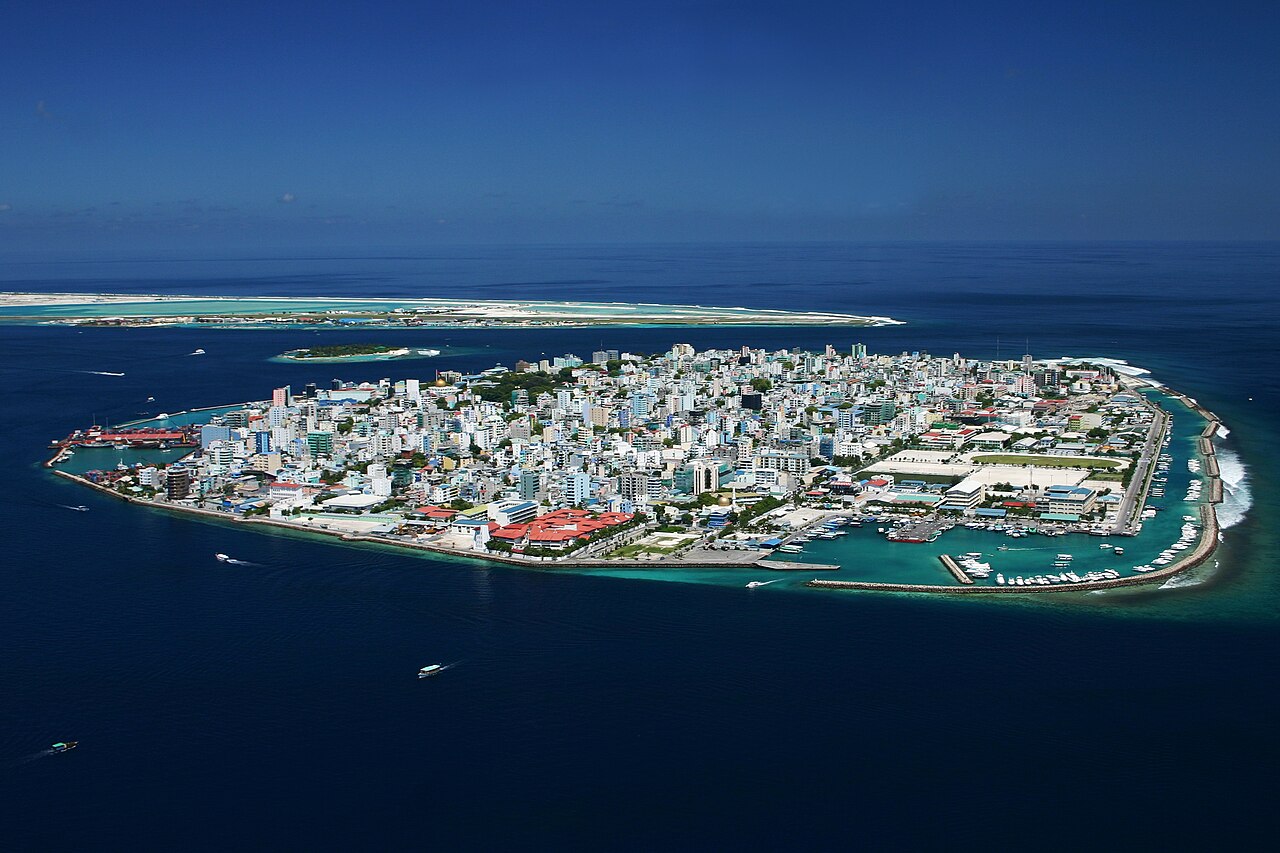
Malé is a landfill-extended island city with the market set on the harbor side, so the fish arrives a few meters from where it is sold. The afternoon pattern that fills the tea shops is partly weather: rain here comes as short showers with sunny periods between them, so the hedhikaa hour sits in whatever gap the day gives.
The easily missed detail
Alcohol is the structural division in Maldivian hospitality. It is served at resorts and licensed venues, not on inhabited local islands, and travelers may not bring it into the country — Maldives Customs confiscates it on arrival. That one rule explains why a guesthouse stay on an inhabited island and a resort stay are different trips, and why the food is better on one and the drinks list only exists on the other.
A practical rhythm
- Breakfast — Mas huni with roshi, the national morning plate.
- Afternoon — Hedhikaa at a sai hotaa: bajiya, gulha, masroshi, kulhi boakibaa.
- Evening — Garudhiya with rice and lime, or fihunu mas off the grill.
What could complicate the plan
Two official points bear on a food-led trip. The visa-on-arrival conditions require either proof of sufficient funds, stated as US$100 plus $50 per day, or a confirmed reservation at a tourist resort or hotel — so an island-hopping plan built on local guesthouses should have its bookings in hand at immigration. And the State Department's Maldives advisory specifically names markets and shopping malls among likely targets in its terrorism warning, alongside tourist locations and transportation hubs, which is worth knowing before a day built around Malé's market quarter.
What to do next
The Malé and atolls things-to-do question in this chapter covers Malé's history as the royal seat and the atoll geography beyond it, and the when-to-visit question explains the monsoon calendar behind those afternoon showers.
Sources
- Maldives Inland Revenue Authority, green tax FAQ — green tax rates for resorts versus small inhabited-island guesthouses
- Permanent Mission of the Maldives, entry to Maldives — proof-of-funds and reservation requirement
- Maldives Meteorological Service, climate — showery, short-lived rainfall pattern
- US Department of State, Maldives Travel Advisory — named likely targets including markets
- Maldives Customs — prohibition on importing alcohol